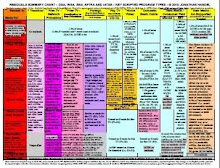
For details, see my Hollywood Reporter piece.
Showing posts with label AMPTP. Show all posts
Showing posts with label AMPTP. Show all posts
Tuesday, September 28, 2010

Wednesday, September 22, 2010
Basic Cable Clarification & Details
In yesterday’s post regarding the schedule for this cycle’s negotiations, I said that SAG and AFTRA would be jointly negotiating basic cable starting on November 7. Sources close to AFTRA and SAG have corrected me on this—and provided more details.
My take on this was based on a misreading of a SAG press release from 11 days ago. The actual language in the release was:
The Basic Cable Live Action, Basic Cable Animation and TV Animation contracts negotiations with producers are tentatively scheduled to begin November 7, 2010. As part of the Basic Cable Live Action agenda item, the SAG National Board voted to explore the possibility of coordinated bargaining with AFTRA in the area of live action basic cable programming.
The source close to SAG confirms that SAG has indeed reserved time starting on Nov. 7 for basic cable discussions. So SAG will presumably be having basic cable discussions with the companies unless something unexpected happens. The AMPTP will be present, and the sessions will be at AMPTP headquarters, but the discussions are technically with “authorizers,” which appears to mean some of the AMPTP members plus other companies.
Will AFTRA be a part of those negotiations? That’s where it gets more complicated. Sources close to both unions confirmed that there have been emails and conversations between the two unions, with one source implying that these informal communications have been between the National Executive Directors of the two organizations, David White (SAG) and Kim Roberts Hedgepeth (AFTRA).
Have those communications progressed beyond the informal stage? The source close to AFTRA says they haven’t, and that s/he would expect a formal letter if things were to continue to move forward. The source close to SAG was a bit doubtful that such a letter was even necessary, but wasn’t completely sure.
Regardless of formality, is AFTRA receptive to the idea of coordinated bargaining? The source close to AFTRA said yes, in theory. The caveat was that AFTRA would want to be sure that coordinated bargaining would increase the likelihood of members actually working. S/he added that AFTRA would consider any SAG proposal on coordinated bargaining very seriously.
That comment points out a difference in philosophy between the two unions, at least to date. SAG has a single basic cable agreement. Companies are offered they agreement, and that’s what they have to sign if they want to use SAG members in their productions. Only in rare circumstances are waivers granted.
AFTRA in contrast has four basic cable templates, one of which is similar to the SAG basic cable contract. Two of the contracts are used with smaller networks, such as the CW, while other are used with full-fledged networks. In each situation, there is a choice of two approaches to residuals. Additionally, the templates are subject to negotiation, which is why they’re “templates” (or “contract forms”) rather than “contracts.” The result is so-called “one production only” deals.
The difference in philosophy is this: AFTRA believes that these OPO deals are the best opportunity to prevent shows from going non-union or being produced in Canada. The source close to AFTRA says the union has statistics on this. There were some statistics of this sort in AFTRA’s 2007 magazine article on basic cable. I’m not sure if there are more recent figures as well.
SAG, in contrast, believes that promulgating a single contract is the best way to ensure that guild members receive the full benefit of SAG’s power to negotiate on their behalf, and that a union’s job is to set minimums.
There’s a also a perception, among at least some leaders on the SAG side, that AFTRA does not pursue contract grievances as aggressively as SAG does. Producers and management-side lawyers generally share this belief, and often prefer to deal with AFTRA rather than SAG.
It doesn’t go unnoticed, either, that AFTRA’s approach has enabled the union to achieve greater market share in basic cable. Whether this comes at the expense of SAG, as some believe, or is simply captures programs that would have gone non-union or fled to Canada, is difficult to say.
In any case, the fundamental difference in opinion is clear, and the question is, should a union focus more on obtaining work for members or more on setting minimums? Compromises between these two extremes are obviously possible, but the two goals are obviously in tension with each other.
The importance of coordinated negotiations, and achieving a synchronization of the two unions’ approach to basic cable is that this helps advance the cause of merger. A single, merged union obviously can’t have only one contract and never deviate from it, while simultaneously having four templates and negotiating OPO deals.
The most likely solution is to meet in the middle, and, for instance, have two contracts rather than one or four. Or there might be four contracts but now deviations from them (i.e., no OPO deals, just a choice of contracts). And, perhaps, two of those contracts might b phased out over the next several years. There are all sorts of compromises one might envision, but it’s obvious why the matter is sensitive.
Another reason the matter is sensitive, of course, is that SAG is in the position of asking AFTRA whether it will join SAG and bargain in a coordinated way. This conceptually makes SAG the suitor, and AFTRA the decision maker (or the “decider,” in George Bush’s charming locution). That’s not a comfortable place for SAG to be in and will require delicate maneuvering to avoid bruised egos. Indeed, it’s perhaps a bit surprising that SAG’s board voted to explore coordinated bargaining without assurance that AFTRA’s board would adopt a similar resolution at its board meeting, which was held on the same day as SAG’s.
SAG, AFTRA and the AMPTP had no comment.
Stay tuned for my piece later this week looking at the issues in play for SAG and AFTRA. And watch for my new book “Hollywood on Strike!,” due out next month.
———————
Subscribe to my blog (jhandel.com) for more about entertainment law and digital media law. Check out my residuals chart there too. Go to the blog itself to subscribe via RSS or email. Or, follow me on Twitter, friend me on Facebook, or subscribe to my Forbes.com or Huffington Post articles. If you work in tech, check out my book How to Write LOIs and Term Sheets.
Tuesday, September 21, 2010
Hollywood Labor: The Tyranny of Time
One key to understanding Hollywood labor is a tool that was invented thousands of years ago: the calendar. That much became clear in the last round of major negotiations, which lasted from 2007 to 2009, and featured a writers strike and a SAG stalemate. I covered those events as they occurred, and they’re also the topic of my forthcoming book, “Hollywood on Strike!,” which is due out next month.
So with the SAG-AFTRA negotiations upon us, let’s look at what the 2010-2011 bargaining cycle has in store.
SAG and AFTRA
The SAG and AFTRA negotiations with the AMPTP (studio alliance) begin on Monday the 27th, less than a week away. They’ll focus on the SAG Codified basic Agreement (which covers film and television), SAG Television Agreement (a supplement which adds more detail regarding television), and AFTRA’s Exhibit A (which covers primetime scripted television). Exhibit A is largely, though not entirely, composed of cross-references to provisions in the SAG agreements.
These negotiations are under the framework of the Phase I agreement, which has governed SAG-AFTRA joint negotiations with the studios for the last 29 years, with the notable exception of the last negotiating cycle.
On November 7, basic cable negotiations may occur. See http://digitalmedialaw.blogspot.com/2010/09/basic-cable-clarification-details.html for details.
The November 7 date seems to assume that SAG, AFTRA and the AMPTP will reach agreement prior to then. This is expected, but is not a given. The SAG and AFTRA contracts don’t expire until June 30 next year, but the studios insisted on early negotiations in order to reduce the likelihood of brinksmanship, stalemate or strike. This was particularly important to them in light of the nearly year-long SAG stalemate during the last negotiating cycle.
However, timely completion of the contracts seems likely this time because of a seemingly unrelated issue: merger of SAG and AFTRA. The actors—SAG’s leadership in particular—want to spend 2011 working towards merger of the two unions.
That ties the negotiating schedule into the SAG election schedule. SAG president Ken Howard will be up for reelection in the 2011 summer-fall election cycle. In order to best position himself for reelection, it’s important that he and his Unite for Strength faction to show progress on merger prior to the time campaigning begins, which is typically in June or July.
That imperative, in turn, means completing the AMPTP negotiations in November, so that there’s sufficient time to work on merger. The “urge to merge” also has some implications on negotiating issues themselves, as I’ll discuss in a future article.
Of course, one side’s imperative is the other side’s leverage. The AMPTP knows that it’s important for the actors to get their deal done by November, and will be able to hold the unions up against the wall of that deadline if need be. The AMPTP now doubt opposes merger—why would management want to deal with a more unified bargaining representative—and that means they will seek to extract concessions if they’re going to agree to deal points that make merger easier.
DGA
Moving on: In mid-November, the DGA will begin formal negotiation of their film and television agreements, which also expire June 30. Those agreements include basic cable, so there isn’t a separate agreement for that medium as there is for SAG and AFTRA.
The creative rights aspects of the DGA agreements will be negotiated at the same time, but directly with the studio CEOs. This may be the only place in Hollywood labor where negotiation is explicitly reserved to the CEOs, rather than the AMPTP—whose entire purpose is, after all, to negotiate labor agreements.
This extraordinary arrangement reflects both the power of the DGA and the key importance to the guild of maintaining the creative control enjoyed by directors. Or film and TV movie directors, at least. Television series directors march to the tune set by the writer-producer, i.e., the showrunner.
Although the DGA’s formal negotiation don’t start until mid-November, the guild has said they will start informal negotiations prior to then. They may well have done so already. This timing here allows the AMPTP to use the DGA as a shield against SAG-AFTRA contract proposals that the studios consider excessive.
For instance, if the DGA and AMPTP informally agree in September or October that wage increases will be a particular percentage, then if SAG and AFTRA insist on a higher percentage, the AMPTP can demur, confident in the knowledge that they can do a deal with the DGA that will set the pattern on the issue.
Likewise, if the DGA decides that certain new media issues are not important, SAG and AFTRA will have an uphill fight to extract concessions from the AMPTP on those particular issues. Indeed, the DGA has already said publicly that new media will not be a focus of their discussions. So, SAG and AFTRA are already in a difficult place on those issues.
The DGA’s policy of informal pre-negotiations also means that few formal sessions are necessary to reach a deal. Last negotiating cycle, for example, the DGA and AMPTP held just five days of formal bargaining. That’s why this year’s mid-November start date probably means a deal will be reached before Thanksgiving, which falls on November 25th. That allows for roughly 7 weekdays and one weekend of formal sessions.
WGA
And what of the Writers Guild? Those negotiations have not yet been scheduled. They won’t start until mid-January at the earliest, since little business can get done in this industry between Thanksgiving and New Year’s.
That timeframe is a problem, because the WGA usually takes far more than 5 days to reach agreement with the AMPTP. Moreover, their agreement expires two months earlier than the actors’ and directors’, on May 1. That’s a 3-1/2 month window to conduct negotiations.
Such a short window may encourage studios to begin stockpiling feature film scripts later this year, if they haven’t already. That’s because it typically takes two or more months to write and revise such scripts. The studios don’t want to be left with nothing to shoot during the summer, for fear of not having a steady supply of product. Also, early summer is particularly important time for shooting movies that use network television actors, since that’s when they’re on hiatus and thus available for film work.
Television stockpiling, in contrast, probably wouldn’t start until sometime in the spring, as May 1 first approaches.
Writers are aware that this year they’re the caboose and thus are left with little leverage. This may encourage their guild to bargain down to the wire in an attempt to exercise what little power they do have. Thus, the WGA negotiations may turn into a game of chicken, since such brinksmanship is unlikely to translate into a strike authorization, let alone an actual strike, so soon after the devastating 2007-2008 strike.
A middle ground is also possible, which is that the WGA works without a contract for weeks or even months. The dynamics are hard to predict: strike architect David Young is still the union‘s executive director, but the president is now the more moderate John Wells.
Summing Up
In any case, one thing is clear: if SAG and AFTRA are unable to reach a deal by November, the picture looks very different. In this scenario, the DGA will do its deal in November, and then SAG, AFTRA and the WGA will be in play in the spring. This would impede the actors unions’ progress towards merger, but would give SAG, the WGA and AFTRA the ability to threaten a joint strike. Thus, merger and strike threats are at poised against each other quite starkly as contrasting strategies in this negotiating cycle.
Later this week: A look at the issues in play for SAG and AFTRA.
———————
Subscribe to my blog (jhandel.com) for more about entertainment law and digital media law. Check out my residuals chart there too. Go to the blog itself to subscribe via RSS or email. Or, follow me on Twitter, friend me on Facebook, or subscribe to my Forbes.com or Huffington Post articles. If you work in tech, check out my book How to Write LOIs and Term Sheets.
Wednesday, April 28, 2010
DGA to Negotiate on SAG & AFTRA's Heels
The Directors Guild announced on its website today that it will begin negotiations with the AMPTP (studio alliance) in mid-November, which is immediately after the scheduled end of 45 days of negotiation between the AMPTP and SAG (Screen Actors Guild) & AFTRA (a smaller performers union).
The DGA contract (like those of SAG, AFTRA and the WGA) expires in mid-2011, but the DGA always negotiates early. Still, the announcement puts enormous pressure on SAG and AFTRA to conclude an agreement in October or early November of this year. If they don’t, the DGA will step in and do a deal first, setting a template that SAG and AFTRA may not like. Indeed, the announcement also says that the DGA will engage in informal discussions with the AMPTP before mid-November, which will prepare the DGA to do a deal promptly before the holiday season sucks the wind out of the town.
The prospect of the DGA stepping in, and the fact that it will negotiate informally even before then, could reduce SAG and AFTRA’s leverage, though at least one industry observer familiar with the situation said that SAG does not consider the DGA scheduling a cause for concern. Still, the DGA timing may reduce the likelihood of significant change in the new media provisions of the contracts, unless the DGA is pushing for the same changes as well. Hopefully, SAG, AFTRA and the DGA will coordinate their proposals. The timing of the DGA negotiations increases the likelihood that they will.
SAG, AFTRA and the AMPTP declined to comment.
The DGA announcement is below.
———————
Subscribe to my blog (jhandel.com) for more about entertainment law and digital media law. Check out my residuals chart there too. Go to the blog itself to subscribe via RSS or email. Or, follow me on Twitter, friend me on Facebook, or subscribe to my Forbes.com or Huffington Post articles. If you work in tech, check out my book How to Write LOIs and Term Sheets.
———————
Negotiations Announcement from DGA President Taylor Hackford and Negotiations Chair Gil Cates (April 28, 2010)
"We have reached an understanding with the AMPTP to begin formal negotiations for a new agreement in mid-November of this year, after the scheduled AFTRA-SAG negotiations begin on October 1.
"As is our custom, we will engage with the AMPTP to clarify and narrow the issues before the beginning of formal negotiations. We will use these discussions to confirm that both parties are committed to negotiating a fair agreement that will protect the economic and creative rights of DGA members while accomplishing the important objective of keeping our industry working in this challenging period.
"Following our traditional practice, the DGA began serious preparations for these negotiations well in advance of our contract expiration. In January, the National Board appointed Gil Cates as Negotiations Chair. Our consultants and research department have begun updating our business and revenue forecasts and assimilating the data collected in the last few years. Our councils, committees and staff have also begun their work to identify issues and prepare proposals.
"Our full Negotiating Committee will be appointed in June and will begin meeting this summer to prepare the DGA proposals.
“We wholeheartedly support SAG's and AFTRA's decision to move forward with joint negotiations and wish them every success when they begin their own negotiations with the AMPTP in October."
Saturday, February 27, 2010
AFTRA Board Approves Joint Bargaining With SAG
At a videoconference meeting today in
Assuming SAG and AFTRA sign a formal agreement to bargain jointly – which seems highly likely – the negotiations with the AMPTP (studio alliance) will be conducted under the terms of the Phase One agreement that had been used for decades, with the notable exception of the most recent negotiating cycle, in 2008-2009. That’s good news for an industry that can ill-afford another strike or year-long stalemate.
In addition, a non-disparagement agreement will be in place, which should help keep tempers from flaring publicly, particularly on the part of the SAG hardline minority. Again, good news.
In a statement, AFTRA National President Roberta Reardon cited “productive discussions with our counterparts at Screen Actors Guild” and added, “I look forward to continuing our work with SAG President Ken Howard and the leadership and members of our sister union as we move forward to bargain the strongest possible contracts for professional talent.” SAG was equally enthusiastic, commenting through a spokeswoman that the AFTRA vote was “terrific news for the memberships of both unions and we look forward to an effective negotiation."
Negotiations between SAG and the AMPTP are currently scheduled to begin October 1 and run through November 15. Whether the date may have to be adjusted to accommodate AFTRA is unclear, since AFTRA’s own Network Code negotiations may bump up against the October 1 date, but shifting the October 1 date would cause the end date (November 15) to slide into Thanksgiving week. After weeks of talking turkey at the bargaining table, negotiators will probably be ready for their holiday.
The AFTRA press release is below.
———————
Subscribe to my blog (jhandel.com) for more about entertainment law and digital media law. Go to the blog itself to subscribe via RSS or email. Or, follow me on Twitter, friend me on Facebook, or subscribe to my Huffington Post articles. If you work in tech, check out my book How to Write LOIs and Term Sheets.
———————
AFTRA National Board Approves Joint Bargaining with SAG on Primetime Television
Ratifies New National Public Television Agreement
LOS ANGELES AND NEW YORK (Feb. 27, 2010) --- The National Board of Directors of the American Federation of Television and Radio Artists (AFTRA), a national union of more than more 70,000 performers, journalists, broadcasters, recording artists and other talent working in the entertainment and news media, met today by videoconference plenary in Los Angeles and New York.
The AFTRA National Board unanimously voted to approve a recommendation by a subcommittee of the AFTRA Strategy Cabinet to formally engage in joint bargaining under Phase One terms with Screen Actors Guild (SAG) for the AFTRA Primetime Television Contract (Exhibit A of the Network Television Code) and the SAG Television and Theatrical Agreement and under the existing AFL-CIO-facilitated No Raiding/Non-Disparagement Agreement between the two unions. No wages and working conditions meetings or negotiations are scheduled at this time.
The approved motion reads:
“The AFTRA National Board approves conducting the preparation for, negotiation and administration of the 2011 AFTRA Exhibit A Agreement and SAG TV/Theatrical Agreement jointly with the Screen Actors Guild (SAG) under the terms of the Phase One Agreement, as Phase One has been applied in the past, in accordance with the terms and conditions of the AFL-CIO-facilitated Agreement for Negotiation of Commercials Contracts Under the Phase One Agreement (“The Commercials Agreement”). Staff is directed to prepare and execute an agreement that is identical to the Commercials Agreement to cover negotiations of the Exhibit A Agreement and SAG TV/Theatrical Agreement and forward same to SAG for its signature as soon as practicable (with the understanding that the escrow currently held by Amalgamated Bank will be utilized in connection with the EXHIBIT A/TV Theatrical Negotiations Agreement).”
After the vote, AFTRA National President Roberta Reardon said, “I applaud the National Board for taking this important step forward today following our productive discussions with our counterparts at Screen Actors Guild earlier this week, specifically with respect to AFTRA’s heavy negotiating schedule for 2010. I look forward to continuing our work with SAG President Ken Howard and the leadership and members of our sister union as we move forward to bargain the strongest possible contracts for professional talent.”
The National Board also unanimously ratified a successor agreement to the 2002 Extension to the National AFTRA Public Television Agreement. The new three-year contract, effective March 1, 2010, to Feb. 28, 2013, includes increases in minimum compensation and employer contributions to the AFTRA Health and Retirement Funds, as well as jurisdiction over programs made for or reused in new media.
In her staff report the National Board, AFTRA National Executive Director Kim Roberts Hedgpeth reported on the union’s advocacy to combat Internet theft of intellectual property and copyrighted material including AFTRA members’ performances. Last August, the AFTRA Convention unanimously approved a resolution supporting broadband access for all Americans and calling on the federal government and its agencies to ensure that the nation’s regulatory policies regarding Internet broadband expansion include provisions that effectively protect against copyright theft.
Hedgpeth also reported that, for the period of May 1, 2009, to Oct. 31, 2009, the union has collected more than $6.6 million in claims, grievances, arbitrations, legal proceedings and negotiated settlements on behalf of AFTRA members.
In other action today, the National Board made appointments to the Sound Recordings Code Steering Committee and the Network Code “Front-of-the-Book” Steering Committee. In the coming month, each committee will discuss preparations and a timeline for negotiations of the Sound Recordings Code, set to expire on June 30, and the AFTRA Network Code which will expire on Nov. 15. In further action, the Board authorized the AFTRA Administrative Committee to update these committees as needed depending upon the calendar and needs for negotiations of both contracts.
Additionally, the National Board made appointments to the Broadcast Steering Committee, and the Financial Core and Actors’ Equity Association Relations Subcommittees of the AFTRA National Organizing Committee. The Board also received reports from the Strategy Cabinet and the Finance, Women’s, Broadcast Steering, Young AFTRAns and Equal Employment Opportunities Committees.
The Board also received a report on the successful outcome of the 2010 AFTRA Media and Entertainment Awards held in
AFTRA National Vice President President Shelby Scott, who serves as Union Chair of the AFTRA Health and Retirement Funds Board of Trustees, reported that the Trustees met at the beginning of February and determined that AFTRA H&R Funds are healthy, with the Retirement Fund more than 89% funded –well within the federal government’s “green zone” – and that the AFTRA Health Fund has more than a year’s reserve.
The National Board opened its meeting by expressing sympathy and concern for the citizens of
The National Board is next scheduled to meet in face-to-face plenary session in
Tuesday, June 9, 2009
SAG TV/Theatrical Contract Ratified Overwhelmingly, 78%-22%
In a stunning defeat for the hardline Membership First faction, SAG's TV/theatrical contract passed overwhelmingly, by a 78%-22% margin (almost 4 to 1), those numbers according to the guild. Variety first reported the story, prior to the guild's announcement, with a 1% difference in the numbers.
Significantly, even in the faction's stronghold, the
It's an amazing end to an almost 12 month stalemate, and calls into question the faction's ability to make any headway in the upcoming SAG board elections. On the contrary, the results suggest that the moderate Unite for Strength faction should make significant gains. That's because only Membership First will be defending seats in
Another question is the SAG presidency, which is up this year as well. According to Variety, incumbent president Alan Rosenberg announced today that he'll seek a third term. Given the membership's overwhelming rejection of his vote No position, that may be an uphill climb, especially if the moderates/independents put forward a high-profile candidate, such as James Cromwell, who has been rumored to be considering a run.
Below are press releases from SAG, AFTRA and the AMPTP.
———————
Subscribe to my blog (jhandel.com) for more about SAG, or digital media law generally. Go to the blog itself to subscribe via RSS or email. Or, follow me on Twitter, friend me on Facebook, or subscribe to my Huffington Post articles. If you work in tech, check out my new book How to Write LOIs and Term Sheets.
———————
SAG Press Release
Screen Actors Guild Members Overwhelmingly Ratify TV/Theatrical Agreements
The two-year successor agreement covers film and digital television programs, motion pictures and new media productions. The pact becomes effective at 12:01 a.m. June 10, 2009 and expires June 30, 2011.
The contracts provide more than $105 million in wages, increased pension contributions, and other gains and establishes a template for SAG coverage of new media formats.
Approximately 110,000 SAG members received ballots of which 35.26 percent returned them – a return that is above average compared with typical referenda on Screen Actors Guild contracts. Integrity Voting Systems of Everett, WA, provided election services and tonight certified the final vote tally upon completion of the tabulation.
The vote count in the Hollywood Division was 70.70 percent to 29.30 percent in favor. In the New York Division, the vote count was 85.74 percent to 14.26 percent in favor. And in the Regional Branch Division, the vote count was 89.06 percent to 10.94 percent in favor.
Screen Actors Guild President Alan Rosenberg said, "The membership has spoken and has decided to work under the terms of this contract that many of us, who have been involved in these negotiations from the beginning, believe to be devastatingly unsatisfactory. Tomorrow morning I will be contacting the elected leadership of the other talent unions with the hope of beginning a series of pre-negotiation summit meetings in preparation for 2011. I call upon all SAG members to begin to ready themselves for the battle ahead,”
Screen Actors Guild Interim National Executive Director David White said, “This decisive vote gets our members back to work with immediate pay raises and puts SAG in a strong position for the future. Preparation for the next round of negotiations begins now. Our members can expect more positive changes in the coming months as we organize new work opportunities, repair and reinvigorate our relationships with our sister unions and industry partners, and continue to improve the Guild’s operations.”
Screen Actors Guild Chief Negotiator John McGuire said, "I want to thank the SAG members and staff who dedicated their time to the negotiations process. We emerged with a solid deal that the members have now voted up. The negotiating team worked tirelessly, building on the work of the first negotiating committee, to deliver these improvements to members.”
Screen Actors Guild began talks with the Alliance of Motion Picture and Television Producers on April 15, 2008. Guild Chief Negotiator John McGuire, Interim National Executive Director David White, and Deputy National Executive Director for Contracts Ray Rodriguez, working with a 10-person negotiating task force comprised of Screen Actors Guild board members and officers representing the three divisions, reached the tentative agreement on April 16, 2009 after 12 months of periodic negotiations with the motion picture studios and television networks.
For further information on the new contract, including the full text and a summary of the agreement, click here.
ACTORS RESPOND TO CONTRACT RATIFICATION
Tony Shalhoub, actor
“This is a great decision for SAG and I’m so appreciative of everything the new leadership is doing to put the Guild back on track. They’ve obviously got the right ideas for making SAG stronger.”
Stephen Collins, actor
"This contract passed because members knew it was time to take advantage of the gains our negotiators won and get back to work. On top of that, they understood that risking our ability to negotiate alongside AFTRA and the other unions in the 2011 negotiations would have been a huge mistake. It's a great day for SAG."
Sam Freed, actor, 2nd National Vice President
“This decision by the membership marks the end of a very long process. We can now move forward with a new sense of certainty.”
Sue-Anne Morrow, actor, National Board Member representing
"This is a good deal with good gains. SAG's members clearly agree. It's about time we got a raise. I'm so pleased that SAG's members exercised their right to be heard and said 'Yes!'."
Mike Hodge, actor, National Board Member representing
“I am extremely pleased that we have finally come to the close of a long, unproductive period. I am hopeful that we can heal our wounds and really start the work to become a unified, national union.”
Nancy Duerr, actor, National Board Member representing SAG Florida Branch
"This is a victory for SAG performers across our region. Stalled and delayed productions can now get underway, boosting our local economies. This contract not only puts more money in members' pockets, it preserves the high standards of working conditions our members have come to expect."
Todd Hissong, actor, Chicago Branch President, National Board Member
"By passing this referendum,
David Hartley-Margolin,
“The membership always has the last word when it comes to contract matters. They have spoken. Their endorsement of the deal with the AMPTP ends the uncertainty that has been hovering over us and allows Screen Actors Guild and the industry to move forward together.”
———————
AFTRA Press Release
AFTRA President Roberta Reardon Applauds SAG Contract Ratification
Los Angeles, CA (June 9, 2009)--In a statement released today, Roberta Reardon, National President of the American Federation of television and Radio Artists (AFTRA), praised the announcement by Screen Actors Guild regarding ratification by SAG members of a new two-year successor agreement to the SAG Basic Agreement and SAG Television Agreement saying:
"On behalf of the more than 70,000 members of AFTRA, I congratulate the members of Screen Actors Guild on their successful ratification of a new television and theatrical agreement. We're pleased that SAG members will now enjoy improved wages and working conditions, and we applaud their efforts to negotiate a solid new agreement."
———————
AMPTP Press Release
Statement by the AMPTP
The ratification vote by SAG members is good news for the entertainment industry. This concludes a two-year negotiating process that has resulted in agreements with all major Hollywood Guilds and Unions. We look forward to working with SAG members - and with everyone else in our industry - to emerge from today's significant economic challenges with a strong and growing business.
Tuesday, May 19, 2009
SAG’s Strange Voyage
Where did the Screen Actors Guild go? After months of news—a near daily barrage covered diligently by various journalists and citizen-journalists, including this author—the guild fell off the radar screen. It was as though 5757 Wilshire, SAG’s national headquarters, somehow disappeared into the black hole that features so prominently in (spoiler alert) the latest “Star Trek” movie.
The quiet was deceptive however. Last week, SAG’s
Meanwhile, within SAG itself another battle is looming, and here again the phasers will not be set on stun. Tensions between the hardliners and the moderates rival those between the Federation and the Romulans, and are about to break out again into open war—this time, as the guild membership prepares to vote on the TV/theatrical contract, which was recently approved by the SAG negotiating task force and the guild’s national board. Ballots are being sent to the membership at large today, May 19.
The stakes are high. Ratification will end an almost eleven month stalemate and restart studio theatrical production, which has been at a virtual standstill since the previous contract expired on June 30 last year. Rejection will plunge the union and the AMPTP—the alliance that represents studios and producers—back into stalemate, once again adrift in uncharted nebulas. Nonetheless, the hardliners have pledged to defeat the deal. Although they seem unlikely to succeed—a recent picnic/rally drew at most 70 attendees—they will drive the percentage of ratification down.
For almost two years, the hardliners have acted as though they come from another galaxy, or at least from Planet Claire, where (as the B-52’s explained) “no one has a head.” They started by trying to unilaterally reduce AFTRA’s power on the committee that for decades has jointly bargained the TV/theatrical contract. AFTRA ultimately responded by abandoning the joint arrangement, called Phase 1, and negotiating its own deal with the studios. The hardliners, who at the time controlled the guild, should have foreseen this result, and its effect, which was to reduce not AFTRA’s power but SAG’s.
Compounding this misstep, SAG delayed negotiating with the AMPTP until the contract was almost at the point of expiration. The studios’ response was unsurprising: they accelerated production, stockpiled films, then presented SAG with a take it or leave it offer whose terms mirrored that of the AFTRA deal and, in a key area, mirrored the terms of the Directors Guild and Writers Guild deals as well.
That key area, as even those on the dark side of the moon probably know, is new media. The deal terms in this area, from a union perspective, have gaps in jurisdiction and residuals structure. In this, the SAG hardliners make a significant point. But those gaps flow largely from the revenue-draining effect that new media is having on
Several additional factors helped make the search for better terms than three other unions a doomed mission to a dead planet. These were (1) the general uncertainty surrounding new media business models, (2) the economic fatigue suffered by actors and the rest of the industry in the wake of the 100 day writers strike, and (3) SAG’s lack of bargaining leverage, the latter a circumstance largely engineered by the hardliners themselves. (The recession, whose severity was at first unclear, only made things worse.) It’s as though the hardliners thought they could run at warp speed on cubic zirconia rather than dilithium crystals. Failure was not only an option, it was the predictable outcome.
What’s more, the stalemate itself led to further injury, of four varieties. First, it meant that SAG actors working in TV (a field in which production had continued) did so under the terms of the expired contract, meaning that they missed out on the 3.5% raise that AFTRA received on June 30 of last year by dint of its new deal. That’s amounted in aggregate to tens of millions of dollars foregone.
Second, it means that SAG will be behind AFTRA by 3.5% for at least the remainder of the new contract, because each union will continue to receive annual increases but SAG won’t get an extra bump to bring it to parity. Third, if SAG wants to catch up in the next round of negotiations, in 2011, it will need to trade off some other deal point that it might otherwise have gotten.
Fourth, the stalemate put into play the date that the new contract would expire, which is significant because it determines whether SAG’s deal will expire concurrently with those of the other guilds, allowing it to make common cause with them and increase the leverage of all four above-the-line unions (SAG, AFTRA, DGA and WGA) in the 2011 negotiations. SAG won that point, but at a cost of another two months of delay, from February (when the studios made an offer that would not expire concurrently) until April (when they made the offer that is now on the table). SAG was also forced to compromise pending claims for over $60 million dollars in force majeure payments—claims for actors’ wages lost due to the writers strike—but this may be less of a hit to the guild than it appears, since the contract language on the subject is at best ambiguous.
So where are we now? The ratification ballots are due back June 9, so we’ll know in less than a month whether the long stalemate is finally over. I anticipate ratification will be achieved, but with a percentage in the 60%-75% range, well below the over-90% that’s usually achieved when
Also of note: several months ago, SAG president Alan Rosenberg and three other hardliners (1st VP Anne-Marie Johnson and board members Diane Ladd and Kent McCord) sued their own union, seeking to enjoin negotiations and reverse personnel and procedural changes that they correctly anticipated would pave the way for a deal on terms the hardliners are pledged to oppose. Although their requests were denied by both the trial and appeals courts, the lawsuit nonetheless continues in both of those forums (Los Angeles Superior Court Case No. BC406900 and Second Appellate District 2d Civil No. B214056).
Why don't the plaintiffs drop the debilitating two-track lawsuit, which flouts the concept of unity trumpeted by the hardliners when they were in power? Their motivation for proceeding in the face of near-certain defeat seems political at this point: dropping the suit would damage the hardliners’ campaign in this fall’s SAG elections, where the SAG presidency, and control of the board, are at stake. (Indeed, the political elbows are so sharp that several of the hardliners are also running in the now-in-progress AFTRA elections, seeking to undermine that union’s leverage from within.) Dismissing the suit would also doom the likely attempt the hardliners will make in the SAG boardroom to obtain reimbursement of their burgeoning legal fees. Meanwhile the guild is, of course, incurring significant fees of its own to defend itself and the forty-odd Board members also named as defendants.
Even assuming the TV/theatrical agreement is ratified, the guild has a long way to go before it’s back in our solar system. SAG’s been without a franchise agreement—the contract between the union and the talent agents—since 2002, and four other agreements are expired as well. The union is riven not only by factionalism but by economic and geographic divisions as well. New media issues will recur in 2011, which is just around the corner, and every three years thereafter, since technology continues to evolve faster than
———————
Subscribe to my blog (jhandel.com) for more about SAG, or digital media law generally. Go to the blog itself to subscribe via RSS or email. Or, follow me on Twitter, friend me on Facebook, or subscribe to my Huffington Post articles. If you work in tech, check out my new book How to Write LOIs and Term Sheets.
Friday, May 8, 2009
SAG Sets Informational Meetings re TV/theatrical Agreement
The TV/theatrical ballots will go out May 19 (about ten days from now) and are due back by mail on June 9. SAG has set members-only informational meetings on the proposed contract. The LA meeting is sure to have fireworks, since the leaders of the Membership First faction, based in LA, oppose the proposed deal.
Supporting the deal are SAG staff and the SAG National Board, including SAG's moderate majority leadership, comprised of the LA-based Unite for Strength faction, LA independent board member Morgan Fairchild, and most or all of the NY and regional board members.
The deal can be ratified by a simple majority (i.e., 50% + 1) of those members voting. If ratified, the agreement would end an over 10-month stalemate.
The details of the meetings are in an email to members (see below).
———————
Subscribe to my blog (jhandel.com) for more about SAG, or digital media law generally. Go to the blog itself to subscribe via RSS or email. Or, follow me on Twitter, friend me on Facebook, or subscribe to my Huffington Post articles. If you work in tech, check out my new book How to Write LOIs and Term Sheets.
Email to SAG members:
Dear Screen Actors Guild member,
As you know, the Screen Actors Guild National Board of Directors voted April 19, 2009, to approve and recommend to members, new, two-year successor agreements to the 2005 Producer-Screen Actors Guild Codified Basic Agreement and 2005 Screen Actors Guild Television Agreement.
Ballots will be mailed to all eligible members on May 19, 2009. Ballots must be mailed in the return envelope provided and received at the Everett, WA, post office box no later than 5:00 p.m. (PDT) June 9, 2009. Ballots received after this deadline, or at a location other than the post office box, will not be counted.
We are holding member informational meetings so that you can hear about the tentative agreement and ask questions. Member informational meetings are scheduled for Hollywood and New York as follows and will be announced for Branch locations next week.
HOLLYWOOD
Thursday, May 21, 2009
7 p.m. – 9:30 p.m.
Renaissance Hollywood Hotel
Hollywood Ballroom
1755 N. Highland Ave.
Hollywood, CA 90028
PARKING: No-host self parking at Hollywood & Highland – validation available at the Hollywood & Highland complex: $2 for 4 hours when you are validated in any shop, restaurant or theatre that is part of the mall. Guild not responsible for illegally parked vehicles.
NEW YORK
Monday, June 1, 2009
6 p.m. - 8 p.m.
Directors Guild of America
110 West 57th Street (between 6th & 7th Aves.) New York, New York
Unfortunately, no guests will be allowed. Parents/guardians of younger performers under 18 years-old are welcome. PLEASE BRING YOUR SAG MEMBERSHIP CARD FOR ADMITTANCE (paid thru April 30, 2009). For more information call the National TV/Theatrical Contracts Hotline (323) 549-6665 or email contract2009@sag.org.
Member informational meetings are also planned for Branch locations across the country. More information on Branch member informational meetings will be available shortly.
Please plan to attend the member informational meeting in your area to get important facts regarding the tentative agreement. Screen Actors Guild negotiators, national board members and staff experts will be on hand to provide a thorough overview of the tentative agreement.
You can also find more information on the upcoming referendum, including details of the tentative agreement, by visiting the TV/Theatrical Contracts Center at www.sag.org or by emailing contract2009@sag.org.
We know how important this contract is to all Screen Actors Guild members. We urge you to stay informed by visiting www.sag.org often, attending the member informational meeting in your area and contacting us with questions and comments.
Watch for your ballot which is mailing May 19, 2009, and when you receive it, vote yes and return your ballot right away. Don't delay, ballots must be received by June 9.
In unity,
David P. White
Interim National Executive Director
John T. McGuire
Chief Negotiator
Screen Actors Guild National Board of Directors Strongly Recommends your “Yes” Vote on this contract. Let’s get back to work with a raise.
Wednesday, April 29, 2009
SAG TV/Theatrical Ballots Later Than Expected; SAG Litigation Continues; and More
The ballots for SAG’s recently approved TV/theatrical contract won’t be going out until mid to late May, a source tells me, several weeks later than the early May target that the Guild stated as recently as a week or so ago. That means that ratification, if achieved as expected, will not come until early to mid June, since balloting is expected to be a three week process. UPDATE: The ballots will go out May 19 and are due back June 9, SAG announced today.
The source, who spoke on condition of anonymity, explained that writing the pro and con statements has only just begun. That process takes a week, and then another week is allowed for rebuttal statements to be written.
(BTW, a copy of the proposed TV/theatrical agreement is available here. I’ve not yet done an analysis, but in the meantime you can read SAGWatch’s.)
Meanwhile, ballots for the commercials contract will be mailed to both SAG and AFTRA members Thursday, and due back May 21, reports Variety. It’s expected to pass easily. In contrast, the TV/theatrical contract will probably pass with a yes vote in the 60%-75% range, roughly in the neighborhood of the AFTRA deal, which achieved 62%. Only a simple majority (i.e., just over 50%) is required.
In other SAG news, Unite for Strength revealed in a Facebook email several days ago that the force majeure compromise is 33 cents on the dollar. “Force majeure” refers to arbitration claims on behalf of about 500 actors for a portion of wages lost due to the 2007-2008 Writer Guild strike. The claims amount to about $63 million, and, thus, the total settlement is about $21 million. The compromise goes into effect if the TV/theatrical agreement is ratified. Each company can opt out on a company-wide basis if they wish. SAG members will receive checks from those companies that don't opt out several weeks after the agreement is ratified, I'm told.
That settlement amount—33 cents on the dollar—is on the low side, but that was a tradeoff. SAG wants its contract to expire in mid-2011, to synch up with the WGA, AFTRA, and DGA. That’s an issue created by the ten-month delay that the hardline Membership First faction inflicted on the union; without the delay, the deals would have synched up as a matter of course. To get synchronicity at this late date, SAG had to give something up.
Remember also that the claims are under arbitration. SAG could have gotten zero cents on the dollar if the arbitration had proceeded; or it could have prevailed altogether. With that much uncertainty, a settlement in the 50% range might have been expected. That would have yielded a total of about $31 million, rather than $21 million. So, it’s a reasonable conclusion that SAG gave up about $10 million in order to get the synchronized expiration date—and prompt payment to the affected members.
The Guild also had to agree to modify the TV-related force majeure language in a way that reduces the likelihood of future force majeure claims. To put this in context, though, I’m told there has never been an industry-wide force majeure claim before. The studios obviously want to avoid seeing one again, not only to reduce their costs, but also to decrease the strength by which SAG members would support a writers strike in the future. (In other words, if actors have to bear the entire cost of their own lost wages, they may be less likely to enthusiastically support a strike by a sister union.)
Speaking of lost wages, I also have a couple of factoids on the SAG layoffs: the total number of people laid off was 36 (not 35, as previously reported), with an additional 26 unfilled positions that will remain unfilled. That’s a total reduction in force of 62 positions, and the annual savings to the Guild is $2.5 million in salaries ($4 million if bonuses and other factors are included).
Moving from lost wages to lost causes, there are developments in the lawsuit filed against SAG by the union’s own president, Alan Rosenberg, and his fellow Membership First plaintiffs 1st VP Anne-Marie-Johnson and board members Diane Ladd and Kent McCord. That suit, as you may rather have forgotten, seeks to unseat the TV/theatrical negotiating task force, as well as interim National Executive Director David White and Chief Negotiator John McGuire. That group—plus the commercials negotiating committee—is the team that managed to close two deals in as many months, while MF closed nothing at all over several years.
The lawsuit, in my opinion, hasn’t got a Popsicle’s chance in hell. After all, what judge is going to unwind a twice-ratified union leadership change? Incredibly, the lawsuit proceeds on not one but two tracks, since there are now both a trial court action and a concurrent appeal. Rosenberg’s and his co-plaintiffs’ solicitude for the members apparently includes spending their money on pointless multi-pronged litigation—understandably, since abandoning the litigation before this summer’s SAG election would be no boon to MF’s election prospects. Indeed, if MF ever wins control of the Board again, you can expect a motion to have SAG reimburse Rosenberg et al. for their no doubt considerable litigation costs.
In any case, there are developments on two fronts. In the trial court, SAG filed its Answer to the plaintiffs’ first amended complaint. A variety of defenses are asserted, including that the complaint is moot (because the SAG Board re-fired the previous NED, Doug Allen, at a meeting, after having first done so by a written assent document), interferes with the union’s right of self-governance, and is barred by the wrongful acts of Rosenberg and his co-plaintiffs (this presumably refers to the 28-hour filibuster over which Rosenberg presided in an attempt to prevent Allen from being fired).
Meanwhile, in the Court of Appeal,
What next? As the name implies, the Appellant’s Opening Brief is the first brief in the appeal. The next few weeks will see the filing of the respondent’s brief (SAG’s brief) and the reply brief (in which Rosenberg et al. get to reply to SAG’s brief). Then comes oral argument, unless the court decides to proceed based on the briefs alone (which I think the court has the right to do, but I’m not sure).
For those who find appellate work dry and lifeless (it’s all briefs and legal arguments, with no witnesses or jury), the trial court action will grind on as well, doubtless with demurrers, a motion to dismiss, motions for summary judgment, depositions, interrogatories, requests for production of documents, and all of the other costly accoutrement of modern-day litigation. Actually, that’s pretty dry and lifeless too. This could go on for months, providing amusement to everyone except SAG’s accountants. As in entertainment, so too in litigation: the show must go on.
———————
Subscribe to my blog (jhandel.com) for more about SAG, or digital media law generally. Go to the blog itself to subscribe via RSS or email. Or, follow me on Twitter, friend me on Facebook, or subscribe to my Huffington Post articles. If you work in tech, check out my new book How to Write LOIs and Term Sheets.
Monday, April 20, 2009
SAG Board Approves Studio Deal
Voting on party lines, a sharply divided SAG board approved the tentative deal with the studios yesterday by a vote of about 53% to 47%. The deal now goes to the membership for ratification, with a bruising fight promised by the hardline MembershipFirst faction. Ratification is nonetheless expected, and will mark an end to an almost ten month
Ballots will go out to the members in early May and will be due back three weeks later. The balloting material will be accompanied by both pro and con statements, and the fight over the deal will be a prelude to SAG’s presidential and board elections, which will commence in July and run through September. Current SAG president Alan Rosenberg has come out in opposition to the deal, while Ned Vaughn, leader of the moderate Unite for Strength group, told Variety that he favored a yes vote.
Although the deal is expected to be ratified, it won’t achieve the over 90% thumbs-up that the Writers Guild deal did last year. An approval in the 60%-70% range seems more likely, given that the AFTRA deal last year achieved only 62%, as a result of an ultimately futile anti-ratification campaign conducted by SAG.
Details and analysis of the deal are available here, and below are press releases from SAG, AFTRA (a rival actors union) and the AMPTP (the alliance representing the studios).
On a personal note, I had a surreal experience outside yesterday’s board meeting. As I talked to a board member who discussed his/her vehement opposition to product integration (a form of product placement, and an issue on which the new contract gives nothing to actors), another board member walked up and handed me a can of energy drink. I looked over and saw a marketing truck painted to look like a can of the drink and blaring rock music. In other words—product placement at SAG’s own board meeting! A bit of a surprise.
———————
Subscribe to my blog (jhandel.com) for more about SAG, or digital media law generally. Go to the blog itself to subscribe via RSS or email. Or, follow me on Twitter, friend me on Facebook, or subscribe to my Huffington Post articles. If you work in tech, check out my new book How to Write LOIs and Term Sheets.
———————
SCREEN ACTORS GUILD NATIONAL BOARD OF DIRECTORS APPROVES TENTATIVE TELEVISION AND MOTION PICTURE CONTRACTS AND RECOMMENDS RATIFICATION
Los Angeles (April 19, 2009) – The Screen Actors Guild National Board of Directors today voted 53.38 percent to 46.62 percent to approve and recommend to members, new, two-year successor agreements to the 2005 Producer-Screen Actors Guild Codified Basic Agreement and 2005 Screen Actors Guild Television Agreement.
The proposed agreement, covering actors in motion pictures and television delivers 3.5% effective annual increases comprised of a 3% wage increase and a .5% pension and health contribution increase upon ratification, and a 3.5% wage increase in year two.
The board passed the below motion shortly after 4:00 p.m. today:
It was moved and seconded that the National Board directs the Interim National Executive Director to send the tentative agreement between the Producers represented by the AMPTP and the Screen Actors Guild for successor agreements to the 2005 Producer–Screen Actors Guild Codified Basic Agreement and the 2005 Screen Actors Guild Television Agreement to the membership for ratification, with a recommendation from the Board to vote ‘Yes.’
Approved: 53.38% –46.62%
“I urge members to carefully review both the pros and cons in the referendum materials, and exercise their right to vote,” said Screen Actors Guild National President Alan Rosenberg.
Interim National Executive Director David White said: “We are pleased that Screen Actors Guild members will soon be voting on a deal for television and motion pictures. We’re eager to get our members back to work and to focus now on the challenges ahead, particularly on initiating a comprehensive effort to thoughtfully plan for the future.
Our negotiating committee, task force and professional staff have worked countless hours on this agreement over the last year. On behalf of the National Board, I thank them for their time, commitment and expertise.”
Chief Negotiator John McGuire stated: “This tentative agreement delivers increased contributions to the SAG pension plan, increased minimums, a significant gain in background actor numbers from 50 to 55 over the term of the contract, and it tracks the new media provisions achieved by other entertainment industry unions. The term of the agreement puts SAG in sync with the other unions, and does not include the extended term recently proposed by the AMPTP.”
Provisions of the proposed deal include:
• A two-year term of agreement concluding June 30, 2011.
• Effective annual increases comprised of 3.0% in wage increases and .5% in pension contributions upon ratification, and a 3.5% wage increase one year following ratification.
• A new media structure that tracks those achieved by other industry unions, resulting in gains for actors including:
o Jurisdiction on all derivative, made-for new media productions; automatic jurisdiction on all high-budget, original, made-for new media productions; plus jurisdiction on low budget original, new media productions that employee at least 1 covered performer.
o Residuals for exhibition of TV and Theatrical motion pictures on consumer pay platforms (Electronic Sell Through) at a greater percentage than those paid for DVD distribution.
o Residuals for ad-supported streaming of feature films and television programs.
o Residuals for derivative new media programs.
• Additional 5 covered background actors in feature films. From 50 to 53 covered background positions upon ratification of the contract, and from 53 to 55 covered background positions in year 2. Adds 1 covered background position in TV, from 19 to 20, upon ratification.
• Increased compensation for guest star premium from 7.5% to 10%.
• Increased trailer money break from $2,500 to $3,000, or more per week.
• Increased overtime money break for three-day performers from $2,700 to $3,000.
Ratification ballots will be mailed to eligible SAG members in early May, with an expected return date at the end of the month. Tabulation will occur immediately upon the conclusion of balloting.
Bargaining for a successor agreement to the 2005 SAG TV/Theatrical Contract began on April 15, 2008.
———————
AFTRA Statement Regarding New Screen Actors Guild Film and Television
Agreement
The American Federation of Television and Radio Artists issued the following statement by President Roberta Reardon regarding the announcement that the Screen Actors Guild National Board has approved a tentative agreement with the Alliance of Motion Picture and Television Producers on a new SAG film and television contract.
“AFTRA congratulates our sister union, Screen Actors Guild, on its new tentative agreement with the AMPTP. I applaud the SAG Negotiating Task Force for bringing a strong contract to the SAG National Board for approval, and I commend the SAG National Board for its leadership in approving and recommending this contract for ratification by their membership.”
———————
Statement by the AMPTP
The new AMPTP-SAG agreement is the eighth major labor agreement reached by AMPTP since the start of 2008 and the 312th such agreement in AMPTP’s 27-year history. Because both sides were willing to compromise we now have an agreement that will provide SAG members with meaningful wage boosts, pension increases, first-class health benefits, and a complete set of new media rights and residuals. With this agreement in place, our entire industry can work together to overcome the enormous economic challenges before us.
Saturday, April 18, 2009
SAG & Studios Agree to Tentative Deal
The Screen Actors Guild and the AMPTP (alliance representing studios and producers) reached tentative agreement yesterday on a two-year TV/theatrical contract, potentially ending a ten-month stalemate that halted production of most studio movies and put thousands of people out of work.
The deal will probably be approved by the SAG board today or tomorrow and ratified by the membership by mid-May, but the hardline MembershipFirst faction has vowed to fight the deal, so ratification, although likely, is not assured. Assuming the deal is in fact ratified (which takes a 50% majority), the stalemate would be over by mid-May. Some production might resume before then, in anticipation of ratification, but this is unknown.
In separate news today, the SAG and AFTRA boards meeting jointly approved the commercials contract reached April 1 with the advertising industry. Ratification ballots will go out to the members of both unions next week, with a return date in mid-May. The deal has wide support among the leadership and is expected to pass easily.
Back to the tentative TV/theatrical deal: Critically, this deal would expire on June 30, 2011, effectively synchronizing it with the Writers Guild, Directors Guild and AFTRA (smaller actors union) deals. That means all four unions will be able to coordinate negotiations and strategy, even to the point of threatening a joint strike by two (WGA and SAG) or three (WGA, SAG and AFTRA) of the unions. (The DGA has essentially never gone on strike, and AFTRA seldom does.)
This synchronicity should give the unions significant leverage, which raises the question of why the studios agreed to it. Probably they needed to restart theatrical film production soon in order to have movies for 2010. That would seem to be the only pressure point SAG had, since the union was widely understood to be unable to strike (a strike authorization would have taken a 75% affirmative vote of those voting, and the union didn’t even seek such a vote for fear of failing).
The gain—synchronicity—came at a price to SAG, however. The new deal compromises the force majeure claims SAG has pending from the 2007-2008 WGA strike. These are claims by actors for lost wages due to the strike, and amount to tens of millions of dollars. It’s unknown as yet how much will be foregone. Also, since the claims were the subject of a pending arbitration process, it’s unknowable how much SAG would have gotten if it had continued to pursue the claims. Thus, it’s hard to calculate the dollar cost of the compromise. The new deal also modifies the force majeure language in the union contract, but the details are unknown.
The deal includes no changes in new media from the AMPTP’s February offer, according to sources. That offer, in turn, is essentially the same as the new media provisions that the DGA, WGA, and AFTRA (in two separate deals) agreed to. (IATSE’s new media provisions are similar in several respects as well.) No change was expected by anyone, yet, ironically, new media was the reason the hardliners stalemated for ten months in a futile attempt to improve on the template accepted in the other five union deals.
The deal will take effect upon ratification, and includes an immediate 3.0% increase in minimum pay rates plus a 0.5% increase in pension and health contributions. A year later, there will be an additional 3.5% increase in minimums, which will run through contract expiration.
In contrast, AFTRA members have been enjoying a 3.5% increase for the last ten months (when AFTRA did its deal), and will receive their 3.0% + 0.5% bump on June 30 of this year. That means that for virtually the entire contract period, AFTRA rates will be about 3.5% higher than SAG’s. In other words, the new deal does not give SAG a double increase in order to catch up with AFTRA.
If SAG wants to ever catch up, they’ll have to seek a double increase in 2011, but that will involve giving up some other issue that SAG would otherwise have negotiated for, and in any case a double increase in 2011 would not be retroactive to the 2009-2011 period. This is part of the damage that the hardliners inflicted on the union.
Speaking of retroactivity, that’s an element that, not surprisingly, this deal doesn’t include either. That means that SAG actors who worked in TV over the last ten months will not receive makeup payments to bring them up to higher minimum pay levels that they would have received if the deal had been done promptly. This also is a result of the delay that MembershipFirst caused by not making a deal almost a year ago. And, of course, the whole issue of expiration date was caused by the hardliners’ delaying tactics.
The deal next goes to the SAG national board tomorrow for approval and then to the members for ratification over a several week period. SAG hardliners will fight the deal—SAG president Alan Rosenberg, 1st VP Anne-Marie Johnson, and former Hollywood board member David Jolliffe are among those who have already spoken in opposition—but I expect it to pass, although not with the over-90% margin the Writer Guild deal did a year ago. The deal will almost certainly go out to the members with a minority statement in opposition. Nonetheless, people are sick of not working and will probably agree that the deal was the best obtainable in a bad economy and with SAG weakened in large part by the hardliners themselves.
One thing that’s clear is that this is a time of enormous change for the
In addition, several of the
SAG’s new leaders have difficult work to do on various other contracts that expired or were ignored on MembershipFirst’s watch, including the franchise agreement between SAG and the town’s talent agents, which expired seven years ago. Then there’s the perennial question of SAG-AFTRA merger, which will probably be a factor in the upcoming SAG elections, as will vituperative arguments about the new TV/theatrical deal and the responsibility for the large-scale decline in SAG’s power and prestige.
Change isn’t limited to the labor side. The AMPTP’s longtime head, Nick Counter, retired several weeks ago. Also, interestingly, the new TV/theatrical deal was negotiated primarily on an informal basis by key SAG leaders and studio heads, not by formal bargaining between the union and the AMPTP. Although AMPTP acting head Carol Lombardini played a part late in the discussions, this process raises questions as to the future role and effectiveness of that organization.
Hanging over all of this are the twin factors of the economy and new media. The troubled economy will continue to harm the entertainment industry for some time to come. New media will continue to evolve, and will probably roil the unions, and the industry as a whole, for a decade or more.
And, of course, with mid-2011 expiration dates set for the WGA, DGA, AFTRA (two deals) and new SAG deals, negotiations will start again in the towards the end of next year. No rest for the weary, or sleep for the sinful, it seems.
———————
Subscribe to my blog (jhandel.com) for more about SAG, or digital media law generally. Go to the blog itself to subscribe via RSS or email. Or, follow me on Twitter, friend me on Facebook, or subscribe to my Huffington Post articles. If you work in tech, check out my new book How to Write LOIs and Term Sheets.
Friday, April 17, 2009
SAG Stalemate Update
The Screen Actors Guild stalemate grinds on. Variety says there are back-channel talks with studio heads, but it’s hard to know whether talks are actually in progress or, if any, how substantive they are. These rumors have persisted off and on for almost two months at least.
Causing the stalemate is the issue of contract expiration date rather than new media; there’s talk of a trade-off between this issue and the (unrelated) SAG demand for force majeure payments per the previous SAG agreement. Meanwhile, the passage of time itself threatens to generate new roadblocks.
The SAG Board is meeting this weekend, and Variety suggests a proposed TV/theatrical deal might be presented to the Board then. I’m skeptical, but you never know. The SAG story has had a surprise around every corner, although for the last year, stalemate has unfortunately been the one constant.
What is known is that the SAG and AFTRA boards will spend part of the weekend meeting jointly to review the proposed commercials contract, a deal reached earlier this month between the two unions and the ad industry. That deal, a good one for labor, has garnered little opposition and is expected to be approved overwhelmingly, first by the two boards, then by the two unions’ membership, a process that will take several weeks.
In contrast, the TV/theatrical deal—even though there isn’t one—has garnered opposition. The MembershipFirst hardliners have pledged to oppose any deal endorsed by the current leadership, in part because of new media issues. A small band of MF-ers, in groups of 50-100, have been protesting the nonexistent deal in small weekly rallies around town for the past 6-8 weeks. That group is led by Scott Wilson, and has included, from time to time, SAG President Alan Rosenberg, 1st VP Anne-Marie Johnson, former national board alternate David Jolliffe, and even twice-ousted National Executive Director Doug Allen.
Speaking of Johnson and Jolliffe, they are two of the several dozen candidates in the upcoming AFTRA national and LA board elections. MF, which bitterly opposes merger between SAG and AFTRA and burns with hatred for AFTRA, has adopted a strategy of attempting to attack merger from within AFTRA itself—not that AFTRA is likely to be keen to merge with SAG at this point anyway, given the turmoil the Guild has endured at the hands of MF for over a year.
Thus, as Variety points out, MF-ers Bonnie Bartlett, Frances Fisher and Sumi Haru currently sit on both the SAG and AFTRA national boards. MF candidates in the upcoming AFTRA elections, in addition to Johnson and Jolliffe, include Steven Barr and David Clennon. Ballots will be mailed May 8 and due back June 3.
The AFTRA press release is below.
———————
Subscribe to my blog (jhandel.com) for more about SAG, or digital media law generally. Go to the blog itself to subscribe via RSS or email. Or, follow me on Twitter, friend me on Facebook, or subscribe to my Huffington Post articles. If you work in tech, check out my new book How to Write LOIs and Term Sheets.
———————
AFTRA press release:
American Federation of Television and Radio Artists, AFL-CIO
All seven incumbent AFTRA Los Angeles Officers were named candidates for re-election by the AFTRA Los Angeles Nominating Committee and will run unopposed for additional two-year terms. They include Los Angeles President Ron Morgan; First Vice President Susan Boyd Joyce; Second Vice President Gabrielle Carteris; Third Vice President Bobbie Bates; Fourth Vice President Jason George; Recording Secretary Patrika Darbo; and Treasurer Jay Gerber.
A total of 22 AFTRA Los Angeles Board seats are up for election with candidates either having been selected by the Los Angeles Nominating Committee or qualifying for the ballot by Nominating Petition. Actors named by the Nominating Committee to fill 11openings include incumbents David Bowe, Raza Burgee, Andrew Caple-Shaw, Gabrielle Carteris, Bob Joles, and Kate Linder, along with David Andriole, Mimi Cozzens, Sandra de Bruin, James Schneider, and Marcia Strassman. Qualifying for the ballot by Nominating Petition are incumbent actors Nancy Daly and Paul Napier, joined by actor David Jolliffe.
Incumbent announcer Mike Sakellarides and announcer Chuck Southcott were named by the Nominating Committee as candidates to fill two vacancies representing that category. Dancer Galen Hooks, also an incumbent Board member, was named as a candidate by the Nominating Committee to fill one vacancy in that category.
Candidates to fill two singer vacancies are incumbents Susan Boyd Joyce and Dick Wells, both also selected by the Nominating Committee. Incumbent broadcaster Pepe Barreto was named by the Nominating Committee as a candidate for re-election representing the newsperson category with two additional newsperson seats remaining to be filled. There are also three vacancies representing the sportscaster category to be filled.
Thirteen seats representing
Officer and Board Candidates will have the opportunity to address the membership at the AFTRA Los Angeles annual "Meet the Candidates" forum on Wednesday evening, April 29, at the union's headquarters.
Ballots will be mailed on May 8 with a voting deadline of June 3. Elected Los Angeles Officers and Board members will begin their terms July 1. National Board members begin their four-year terms at the conclusion of this summer's National Convention.
Subscribe to:
Posts (Atom)