Showing posts with label Phase I. Show all posts

Saturday, February 27, 2010

AFTRA Board Approves Joint Bargaining With SAG

At a videoconference meeting today in New York and LA, AFTRA’s national board unanimously voted to approve joint bargaining with SAG for the Primetime Television Contract and the SAG TV/theatrical contract. The move comes a month after SAG’s national board voted, by a tally of 82% to 18%, to “seek engagement with AFTRA in a joint bargaining agreement for negotiation of the Television/Theatrical Contract.”

Assuming SAG and AFTRA sign a formal agreement to bargain jointly – which seems highly likely – the negotiations with the AMPTP (studio alliance) will be conducted under the terms of the Phase One agreement that had been used for decades, with the notable exception of the most recent negotiating cycle, in 2008-2009. That’s good news for an industry that can ill-afford another strike or year-long stalemate.

In addition, a non-disparagement agreement will be in place, which should help keep tempers from flaring publicly, particularly on the part of the SAG hardline minority. Again, good news.

In a statement, AFTRA National President Roberta Reardon cited “productive discussions with our counterparts at Screen Actors Guild” and added, “I look forward to continuing our work with SAG President Ken Howard and the leadership and members of our sister union as we move forward to bargain the strongest possible contracts for professional talent.” SAG was equally enthusiastic, commenting through a spokeswoman that the AFTRA vote was “terrific news for the memberships of both unions and we look forward to an effective negotiation."

Negotiations between SAG and the AMPTP are currently scheduled to begin October 1 and run through November 15. Whether the date may have to be adjusted to accommodate AFTRA is unclear, since AFTRA’s own Network Code negotiations may bump up against the October 1 date, but shifting the October 1 date would cause the end date (November 15) to slide into Thanksgiving week. After weeks of talking turkey at the bargaining table, negotiators will probably be ready for their holiday.

The AFTRA press release is below.

———————

Subscribe to my blog (jhandel.com) for more about entertainment law and digital media law. Go to the blog itself to subscribe via RSS or email. Or, follow me on Twitter, friend me on Facebook, or subscribe to my Huffington Post articles. If you work in tech, check out my book How to Write LOIs and Term Sheets.

———————

AFTRA National Board Approves Joint Bargaining with SAG on Primetime Television

Ratifies New National Public Television Agreement

LOS ANGELES AND NEW YORK (Feb. 27, 2010) --- The National Board of Directors of the American Federation of Television and Radio Artists (AFTRA), a national union of more than more 70,000 performers, journalists, broadcasters, recording artists and other talent working in the entertainment and news media, met today by videoconference plenary in Los Angeles and New York.

The AFTRA National Board unanimously voted to approve a recommendation by a subcommittee of the AFTRA Strategy Cabinet to formally engage in joint bargaining under Phase One terms with Screen Actors Guild (SAG) for the AFTRA Primetime Television Contract (Exhibit A of the Network Television Code) and the SAG Television and Theatrical Agreement and under the existing AFL-CIO-facilitated No Raiding/Non-Disparagement Agreement between the two unions. No wages and working conditions meetings or negotiations are scheduled at this time.

The approved motion reads:

“The AFTRA National Board approves conducting the preparation for, negotiation and administration of the 2011 AFTRA Exhibit A Agreement and SAG TV/Theatrical Agreement jointly with the Screen Actors Guild (SAG) under the terms of the Phase One Agreement, as Phase One has been applied in the past, in accordance with the terms and conditions of the AFL-CIO-facilitated Agreement for Negotiation of Commercials Contracts Under the Phase One Agreement (“The Commercials Agreement”). Staff is directed to prepare and execute an agreement that is identical to the Commercials Agreement to cover negotiations of the Exhibit A Agreement and SAG TV/Theatrical Agreement and forward same to SAG for its signature as soon as practicable (with the understanding that the escrow currently held by Amalgamated Bank will be utilized in connection with the EXHIBIT A/TV Theatrical Negotiations Agreement).”

After the vote, AFTRA National President Roberta Reardon said, “I applaud the National Board for taking this important step forward today following our productive discussions with our counterparts at Screen Actors Guild earlier this week, specifically with respect to AFTRA’s heavy negotiating schedule for 2010. I look forward to continuing our work with SAG President Ken Howard and the leadership and members of our sister union as we move forward to bargain the strongest possible contracts for professional talent.”

The National Board also unanimously ratified a successor agreement to the 2002 Extension to the National AFTRA Public Television Agreement. The new three-year contract, effective March 1, 2010, to Feb. 28, 2013, includes increases in minimum compensation and employer contributions to the AFTRA Health and Retirement Funds, as well as jurisdiction over programs made for or reused in new media.

In her staff report the National Board, AFTRA National Executive Director Kim Roberts Hedgpeth reported on the union’s advocacy to combat Internet theft of intellectual property and copyrighted material including AFTRA members’ performances. Last August, the AFTRA Convention unanimously approved a resolution supporting broadband access for all Americans and calling on the federal government and its agencies to ensure that the nation’s regulatory policies regarding Internet broadband expansion include provisions that effectively protect against copyright theft.

Hedgpeth also reported that, for the period of May 1, 2009, to Oct. 31, 2009, the union has collected more than $6.6 million in claims, grievances, arbitrations, legal proceedings and negotiated settlements on behalf of AFTRA members.

In other action today, the National Board made appointments to the Sound Recordings Code Steering Committee and the Network Code “Front-of-the-Book” Steering Committee. In the coming month, each committee will discuss preparations and a timeline for negotiations of the Sound Recordings Code, set to expire on June 30, and the AFTRA Network Code which will expire on Nov. 15. In further action, the Board authorized the AFTRA Administrative Committee to update these committees as needed depending upon the calendar and needs for negotiations of both contracts.

Additionally, the National Board made appointments to the Broadcast Steering Committee, and the Financial Core and Actors’ Equity Association Relations Subcommittees of the AFTRA National Organizing Committee. The Board also received reports from the Strategy Cabinet and the Finance, Women’s, Broadcast Steering, Young AFTRAns and Equal Employment Opportunities Committees.

The Board also received a report on the successful outcome of the 2010 AFTRA Media and Entertainment Awards held in New York on February 22, the proceeds of which benefit the work of the AFTRA Foundation, a charitable and education organization funded through tax-deductible contributions, grants and bequests to support projects outside the scope of normal AFTRA activities. New York Board members Lainie Cooke, who also serves as the union’s National Recording Secretary, and Ed Fry were elected by acclamation to the AFTRA Foundation Board of Directors.

AFTRA National Vice President President Shelby Scott, who serves as Union Chair of the AFTRA Health and Retirement Funds Board of Trustees, reported that the Trustees met at the beginning of February and determined that AFTRA H&R Funds are healthy, with the Retirement Fund more than 89% funded –well within the federal government’s “green zone” – and that the AFTRA Health Fund has more than a year’s reserve.

The National Board opened its meeting by expressing sympathy and concern for the citizens of Chile who suffered a massive 8.8 earthquake last night. President Reardon convened the meeting in remembrance of AFTRA members who passed away since Board last met in October, including recording artist Teddy Pendergrass, actor James Mitchell and former National Board members Jim Huston, Frances Reid, Conard Fowkes, among others.

The National Board is next scheduled to meet in face-to-face plenary session in New York in June 2010.

Monday, February 8, 2010

Pilots Overwhelmingly AFTRA Again

About 60 pilots for scripted network primetime programs will be shot under AFTRA contracts this year, while few – or perhaps none – will be produced under SAG jurisdiction, according to sources close to the two unions, who spoke on condition of anonymity. This continues a trend that began last year, when roughly 90% of pilots (and 83% of pilot pickups) went AFTRA.

Those numbers, in turn, were a stunning reversal from previous years, which had had SAG garnering about 90% of pilots and 86% of pickups in 2008. But to see such figures two years in a row raises a fundamental question: Is SAG fading out of the TV business?

Maybe so. The ill-will generated by SAG hardliners evidently lives on in the producing community, notwithstanding the electoral change that brought cooler heads last year to the elected and top appointed leadership of the guild. The stalemate and strike rumblings that ensued after the June 30, 2008 expiration of SAG’s contract led many television producers to choose AFTRA jurisdiction wherever possible. SAG finally ratified a new agreement almost a year after the previous contract’s expiration, but the damage to the guild was done.

Also driving the change is the migration of television production from film to digital video: a filmed TV show can essentially only be shot under a SAG contract, but a digital video TV show in most cases can be produced under either union’s jurisdiction. It appears that TV producers are overwhelmingly choosing AFTRA — even though AFTRA wage rates (minimums) are several percent higher than SAG’s.

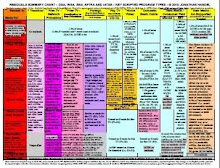
So, AFTRA’s reach is growing in network primetime scripted programming. That’s only part of the story though. Much of television is non-scripted, non-network or non-primetime: news programs, talk shows, reality, daytime dramas (soap operas), game shows, and more. Those areas, other than scripted cable, are AFTRA’s alone (or are non-union), as AFTRA indicated last summer in a compelling “24-hour TV union” graphic.

This year’s pilot season still has several weeks to go, so the numbers could change slightly, but probably not by much. Last year, for example, as of March 11, there were 70 pilots set for production, whereas the figure for this year as of today is about 60. If the pattern holds, we may see SAG increasingly focused on motion pictures and AFTRA on TV. The transition will be somewhat slow, because existing network primetime scripted series are heavily SAG, but the transition appears to be happening nonetheless.

And what of new media? Those productions tend to resemble TV series more than theatrical motion pictures – i.e., they’re episodic, the budgets are low, they’re shot on digital video, and are viewed on home screens – so AFTRA may end up with the lion’s share of these as well, to the extent that the work is done under union jurisdiction at all.

It’s a murky and confused picture that once again underscores the importance of joint bargaining by the two unions and, ultimately, the likelihood that merger is only solution to the present crazy-quilt jurisdictional overlaps between the two unions.

Spokespeople for SAG and AFTRA had no comment.

———————

Subscribe to my blog (jhandel.com) for more about entertainment law and digital media law. Go to the blog itself to subscribe via RSS or email. Or, follow me on Twitter, friend me on Facebook, or subscribe to my Huffington Post articles. If you work in tech, check out my book How to Write LOIs and Term Sheets.

Sunday, January 31, 2010

SAG Moves towards Joint Bargaining with AFTRA

The SAG National Board yesterday passed a resolution, by a surprising 82% to 18% vote, directing the guild’s president and National Executive Director to “seek engagement with AFTRA in a joint bargaining agreement for negotiation of the Television/Theatrical Contract,” as quoted in a SAG press release. This move is as I predicted in a blog post three weeks ago, based on conversations then with a confidential source.

Those negotiations, scheduled for October 1 – November 15 of this year, would take place “under the terms of Phase One, modeled on the agreement used successfully in the 2009 Commercials Contract negotiations,” per the resolution. Phase One is the 1981 agreement between the two unions under which they have jointly bargained with the studios for almost three decades, with the notable exception of 2007-2009.

The margin was unexpected, since the board is almost evenly divided between factions that support joint bargaining (Unite for Strength and an independent in Los Angeles, and most or all members of the New York and regional boards) and a group (Membership First) that has generally expressed bitter opposition to joint bargaining under Phase One, a framework that gives SAG and AFTRA equal weight on the negotiating committee. (Because of the lateness of the hour, it was not possible to explore this issue with sources, and a call to a SAG spokesperson was not immediately returned.)

The resolution also directs the President, Ken Howard, and National Executive Director, David White, to “bring a recommendation to the National Board at the earliest opportunity.” The urgency presumably stems in part from the fact that AFTRA’s next national board meeting is February 27 meeting, and more generally from the constraints created by the October 1 date and the various processes leading up to it, as I have previously discussed. The TV/theatrical contract doesn’t expire until June 30, 2011, but the agreement reached last year between the studios and SAG mandates early bargaining, specifically, from October 1 through November 15.

The SAG press release is below.

———————

Subscribe to my blog (jhandel.com) for more about entertainment law and digital media law. Go to the blog itself to subscribe via RSS or email. Or, follow me on Twitter, friend me on Facebook, or subscribe to my Huffington Post articles. If you work in tech, check out my book How to Write LOIs and Term Sheets.

———————

SAG National Board of Directors Meets via
Videoconference in Los Angeles and New York

Los Angeles, (January 31, 2010) - Screen Actors Guild National Board of Directors voted today to seek engagement with AFTRA in a joint bargaining agreement for negotiation of the Television/Theatrical Contract. Approved 82 to 18 percent, the resolution states:

“It was moved and seconded that in light of SAG's historically productive negotiating partnership with AFTRA, the SAG National Board of Directors directs President Ken Howard and National Executive Director David White to seek engagement with AFTRA in a joint bargaining agreement for negotiation of the Television/Theatrical Contract, under the terms of Phase One, modeled on the agreement used successfully in the 2009 Commercials Contract negotiations. President Howard and NED White shall bring a recommendation to the National Board at the earliest opportunity.”

Screen Actors Guild President Ken Howard said, “I am very pleased with the vote and thank the Board for their leadership and foresight on this important issue. I so appreciate the Board’s cooperative spirit in this discussion and throughout the day, and feel confident that our Guild is moving in the right direction.”

In other actions, the National Board voted unanimously to create a National Performance Capture Committee to address the unique concerns and experiences of members who render performances that are recorded using “performance capture” technology across all media, and to advise the Guild on all matters pertaining to work in this rapidly growing area.

The board also approved 83 percent to 17 percent the unanimous recommendation of the finance committee to authorize the extension of existing initiation fee reductions in targeted markets across the country and to have the Guild’s Joint Strategic Planning and Finance Committee review the initiation fee structure nationwide.

Reports
The national board received reports from elected leadership and staff including:

• President Howard memorialized those members who have passed away over the last year reading each name aloud and calling for a moment of silent remembrance. Howard also recognized the recent loss of former Houston Branch President and board member Jim Huston, who passed away January 28, 2010.

Mary McDonald-Lewis, Regional Branch Division board member from Portland, Oregon, delivered a special tribute to Huston, saying, “He stood with his brothers and sisters through the best of times and the worst of times, and did so with resolve.“

• Secretary-Treasurer Amy Aquino delivered a report on the Guild’s second quarter financial results noting that SAG’s revenue and expenses are closely tracking the projections for fiscal year 2010. Aquino also provided an update on investment performance indicating recoupment of certain losses in the Guild’s investment portfolio when compared to the prior year.

• National Executive Director David White reported on the strategic planning efforts underway at the Guild and preparation for negotiations. White updated the board on new institutional and member service initiatives including a revitalized organizing strategy and program. White applauded SAG committee members and staff for their innovative and thoughtful work in key areas including the 2010 SAG Awards, government relations and legislative activities, new media outreach activities, and the LifeRaft Live Streaming partnership with SAG Foundation, among other efforts.

The Board also appointed Deputy National Executive Director of Contracts Ray Rodriguez to the Screen Actors Guild-Producers Industry Advancement & Cooperative Fund (IACF) board and addressed a number of governance matters, including a constitutional amendment regarding written assent procedures; an amendment to Branch rules of procedure; advisory recommendations from the annual national membership meeting; amendments to the election guidelines; and a recommendation to study the feasibility of electronic voting.

The meeting adjourned just after 5:00 p.m. PST.

Tuesday, January 26, 2010

SAG-AFTRA Joint Bargaining: AFTRA Hesitates, Slightly; and More

An AFTRA committee, expected to recommend joint bargaining with SAG, instead referred the matter to a subcommittee, the Hollywood Reporter and The Wrap reported. Curious about details, I contacted a source close to AFTRA. (SAG and AFTRA declined to comment.)

The committee that met yesterday is, in fact, AFTRA’s Strategy Cabinet, a key, 25-member committee that advises the AFTRA National Board on important matters. The Cabinet is chaired by AFTRA president Roberta Reardon and includes AFTRA officers and others.

As the Strategy Cabinet’s action indicates, there wasn’t 100% agreement in the room regarding joint bargaining. However, reports my source, there is nonetheless a sense of inevitability that there will, in fact, be joint bargaining. AFTRA wants to develop a framework that it would be comfortable with.

Fortunately, my source indicate that this framework would probably entail only the three well-understood concepts that I discussed in a recent post: (a) 50-50 representation on the negotiating committee (and equal voting strength for all members of the committee), (b) a non-disparagement agreement, and (c) working out the negotiating schedule to accommodate both the joint bargaining (SAG’s bargaining is scheduled for October 1 – November 15) and AFTRA’s always solo “front of the book” bargaining (that portion of their Network Code agreement expires November 15).

As a caveat, the subcommittee to which the Strategy Cabinet referred the matter has not been appointed yet (this is expected in the next few days, and Reardon is expected to be chair), so it may have other thoughts. In any case, these developments make it all the more important for SAG to make decisive moves at its National Board meeting this Sunday towards joint bargaining.

Two other interesting notes from the Strategy Cabinet meeting. One is that AFTRA is continuing with an organizing training program in all Locals whose purpose, I’m told, is to build strength at the bargaining table in AFTRA’s existing areas or jurisdiction, including by increasing AFTRA’s share of work in a variety of areas. Those existing areas include some where AFTRA’s jurisdiction overlaps with SAG’s – scripted basic cable; new media; and video games – as well as other areas that are AFTRA’s alone.

In addition, the Cabinet created a national Actors’ Equity Cooperation Committee to explore with Actors’ Equity areas of mutual interest and concern. This could be a very early step towards merger; who knows? In any case, cooperation, and perhaps a merger, make sense from three very different perspectives.

First, at the level of expensive stage productions, a number of these are mounted by studios (Disney) and/or based on movies. Cooperation or a merger would allow actors to present a united front during bargaining. Bluntly put, the more sources of media conglomerate revenue that actors can threaten, the more leverage they have.

Second, at the level of 99-seat productions (in Los Angeles, this is the 99 Seat Plan, commonly referred to as Equity waiver; in New York, the Showcase Code), cooperation or merger might result in allowing small producers to exhibit pay-per-view tapings on YouTube or other websites. This could provide producers – and actors – with a new source of revenue, but is currently forbidden by Equity. Instead, promotional tapings of portions of a show are allowed, but not taping or exhibition of an entire show, to preserve the uniqueness of a live experience. Discussion between AFTRA and Equity might ultimately persuade Equity to become more comfortable with new media, and new revenue sources sought by entrepreneurial producers. The other benefit to actors is, of course, more exposure for their work, which is in fact the purpose of the 99-seat arrangements.

Finally, of course, merger would eliminate duplicative dues payments and presumably make it easier to qualify for health insurance and pension for actors who work in both television and live stage. The Equity pension plan, like AFTRA’s, is a defined benefit plan; interestingly, Equity also has a 401(k) plan. (Equity declined to comment for this story.)

Looks like AFTRA may be slowly bringing actors towards the day when all three performers unions merge, though there are certainly many steps between now and then, if indeed it ever happens. Interesting times.

———————

Subscribe to my blog (jhandel.com) for more about entertainment law and digital media law. Go to the blog itself to subscribe via RSS or email. Or, follow me on Twitter, friend me on Facebook, or subscribe to my Huffington Post articles. If you work in tech, check out my book How to Write LOIs and Term Sheets.