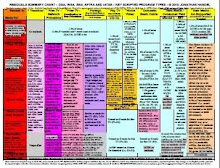
For details, see my Hollywood Reporter piece.
Showing posts with label SAG. Show all posts
Showing posts with label SAG. Show all posts
Tuesday, September 28, 2010

Wednesday, September 22, 2010
Basic Cable Clarification & Details
In yesterday’s post regarding the schedule for this cycle’s negotiations, I said that SAG and AFTRA would be jointly negotiating basic cable starting on November 7. Sources close to AFTRA and SAG have corrected me on this—and provided more details.
My take on this was based on a misreading of a SAG press release from 11 days ago. The actual language in the release was:
The Basic Cable Live Action, Basic Cable Animation and TV Animation contracts negotiations with producers are tentatively scheduled to begin November 7, 2010. As part of the Basic Cable Live Action agenda item, the SAG National Board voted to explore the possibility of coordinated bargaining with AFTRA in the area of live action basic cable programming.
The source close to SAG confirms that SAG has indeed reserved time starting on Nov. 7 for basic cable discussions. So SAG will presumably be having basic cable discussions with the companies unless something unexpected happens. The AMPTP will be present, and the sessions will be at AMPTP headquarters, but the discussions are technically with “authorizers,” which appears to mean some of the AMPTP members plus other companies.
Will AFTRA be a part of those negotiations? That’s where it gets more complicated. Sources close to both unions confirmed that there have been emails and conversations between the two unions, with one source implying that these informal communications have been between the National Executive Directors of the two organizations, David White (SAG) and Kim Roberts Hedgepeth (AFTRA).
Have those communications progressed beyond the informal stage? The source close to AFTRA says they haven’t, and that s/he would expect a formal letter if things were to continue to move forward. The source close to SAG was a bit doubtful that such a letter was even necessary, but wasn’t completely sure.
Regardless of formality, is AFTRA receptive to the idea of coordinated bargaining? The source close to AFTRA said yes, in theory. The caveat was that AFTRA would want to be sure that coordinated bargaining would increase the likelihood of members actually working. S/he added that AFTRA would consider any SAG proposal on coordinated bargaining very seriously.
That comment points out a difference in philosophy between the two unions, at least to date. SAG has a single basic cable agreement. Companies are offered they agreement, and that’s what they have to sign if they want to use SAG members in their productions. Only in rare circumstances are waivers granted.
AFTRA in contrast has four basic cable templates, one of which is similar to the SAG basic cable contract. Two of the contracts are used with smaller networks, such as the CW, while other are used with full-fledged networks. In each situation, there is a choice of two approaches to residuals. Additionally, the templates are subject to negotiation, which is why they’re “templates” (or “contract forms”) rather than “contracts.” The result is so-called “one production only” deals.
The difference in philosophy is this: AFTRA believes that these OPO deals are the best opportunity to prevent shows from going non-union or being produced in Canada. The source close to AFTRA says the union has statistics on this. There were some statistics of this sort in AFTRA’s 2007 magazine article on basic cable. I’m not sure if there are more recent figures as well.
SAG, in contrast, believes that promulgating a single contract is the best way to ensure that guild members receive the full benefit of SAG’s power to negotiate on their behalf, and that a union’s job is to set minimums.
There’s a also a perception, among at least some leaders on the SAG side, that AFTRA does not pursue contract grievances as aggressively as SAG does. Producers and management-side lawyers generally share this belief, and often prefer to deal with AFTRA rather than SAG.
It doesn’t go unnoticed, either, that AFTRA’s approach has enabled the union to achieve greater market share in basic cable. Whether this comes at the expense of SAG, as some believe, or is simply captures programs that would have gone non-union or fled to Canada, is difficult to say.
In any case, the fundamental difference in opinion is clear, and the question is, should a union focus more on obtaining work for members or more on setting minimums? Compromises between these two extremes are obviously possible, but the two goals are obviously in tension with each other.
The importance of coordinated negotiations, and achieving a synchronization of the two unions’ approach to basic cable is that this helps advance the cause of merger. A single, merged union obviously can’t have only one contract and never deviate from it, while simultaneously having four templates and negotiating OPO deals.
The most likely solution is to meet in the middle, and, for instance, have two contracts rather than one or four. Or there might be four contracts but now deviations from them (i.e., no OPO deals, just a choice of contracts). And, perhaps, two of those contracts might b phased out over the next several years. There are all sorts of compromises one might envision, but it’s obvious why the matter is sensitive.
Another reason the matter is sensitive, of course, is that SAG is in the position of asking AFTRA whether it will join SAG and bargain in a coordinated way. This conceptually makes SAG the suitor, and AFTRA the decision maker (or the “decider,” in George Bush’s charming locution). That’s not a comfortable place for SAG to be in and will require delicate maneuvering to avoid bruised egos. Indeed, it’s perhaps a bit surprising that SAG’s board voted to explore coordinated bargaining without assurance that AFTRA’s board would adopt a similar resolution at its board meeting, which was held on the same day as SAG’s.
SAG, AFTRA and the AMPTP had no comment.
Stay tuned for my piece later this week looking at the issues in play for SAG and AFTRA. And watch for my new book “Hollywood on Strike!,” due out next month.
———————
Subscribe to my blog (jhandel.com) for more about entertainment law and digital media law. Check out my residuals chart there too. Go to the blog itself to subscribe via RSS or email. Or, follow me on Twitter, friend me on Facebook, or subscribe to my Forbes.com or Huffington Post articles. If you work in tech, check out my book How to Write LOIs and Term Sheets.
Tuesday, September 21, 2010
Hollywood Labor: The Tyranny of Time
One key to understanding Hollywood labor is a tool that was invented thousands of years ago: the calendar. That much became clear in the last round of major negotiations, which lasted from 2007 to 2009, and featured a writers strike and a SAG stalemate. I covered those events as they occurred, and they’re also the topic of my forthcoming book, “Hollywood on Strike!,” which is due out next month.
So with the SAG-AFTRA negotiations upon us, let’s look at what the 2010-2011 bargaining cycle has in store.
SAG and AFTRA
The SAG and AFTRA negotiations with the AMPTP (studio alliance) begin on Monday the 27th, less than a week away. They’ll focus on the SAG Codified basic Agreement (which covers film and television), SAG Television Agreement (a supplement which adds more detail regarding television), and AFTRA’s Exhibit A (which covers primetime scripted television). Exhibit A is largely, though not entirely, composed of cross-references to provisions in the SAG agreements.
These negotiations are under the framework of the Phase I agreement, which has governed SAG-AFTRA joint negotiations with the studios for the last 29 years, with the notable exception of the last negotiating cycle.
On November 7, basic cable negotiations may occur. See http://digitalmedialaw.blogspot.com/2010/09/basic-cable-clarification-details.html for details.
The November 7 date seems to assume that SAG, AFTRA and the AMPTP will reach agreement prior to then. This is expected, but is not a given. The SAG and AFTRA contracts don’t expire until June 30 next year, but the studios insisted on early negotiations in order to reduce the likelihood of brinksmanship, stalemate or strike. This was particularly important to them in light of the nearly year-long SAG stalemate during the last negotiating cycle.
However, timely completion of the contracts seems likely this time because of a seemingly unrelated issue: merger of SAG and AFTRA. The actors—SAG’s leadership in particular—want to spend 2011 working towards merger of the two unions.
That ties the negotiating schedule into the SAG election schedule. SAG president Ken Howard will be up for reelection in the 2011 summer-fall election cycle. In order to best position himself for reelection, it’s important that he and his Unite for Strength faction to show progress on merger prior to the time campaigning begins, which is typically in June or July.
That imperative, in turn, means completing the AMPTP negotiations in November, so that there’s sufficient time to work on merger. The “urge to merge” also has some implications on negotiating issues themselves, as I’ll discuss in a future article.
Of course, one side’s imperative is the other side’s leverage. The AMPTP knows that it’s important for the actors to get their deal done by November, and will be able to hold the unions up against the wall of that deadline if need be. The AMPTP now doubt opposes merger—why would management want to deal with a more unified bargaining representative—and that means they will seek to extract concessions if they’re going to agree to deal points that make merger easier.
DGA
Moving on: In mid-November, the DGA will begin formal negotiation of their film and television agreements, which also expire June 30. Those agreements include basic cable, so there isn’t a separate agreement for that medium as there is for SAG and AFTRA.
The creative rights aspects of the DGA agreements will be negotiated at the same time, but directly with the studio CEOs. This may be the only place in Hollywood labor where negotiation is explicitly reserved to the CEOs, rather than the AMPTP—whose entire purpose is, after all, to negotiate labor agreements.
This extraordinary arrangement reflects both the power of the DGA and the key importance to the guild of maintaining the creative control enjoyed by directors. Or film and TV movie directors, at least. Television series directors march to the tune set by the writer-producer, i.e., the showrunner.
Although the DGA’s formal negotiation don’t start until mid-November, the guild has said they will start informal negotiations prior to then. They may well have done so already. This timing here allows the AMPTP to use the DGA as a shield against SAG-AFTRA contract proposals that the studios consider excessive.
For instance, if the DGA and AMPTP informally agree in September or October that wage increases will be a particular percentage, then if SAG and AFTRA insist on a higher percentage, the AMPTP can demur, confident in the knowledge that they can do a deal with the DGA that will set the pattern on the issue.
Likewise, if the DGA decides that certain new media issues are not important, SAG and AFTRA will have an uphill fight to extract concessions from the AMPTP on those particular issues. Indeed, the DGA has already said publicly that new media will not be a focus of their discussions. So, SAG and AFTRA are already in a difficult place on those issues.
The DGA’s policy of informal pre-negotiations also means that few formal sessions are necessary to reach a deal. Last negotiating cycle, for example, the DGA and AMPTP held just five days of formal bargaining. That’s why this year’s mid-November start date probably means a deal will be reached before Thanksgiving, which falls on November 25th. That allows for roughly 7 weekdays and one weekend of formal sessions.
WGA
And what of the Writers Guild? Those negotiations have not yet been scheduled. They won’t start until mid-January at the earliest, since little business can get done in this industry between Thanksgiving and New Year’s.
That timeframe is a problem, because the WGA usually takes far more than 5 days to reach agreement with the AMPTP. Moreover, their agreement expires two months earlier than the actors’ and directors’, on May 1. That’s a 3-1/2 month window to conduct negotiations.
Such a short window may encourage studios to begin stockpiling feature film scripts later this year, if they haven’t already. That’s because it typically takes two or more months to write and revise such scripts. The studios don’t want to be left with nothing to shoot during the summer, for fear of not having a steady supply of product. Also, early summer is particularly important time for shooting movies that use network television actors, since that’s when they’re on hiatus and thus available for film work.
Television stockpiling, in contrast, probably wouldn’t start until sometime in the spring, as May 1 first approaches.
Writers are aware that this year they’re the caboose and thus are left with little leverage. This may encourage their guild to bargain down to the wire in an attempt to exercise what little power they do have. Thus, the WGA negotiations may turn into a game of chicken, since such brinksmanship is unlikely to translate into a strike authorization, let alone an actual strike, so soon after the devastating 2007-2008 strike.
A middle ground is also possible, which is that the WGA works without a contract for weeks or even months. The dynamics are hard to predict: strike architect David Young is still the union‘s executive director, but the president is now the more moderate John Wells.
Summing Up
In any case, one thing is clear: if SAG and AFTRA are unable to reach a deal by November, the picture looks very different. In this scenario, the DGA will do its deal in November, and then SAG, AFTRA and the WGA will be in play in the spring. This would impede the actors unions’ progress towards merger, but would give SAG, the WGA and AFTRA the ability to threaten a joint strike. Thus, merger and strike threats are at poised against each other quite starkly as contrasting strategies in this negotiating cycle.
Later this week: A look at the issues in play for SAG and AFTRA.
———————
Subscribe to my blog (jhandel.com) for more about entertainment law and digital media law. Check out my residuals chart there too. Go to the blog itself to subscribe via RSS or email. Or, follow me on Twitter, friend me on Facebook, or subscribe to my Forbes.com or Huffington Post articles. If you work in tech, check out my book How to Write LOIs and Term Sheets.
Friday, August 20, 2010
SAG Feels its Own Labor Pains
Labor unrest is hitting SAG close to home.
Negotiations between the actors guild and Teamsters Local 986, which represents more than 40 of SAG's Los Angeles-based business representatives, have gotten bumpy. The contract between the parties expired June 1, and one issue still to be resolved is what wage increases the new deal will grant.
Yes, even unions have unions. In this negotiation, SAG functions as management, not labor. After about a dozen meetings, the two sides are far apart, with the key sticking issues being wages and a SAG proposal to require the employees to arbitrate discrimination and sexual harassment claims rather than file them in court.
For more details, see my piece in The Hollywood Reporter: http://www.hollywoodreporter.com/hr/content_display/news/e3i7ac2488e5367c3860b8b6e94dda149c5.
———————
Subscribe to my blog (jhandel.com) for more about entertainment law and digital media law. Check out my residuals chart there too. Go to the blog itself to subscribe via RSS or email. Or, follow me on Twitter, friend me on Facebook, or subscribe to my Forbes.com or Huffington Post articles. If you work in tech, check out my book How to Write LOIs and Term Sheets.
Tuesday, August 10, 2010
Rosenberg v. SAG Lawsuit Dismissed
The lawsuit filed 1-1/2 years ago by SAG's then-president Alan Rosenberg against his own union has finally been formally dismissed, according to court records and a source with knowledge of the matter. The formal dismissal actually came in late July, but appears not to have previously been reported. The dismissal was expected, as the judge had ruled on the matter a month earlier.
The action ends with a whimper a suit that attempted to reinstate SAG's previous National Executive Director, Doug Allen, and impede the ultimate achievement of the 2009 agreement between SAG and the studios and producers.
———————
Subscribe to my blog (jhandel.com) for more about entertainment law and digital media law. Check out my residuals chart there too. Go to the blog itself to subscribe via RSS or email. Or, follow me on Twitter, friend me on Facebook, or subscribe to my Forbes.com or Huffington Post articles. If you work in tech, check out my book How to Write LOIs and Term Sheets.
Tuesday, June 22, 2010
Silly Lawsuit Against SAG Dismissed; and More
Remember the lawsuit that former SAG president Alan Rosenberg and three other Membership First members (1st VP Anne-Marie Johnson and board members Diane Ladd and Kent McCord) filed against their own union?
No? You may have blissfully forgotten this misbegotten legal action, filed a year and a half ago (!), but the courts haven’t. This is the lawsuit that attempted to reinstate former SAG National Executive Director Doug Allen and undo ratification of the SAG-AMPTP collective bargaining agreement. In a case of chasing a horse that’s left the barn, and despite two court decisions that the action was moot, the lawsuit drags on.
Or maybe not. This morning, yet another judge declared the lawsuit moot. That’s five judges total, since one of the previous decisions was by a three judge panel. In a statement, SAG’s Deputy National Executive Director and General Counsel, Duncan Crabtree-Ireland, said “Screen Actors Guild is gratified that this litigation has now concluded with a final reaffirmation of the Guild's position by the trial court.”
Let’s hope. Interestingly, in their opposition filing, the plaintiffs did not oppose dismissal of their complaint. But an observer pointed out that the plaintiffs have crafted their document, and their statements in the courtroom, so as to tee up a motion for attorneys fees. In other words, Rosenberg et al. will probably ask the court to order that SAG pay Rosenberg et al.'s attorneys fee for bringing a case that five judges declared moot and that at the end of the day Rosenberg's own attorneys were willing to dismiss!
——
In other guild and union news of late:
· In a surprising move, SAG’s Unite for Strength faction reached across the aisle and chose Membership First hardline David Joliffe as the chair of the Negotiating Committee for the AMPTP talks that begin October 1, reports SAGWatch.
· Those talks involve both SAG and AFTRA, negotiating together once again after a bitter hiatus in the last negotiating cycle. In order to make the schedule for joint negotiations work, AFTRA leadership has agreed to a one-year extension to its so-called “front of book” – the portion of its agreement with the AMPTP that covers daytime serials (soap operas) and various other work whose jurisdiction is not shared with SAG.
The extension, which runs through Nov. 15, 2011, is noteworthy for two reasons. First, the compensation increase, effective Jan. 1, 2011, is 2.5% (2% increase in minimums and 0.5% increase in pension and health contributions), significantly less than the 3.5% that was agreed to in the last negotiating cycle, which began before the economy had spiraled into recession. That 2.5% may well set a precedent for the October 1 negotiations.
Second, the extension does not change the new media provisions in any way. This suggests that any changes will be handled in the October 1 negotiations. Those issues will probably be hard fought.
The extension goes out for a vote in a few weeks to membership meetings in the five major AFTRA Locals of Chicago, Los Angeles, New York, San Francisco and Washington/Baltimore.
· Speaking of front of book, a new version is now available from AFTRA, incorporating the changes agreed to in 2008. Yes, these books take a while to revise, and, alas, the AFTRA book still uses the same almost unreadable tiny typeface as previous editions. None of the other guild/union books do, and the WGA has even moved away from the small format books to a large size that’s more manageable.
A noteworthy change in the AFTRA book: Ex. A (the portion that is jointly negotiated with SAG) is no longer included. Word is that there will be a separate Ex. A book eventually, but no information on when. That book, if and when it appears, will presumably incorporate the results of the Oct. 1 negotiations.
· It turns out even unions sometimes have unions. SAG does – in particular, a few dozen of its employees are represented by Teamsters Local 986. The contract between SAG and 986 expired June 1, and negotiations are ongoing. In a statement, SAG declined to provide any details on progress: “Screen Actors Guild and Teamsters Local 986 continue to negotiate for a successor agreement. Having agreed to bargain across the table and not in the media, SAG will have no further comment at this time.”
· The Writers Guild voted a few days ago to revise its credit rules. Variety has details on this relatively technical change. And speaking of WGA credits, why not have end credits for “Additional writing by,” so that all participating writers get credit? Decades ago, the WGA agreement provided for a credit of this sort, but it was eliminated in order to create the often-fictional idea that only a small number of writers contribute to a script. The result: caterers get credit and many writers don’t.
· In other WGA news, the WGA West announced 18 candidates running for 8 open board seats: Robin Schiff, David Shore, David A. Goodman (inc.), Cheryl Heuton, Aaron Mendelsohn (inc.), Katherine Fugate (inc.), Timothy J. Lea, Mick Betancourt, Mark Gunn (inc.), Erich Hoeber, Erica Montolfo, Matt Pyken, Naomi Foner, Karen Harris (inc.), Kathy Kiernan (inc.), Christopher Keyser, Steve Skrovan, Matthew Weiner. (inc. means incumbent, and the order of the list was determined by lot). There will be a candidates night Sept. 7 in LA. Voting is by mail or at the WGA annual meeting Sept. 16, with ballots counted the next day.
· This summer is also SAG election season. The president is not up, but 1/3 of the board is. Candidates are usually announced in late July, with voting closing in late September. No details as yet.
· The WGA East (which has a snazzy new logo) announced 23 new digital media signatories to new contracts, bringing the total number of WGAE digital signatories to 43. Twenty eight writers have become new Guild members as a result of the new contracts.
· Finally, an item from a couple months back: AFTRA and the AFM, which represent recording artists and musicians respectively, sent a letter to the Teamsters supporting efforts by composers and lyricists to unionize. The Teamsters are assisting the efforts of the music scribes, who are among the few non-unionized workers in the business (with computer effects workers being another large group). No word on any progress though.
———————
Subscribe to my blog (jhandel.com) for more about entertainment law and digital media law. Check out my residuals chart there too. Go to the blog itself to subscribe via RSS or email. Or, follow me on Twitter, friend me on Facebook, or subscribe to my Forbes.com or Huffington Post articles. If you work in tech, check out my book How to Write LOIs and Term Sheets.
Wednesday, April 28, 2010
DGA to Negotiate on SAG & AFTRA's Heels
The Directors Guild announced on its website today that it will begin negotiations with the AMPTP (studio alliance) in mid-November, which is immediately after the scheduled end of 45 days of negotiation between the AMPTP and SAG (Screen Actors Guild) & AFTRA (a smaller performers union).
The DGA contract (like those of SAG, AFTRA and the WGA) expires in mid-2011, but the DGA always negotiates early. Still, the announcement puts enormous pressure on SAG and AFTRA to conclude an agreement in October or early November of this year. If they don’t, the DGA will step in and do a deal first, setting a template that SAG and AFTRA may not like. Indeed, the announcement also says that the DGA will engage in informal discussions with the AMPTP before mid-November, which will prepare the DGA to do a deal promptly before the holiday season sucks the wind out of the town.
The prospect of the DGA stepping in, and the fact that it will negotiate informally even before then, could reduce SAG and AFTRA’s leverage, though at least one industry observer familiar with the situation said that SAG does not consider the DGA scheduling a cause for concern. Still, the DGA timing may reduce the likelihood of significant change in the new media provisions of the contracts, unless the DGA is pushing for the same changes as well. Hopefully, SAG, AFTRA and the DGA will coordinate their proposals. The timing of the DGA negotiations increases the likelihood that they will.
SAG, AFTRA and the AMPTP declined to comment.
The DGA announcement is below.
———————
Subscribe to my blog (jhandel.com) for more about entertainment law and digital media law. Check out my residuals chart there too. Go to the blog itself to subscribe via RSS or email. Or, follow me on Twitter, friend me on Facebook, or subscribe to my Forbes.com or Huffington Post articles. If you work in tech, check out my book How to Write LOIs and Term Sheets.
———————
Negotiations Announcement from DGA President Taylor Hackford and Negotiations Chair Gil Cates (April 28, 2010)
"We have reached an understanding with the AMPTP to begin formal negotiations for a new agreement in mid-November of this year, after the scheduled AFTRA-SAG negotiations begin on October 1.
"As is our custom, we will engage with the AMPTP to clarify and narrow the issues before the beginning of formal negotiations. We will use these discussions to confirm that both parties are committed to negotiating a fair agreement that will protect the economic and creative rights of DGA members while accomplishing the important objective of keeping our industry working in this challenging period.
"Following our traditional practice, the DGA began serious preparations for these negotiations well in advance of our contract expiration. In January, the National Board appointed Gil Cates as Negotiations Chair. Our consultants and research department have begun updating our business and revenue forecasts and assimilating the data collected in the last few years. Our councils, committees and staff have also begun their work to identify issues and prepare proposals.
"Our full Negotiating Committee will be appointed in June and will begin meeting this summer to prepare the DGA proposals.
“We wholeheartedly support SAG's and AFTRA's decision to move forward with joint negotiations and wish them every success when they begin their own negotiations with the AMPTP in October."
Wednesday, April 7, 2010
A “New” Entertainment Union - And a Possible Name
AFTRA is interested in merger with the Screen Actors Guild, but not if the effort is going to fail again. So we learn from an article appearing in the just-mailed Spring 2010 issue of AFTRA Magazine. The union makes clear that any such effort will encompass all of its members, and emphasizes that the goal is “creating one media and entertainment union for all actors, performers and broadcast journalists.”
SAG reacted favorably, with guild president Ken Howard remarking in an email to me, “I’m delighted to see AFTRA’s leadership speak out forcefully about something that I and other SAG leaders so strongly support. Joining SAG and AFTRA to create a single union is essential to performers’ maximizing their power. It’s undoubtedly an idea whose time has come.”
(AFTRA, for the non-laborites among my readers, is the American Federation of Television and Radio Artists. The Screen Actors Guild (SAG) and AFTRA share jurisdiction over scripted television programming.)
So far, nothing unexpected. But what is new is the letter’s proposal that the new union have “a structure where no single city or no single category of member—actor, recording artist or broadcaster—is able to unilaterally impose its will on everyone else.” That description could just as well apply to AFTRA’s own current structure. SAG’s governance is quite different, and a simple majority of the
Adopting a more AFTRA-like structure is bound to sit poorly with SAG’s Hollywood-based Membership First Faction. That’s the same stale group that has previously disparaged AFTRA and that caused the year-long contract impasse that cost SAG dearly. However, even non-MF
Meanwhile, also new is the article’s conceptualization of the effort not as merger, but as the creation of “A New Union for a
The article stresses that power should be the main goal, with other factors – elimination of duplicative dues, easing the ability to qualify for pension and health plans, and reduction of redundant administrative costs – treated as secondary. I wouldn’t downplay those secondary advantages quite as much as the article does, but the point is clear.
What’s less obvious from the piece is how creation of a new, merged union would increase union leverage. The article, styled as an open letter from AFTRA elected leadership (Roberta Reardon, Bob Edwards, Ron Morgan, Matthew Kimbrough and Lainie Cooke), notes that on the management side, many of the same companies are the employers of actors, other performers and broadcast journalists. (This is less true of another category of AFTRA member, musicians, since only one of the big four labels, Sony Music, is owned by an audiovisual company.)
However, this is less significant than it seems. The fly in the ointment is that since these different categories are employed under different contracts, each with no-strike clauses, joint strikes would be impossible. Does that mean that the letter is no better than a misaddressed email?
Not necessarily. On the contrary, I think the article is on to something if the goal is to create a larger community of interest among the different categories of member. It will, however, take assertive cross education and meetings between different type of workers – in other words, cross-category community building – in order for this to play out. Even if cross-category strikes are impossible, solidarity picketing and informal pressure may not be – just as we saw when SAG supported the Writers Guild during the latter’s strike. That support ultimately was one key to ending the 100 day labor dispute.
Cross education won’t be easy. The article pictures a commonality of interest, citing “salary reductions and added work responsibilities facing broadcasters, declining quotes and reduced work opportunities for actors or record labels’ imposition of ‘360 deals’ on recording artists” as though they were one and the same thing. However, it takes a bit of digging to identify technology as the common factor, since its manifestations are somewhat different – and, thus, so are the implications for labor.
Is technology a strong enough thread out of which to weave a community of interest? After all, technological change affects nurses, autoworkers and lawyers too, yet that doesn’t mean that these groups have enough commonality to foster solidarity between them. Do media workers? Maybe so, but it will take more fleshed out examples to make the point., and hard work to accomplish the goal
Nonetheless, SAG-AFTRA merger is a smart move for media workers. It is, at the least, a step in the direction of creating a larger community of interest and it addresses the dues, pension and health plans, and administrative costs issues. Moreover, it would make it harder for management to play SAG and AFTRA off against each other in negotiations.
The article alludes briefly to “secondary micro-issues” that helped scuttle merger the last two times it was attempted. In my view, those issues deserve a fuller airing well in advance of a merger attempt. The key issues are merger or revision of the health plans, merger of the pension plans, and the name of the new union.
Merger or revision of the health plans seems doable. After all, companies change health plans with some frequency; why can’t two unions, or a new union, change health plans and converge to the same plan? Merger of the pension plans is a more technical issue, and there probably needs to be an au current study done.
The third issue is the one that makes for a nice political football: should the new union be called SAG, AFTRA, AIMA (a proposal during the last merger attempt), or something different? MF partisans have a clear opinion: “You’ll pry my SAG card from my cold, dead hands” seems to be the thinking. Indeed, some probably intend to be buried with their cards.
Extreme or not, there is a reality here: a SAG card is aspirational, whereas an AFTRA card is not. The buff young trainers at my gym sidle up to me and in a whisper beg to learn how they can get their SAG cards. Do I have any in’s with the staff? Is there something I can do? If only the answer were yes, I’d probably have dates every Saturday into eternity. An AFTRA card, in contrast, might be enough for a free workout on a slow day.
Why the difference? Three reasons, probably:
First, as SAG partisans point out, “SAG” is a brand name with greater name recognition, or brand equity, as trademark experts like to say. With due respect to my AFTRA friends, the SAG partisans are right: clearly, more of the general public has heard of SAG than of AFTRA.
Second, “SAG” symbolizes the glamour of the movies; AFTRA symbolizes the technology of TV. Would you rather be 20 feet tall on a movie screen or 20 inches tall on a TV screen? Leave aside the reality that most people watch most movies on home video anyway, movies still have a cachet that television doesn’t.
Third, anyone can get an AFTRA card if they pay the initiation fee. In contrast, SAG is an exclusive club, albeit one with 126,000 members, two-thirds or more of whom don’t work as performers in any given year. Here again, the reality isn’t nearly as seductive as the perception, but so it goes.
So are we stuck in a world where SAG has to discard its name, which I think it will never do, or AFTRA has to accept “SAG” as the name of a merged union, which is also unlikely? No. The solution is easy, and it’s the same approach that was chosen when two rival union federations, the American Federation of Labor (AF of L) and the Congress of International Organizations (CIO) merged in 1955. The name of the merged organization? The American Federation of Labor and Congress of International Organizations – unwieldy, but no one calls it that. They call it the AFL-CIO. Short and simple.
And so would be the obvious equivalent for SAG and AFTRA: “SAG-AFTRA.” It’s short, easy to pronounce – easier than AFTRA-SAG – and it puts the union with the larger membership and more name recognition first. It’s a name that may be the best hope for a merger – or creation of a new union, call it whichever you prefer.
Will a new name require mental adjustment? Of course. No doubt the transformation of the Screen Writers Guild and Television Writers Guild into the Writers Guild of America required adjustment too. Ditto the mergers and name changes that led to the Directors Guild.
But SAG hardliners, ask yourself this: would you rather adjust to a new name, or do you prefer to deny health care to yourself and your family when you split work between the two unions and fail to meet either one’s threshold for coverage? Do you like paying two sets of dues and watching management play ping pong with two unions?
Sunset Boulevard got it wrong: the pictures – and the salaries – are getting smaller. It’s the companies that got bigger. Maybe it’s finally time for the unions to get bigger too.
———————
Subscribe to my blog (jhandel.com) for more about entertainment law and digital media law. Check out my residuals chart there too. Go to the blog itself to subscribe via RSS or email. Or, follow me on Twitter, friend me on Facebook, or subscribe to my Huffington Post articles. If you work in tech, check out my book How to Write LOIs and Term Sheets.
Saturday, February 27, 2010
AFTRA Board Approves Joint Bargaining With SAG
At a videoconference meeting today in
Assuming SAG and AFTRA sign a formal agreement to bargain jointly – which seems highly likely – the negotiations with the AMPTP (studio alliance) will be conducted under the terms of the Phase One agreement that had been used for decades, with the notable exception of the most recent negotiating cycle, in 2008-2009. That’s good news for an industry that can ill-afford another strike or year-long stalemate.
In addition, a non-disparagement agreement will be in place, which should help keep tempers from flaring publicly, particularly on the part of the SAG hardline minority. Again, good news.
In a statement, AFTRA National President Roberta Reardon cited “productive discussions with our counterparts at Screen Actors Guild” and added, “I look forward to continuing our work with SAG President Ken Howard and the leadership and members of our sister union as we move forward to bargain the strongest possible contracts for professional talent.” SAG was equally enthusiastic, commenting through a spokeswoman that the AFTRA vote was “terrific news for the memberships of both unions and we look forward to an effective negotiation."
Negotiations between SAG and the AMPTP are currently scheduled to begin October 1 and run through November 15. Whether the date may have to be adjusted to accommodate AFTRA is unclear, since AFTRA’s own Network Code negotiations may bump up against the October 1 date, but shifting the October 1 date would cause the end date (November 15) to slide into Thanksgiving week. After weeks of talking turkey at the bargaining table, negotiators will probably be ready for their holiday.
The AFTRA press release is below.
———————
Subscribe to my blog (jhandel.com) for more about entertainment law and digital media law. Go to the blog itself to subscribe via RSS or email. Or, follow me on Twitter, friend me on Facebook, or subscribe to my Huffington Post articles. If you work in tech, check out my book How to Write LOIs and Term Sheets.
———————
AFTRA National Board Approves Joint Bargaining with SAG on Primetime Television
Ratifies New National Public Television Agreement
LOS ANGELES AND NEW YORK (Feb. 27, 2010) --- The National Board of Directors of the American Federation of Television and Radio Artists (AFTRA), a national union of more than more 70,000 performers, journalists, broadcasters, recording artists and other talent working in the entertainment and news media, met today by videoconference plenary in Los Angeles and New York.
The AFTRA National Board unanimously voted to approve a recommendation by a subcommittee of the AFTRA Strategy Cabinet to formally engage in joint bargaining under Phase One terms with Screen Actors Guild (SAG) for the AFTRA Primetime Television Contract (Exhibit A of the Network Television Code) and the SAG Television and Theatrical Agreement and under the existing AFL-CIO-facilitated No Raiding/Non-Disparagement Agreement between the two unions. No wages and working conditions meetings or negotiations are scheduled at this time.
The approved motion reads:
“The AFTRA National Board approves conducting the preparation for, negotiation and administration of the 2011 AFTRA Exhibit A Agreement and SAG TV/Theatrical Agreement jointly with the Screen Actors Guild (SAG) under the terms of the Phase One Agreement, as Phase One has been applied in the past, in accordance with the terms and conditions of the AFL-CIO-facilitated Agreement for Negotiation of Commercials Contracts Under the Phase One Agreement (“The Commercials Agreement”). Staff is directed to prepare and execute an agreement that is identical to the Commercials Agreement to cover negotiations of the Exhibit A Agreement and SAG TV/Theatrical Agreement and forward same to SAG for its signature as soon as practicable (with the understanding that the escrow currently held by Amalgamated Bank will be utilized in connection with the EXHIBIT A/TV Theatrical Negotiations Agreement).”
After the vote, AFTRA National President Roberta Reardon said, “I applaud the National Board for taking this important step forward today following our productive discussions with our counterparts at Screen Actors Guild earlier this week, specifically with respect to AFTRA’s heavy negotiating schedule for 2010. I look forward to continuing our work with SAG President Ken Howard and the leadership and members of our sister union as we move forward to bargain the strongest possible contracts for professional talent.”
The National Board also unanimously ratified a successor agreement to the 2002 Extension to the National AFTRA Public Television Agreement. The new three-year contract, effective March 1, 2010, to Feb. 28, 2013, includes increases in minimum compensation and employer contributions to the AFTRA Health and Retirement Funds, as well as jurisdiction over programs made for or reused in new media.
In her staff report the National Board, AFTRA National Executive Director Kim Roberts Hedgpeth reported on the union’s advocacy to combat Internet theft of intellectual property and copyrighted material including AFTRA members’ performances. Last August, the AFTRA Convention unanimously approved a resolution supporting broadband access for all Americans and calling on the federal government and its agencies to ensure that the nation’s regulatory policies regarding Internet broadband expansion include provisions that effectively protect against copyright theft.
Hedgpeth also reported that, for the period of May 1, 2009, to Oct. 31, 2009, the union has collected more than $6.6 million in claims, grievances, arbitrations, legal proceedings and negotiated settlements on behalf of AFTRA members.
In other action today, the National Board made appointments to the Sound Recordings Code Steering Committee and the Network Code “Front-of-the-Book” Steering Committee. In the coming month, each committee will discuss preparations and a timeline for negotiations of the Sound Recordings Code, set to expire on June 30, and the AFTRA Network Code which will expire on Nov. 15. In further action, the Board authorized the AFTRA Administrative Committee to update these committees as needed depending upon the calendar and needs for negotiations of both contracts.
Additionally, the National Board made appointments to the Broadcast Steering Committee, and the Financial Core and Actors’ Equity Association Relations Subcommittees of the AFTRA National Organizing Committee. The Board also received reports from the Strategy Cabinet and the Finance, Women’s, Broadcast Steering, Young AFTRAns and Equal Employment Opportunities Committees.
The Board also received a report on the successful outcome of the 2010 AFTRA Media and Entertainment Awards held in
AFTRA National Vice President President Shelby Scott, who serves as Union Chair of the AFTRA Health and Retirement Funds Board of Trustees, reported that the Trustees met at the beginning of February and determined that AFTRA H&R Funds are healthy, with the Retirement Fund more than 89% funded –well within the federal government’s “green zone” – and that the AFTRA Health Fund has more than a year’s reserve.
The National Board opened its meeting by expressing sympathy and concern for the citizens of
The National Board is next scheduled to meet in face-to-face plenary session in
Monday, February 8, 2010
Pilots Overwhelmingly AFTRA Again
About 60 pilots for scripted network primetime programs will be shot under AFTRA contracts this year, while few – or perhaps none – will be produced under SAG jurisdiction, according to sources close to the two unions, who spoke on condition of anonymity. This continues a trend that began last year, when roughly 90% of pilots (and 83% of pilot pickups) went AFTRA.
Those numbers, in turn, were a stunning reversal from previous years, which had had SAG garnering about 90% of pilots and 86% of pickups in 2008. But to see such figures two years in a row raises a fundamental question: Is SAG fading out of the TV business?
Maybe so. The ill-will generated by SAG hardliners evidently lives on in the producing community, notwithstanding the electoral change that brought cooler heads last year to the elected and top appointed leadership of the guild. The stalemate and strike rumblings that ensued after the June 30, 2008 expiration of SAG’s contract led many television producers to choose AFTRA jurisdiction wherever possible. SAG finally ratified a new agreement almost a year after the previous contract’s expiration, but the damage to the guild was done.
Also driving the change is the migration of television production from film to digital video: a filmed TV show can essentially only be shot under a SAG contract, but a digital video TV show in most cases can be produced under either union’s jurisdiction. It appears that TV producers are overwhelmingly choosing AFTRA — even though AFTRA wage rates (minimums) are several percent higher than SAG’s.
So, AFTRA’s reach is growing in network primetime scripted programming. That’s only part of the story though. Much of television is non-scripted, non-network or non-primetime: news programs, talk shows, reality, daytime dramas (soap operas), game shows, and more. Those areas, other than scripted cable, are AFTRA’s alone (or are non-union), as AFTRA indicated last summer in a compelling “24-hour TV union” graphic.
This year’s pilot season still has several weeks to go, so the numbers could change slightly, but probably not by much. Last year, for example, as of March 11, there were 70 pilots set for production, whereas the figure for this year as of today is about 60. If the pattern holds, we may see SAG increasingly focused on motion pictures and AFTRA on TV. The transition will be somewhat slow, because existing network primetime scripted series are heavily SAG, but the transition appears to be happening nonetheless.
And what of new media? Those productions tend to resemble TV series more than theatrical motion pictures – i.e., they’re episodic, the budgets are low, they’re shot on digital video, and are viewed on home screens – so AFTRA may end up with the lion’s share of these as well, to the extent that the work is done under union jurisdiction at all.
It’s a murky and confused picture that once again underscores the importance of joint bargaining by the two unions and, ultimately, the likelihood that merger is only solution to the present crazy-quilt jurisdictional overlaps between the two unions.
Spokespeople for SAG and AFTRA had no comment.
———————
Subscribe to my blog (jhandel.com) for more about entertainment law and digital media law. Go to the blog itself to subscribe via RSS or email. Or, follow me on Twitter, friend me on Facebook, or subscribe to my Huffington Post articles. If you work in tech, check out my book How to Write LOIs and Term Sheets.
Sunday, January 31, 2010
SAG Moves towards Joint Bargaining with AFTRA
The SAG National Board yesterday passed a resolution, by a surprising 82% to 18% vote, directing the guild’s president and National Executive Director to “seek engagement with AFTRA in a joint bargaining agreement for negotiation of the Television/Theatrical Contract,” as quoted in a SAG press release. This move is as I predicted in a blog post three weeks ago, based on conversations then with a confidential source.
Those negotiations, scheduled for October 1 – November 15 of this year, would take place “under the terms of Phase One, modeled on the agreement used successfully in the 2009 Commercials Contract negotiations,” per the resolution. Phase One is the 1981 agreement between the two unions under which they have jointly bargained with the studios for almost three decades, with the notable exception of 2007-2009.
The margin was unexpected, since the board is almost evenly divided between factions that support joint bargaining (Unite for Strength and an independent in Los Angeles, and most or all members of the New York and regional boards) and a group (Membership First) that has generally expressed bitter opposition to joint bargaining under Phase One, a framework that gives SAG and AFTRA equal weight on the negotiating committee. (Because of the lateness of the hour, it was not possible to explore this issue with sources, and a call to a SAG spokesperson was not immediately returned.)
The resolution also directs the President, Ken Howard, and National Executive Director, David White, to “bring a recommendation to the National Board at the earliest opportunity.” The urgency presumably stems in part from the fact that AFTRA’s next national board meeting is February 27 meeting, and more generally from the constraints created by the October 1 date and the various processes leading up to it, as I have previously discussed. The TV/theatrical contract doesn’t expire until June 30, 2011, but the agreement reached last year between the studios and SAG mandates early bargaining, specifically, from October 1 through November 15.
The SAG press release is below.
———————
Subscribe to my blog (jhandel.com) for more about entertainment law and digital media law. Go to the blog itself to subscribe via RSS or email. Or, follow me on Twitter, friend me on Facebook, or subscribe to my Huffington Post articles. If you work in tech, check out my book How to Write LOIs and Term Sheets.
———————
SAG National Board of Directors Meets via
Videoconference in
“It was moved and seconded that in light of SAG's historically productive negotiating partnership with AFTRA, the SAG National Board of Directors directs President Ken Howard and National Executive Director David White to seek engagement with AFTRA in a joint bargaining agreement for negotiation of the Television/Theatrical Contract, under the terms of Phase One, modeled on the agreement used successfully in the 2009 Commercials Contract negotiations. President Howard and NED White shall bring a recommendation to the National Board at the earliest opportunity.”
Screen Actors Guild President Ken Howard said, “I am very pleased with the vote and thank the Board for their leadership and foresight on this important issue. I so appreciate the Board’s cooperative spirit in this discussion and throughout the day, and feel confident that our Guild is moving in the right direction.”
In other actions, the National Board voted unanimously to create a National Performance Capture Committee to address the unique concerns and experiences of members who render performances that are recorded using “performance capture” technology across all media, and to advise the Guild on all matters pertaining to work in this rapidly growing area.
The board also approved 83 percent to 17 percent the unanimous recommendation of the finance committee to authorize the extension of existing initiation fee reductions in targeted markets across the country and to have the Guild’s Joint Strategic Planning and Finance Committee review the initiation fee structure nationwide.
Reports
The national board received reports from elected leadership and staff including:
• President Howard memorialized those members who have passed away over the last year reading each name aloud and calling for a moment of silent remembrance. Howard also recognized the recent loss of former Houston Branch President and board member Jim Huston, who passed away January 28, 2010.
Mary McDonald-Lewis, Regional Branch Division board member from Portland, Oregon, delivered a special tribute to Huston, saying, “He stood with his brothers and sisters through the best of times and the worst of times, and did so with resolve.“
• Secretary-Treasurer Amy Aquino delivered a report on the Guild’s second quarter financial results noting that SAG’s revenue and expenses are closely tracking the projections for fiscal year 2010. Aquino also provided an update on investment performance indicating recoupment of certain losses in the Guild’s investment portfolio when compared to the prior year.
• National Executive Director David White reported on the strategic planning efforts underway at the Guild and preparation for negotiations. White updated the board on new institutional and member service initiatives including a revitalized organizing strategy and program. White applauded SAG committee members and staff for their innovative and thoughtful work in key areas including the 2010 SAG Awards, government relations and legislative activities, new media outreach activities, and the LifeRaft Live Streaming partnership with SAG Foundation, among other efforts.
The Board also appointed Deputy National Executive Director of Contracts Ray Rodriguez to the Screen Actors Guild-Producers Industry Advancement & Cooperative Fund (IACF) board and addressed a number of governance matters, including a constitutional amendment regarding written assent procedures; an amendment to Branch rules of procedure; advisory recommendations from the annual national membership meeting; amendments to the election guidelines; and a recommendation to study the feasibility of electronic voting.
The meeting adjourned just after 5:00 p.m. PST.
Wednesday, November 18, 2009
No More Sounds of Silence on the Music Composition Front?
Everyone knows that composers and lyricists make scales ... now they want to make scale as well. Union scale, that is (or, even better, above scale). One of the few non-unionized sectors of Hollywood, composers and lyricists - the people who write music (as opposed to musicians, the people who perform it) - are now in talks with the Teamsters for representation.
It's not as strange as it seems: the macho union of dock workers and Hollywood truck drivers (Teamsters Local 399 on the West coast and Local 817 in New York) also represents casting directors, location managers, and various other tenderfoots. An earlier bid to join the Writers Guild (WGA) apparently gained little traction.
All this according to recent pieces in Variety (here, here, and here) and a long piece today in the LA Times. An early-stage meeting Monday, which had been announced by the Society of Composers & Lyricists (a trade group, not a union) attracted over 300 people, about a third of the 900 who would be covered by a union agreement. About 200 of them signed union authorization cards, but the Teamsters are hoping for two-thirds (i.e., 600 or so) in order to move forward.
In other audible union news, AFTRA recently approved its interactive (i.e., video game) voiceover contract, while SAG voted down its similar pact, representing a rare defeat for SAG's new administration. Despite concerns with some aspects of the contract, that's unfortunate for SAG, because I'm told this sector is only about 25% unionized (AFTRA numbers + SAG's). That means that video game companies can easily move over to AFTRA - or go nonunion. The hard reality is that neither SAG nor AFTRA control the labor supply in this area, leaving them little leverage in negotiations. Sort of like bringing a PS2 to a PS3 meetup.
In still other news on the union front - sorry, I've been busy prepping for my UCLA gig, not to mention working for a living - the California Court of Appeals dismissed as moot an appeal by former SAG president Alan Rosenberg and his fellow Membership First plaintiffs newly-reelected 1st VP Anne-Marie-Johnson and board members Diane Ladd and Kent McCord of their suit against their own union. This cacophony lives on in the lower court, however, still costing the union money, but there's some hope that that court will adopt the appeals court's underlying reasoning and dismiss the entire proceeding on the same basis. Let's hope.
———————
Subscribe to my blog (jhandel.com) for more about entertainment law and digital media law. Go to the blog itself to subscribe via RSS or email. Or, follow me on Twitter, friend me on Facebook, or subscribe to my Huffington Post articles. If you work in tech, check out my book How to Write LOIs and Term Sheets.
Sunday, October 18, 2009
SAG Interim Nat'l Exec Director Hired as Permanent
SAG's Interim National Executive Director David White just got the permanent gig and can drop "Interim" from his title. The vote on today SAG's national board, which began meeting yesterday and is still meeting today for a little while longer, was 70.91% in favor, I'm told, which suggests that a few of the Membership First directors joined the moderate coalition in appointing White to the job.
The appointment is well-deserved: Not only is White a calming and smart presence, but also he, John McGuire, Ray Rodriguez and others on the SAG team have built a record of accomplishment over the last 8 mos. or so, closing one deal after another, including, or course, the biggies (TV/theatrical and commercials). Now the work begins for next round of negotiations, which start in just under a year, believe it or not.
Monday, October 12, 2009
Rosenberg v. SAG: Court of Appeal Implies Appeal May be Moot
Alan Rosenberg is no longer president of SAG, nor even a national board member, but his lawsuit against his own union drags on pointlessly. Believe it or not, he’s still trying to undo Doug Allen’s firing, the appointment of David White, the ratification of the TV/theatrical contract and, no doubt, the discovery of a new ring around Saturn. That last is probably a particularly bitter blow for the ex-president.
Rosenberg and his fellow Membership First plaintiffs 1st VP Anne-Marie-Johnson and board members Diane Ladd and Kent McCord might see some reason to continue the charade, but the Court of Appeal is apparently more skeptical: in a one-paragraph letter to counsel last week, the court asked both sides’ lawyers to be prepared to discuss at oral argument whether the appeal is moot, given that the SAG board reaffirmed Allen’s dismissal and White’s appointment, and the membership at large ratified the TV/theatrical agreement.
The oral argument in this farce is set for a week from tomorrow, October 20, but regardless of what happens, the case continues in the trial court — unless, perhaps, that judge, as well as the appellate judges, can be persuaded that courts have better things to do than try to madly shove toothpaste back into an already discarded tube.
———————
Subscribe to my blog (jhandel.com) for more about entertainment law and digital media law. Go to the blog itself to subscribe via RSS or email. Or, follow me on Twitter, friend me on Facebook, or subscribe to my Huffington Post articles. If you work in tech, check out my book How to Write LOIs and Term Sheets.
Sunday, September 27, 2009
SAG: Four Hardline Horsemen in the National Board Room
Thursday’s SAG election was a victory for the moderate coalition. Yet, strangely enough, the leaders of the losing hardline faction will all find seats on the national board, and will continue to be a shadow government within the union’s Hollywood board—a board on which none of the key moderate leaders will be voting members.
Yes, the moderates (Unite for Strength (UFS) / USAN / RBD / independents) won the national offices – President and Secretary-Treasurer – and picked up additional national board seats and many on the
In fact, paradoxically, 1st VP and failed Membership First presidential candidate Anne-Marie Johnson will probably continue as 1st VP, ex-president Alan Rosenberg will almost certainly be back on the national board in a matter of days despite winning only an alternate seat, MF leader David Joliffe will probably be on the Hollywood board and effectively on the national board, and MF leader Kent McCord continues on the national and Hollywood boards.
Meanwhile, none of the key moderate leaders will be on the
How could the election yield so much change in the national offices and so little in the Hollywood Division? Here’s the scenario [UPDATED: Para. 3 is new.]:
1. The moderates seemingly have 27 seats on the
2. However, look closer. One of those 6 pre-election seats was held by Ken Howard. Under the SAG Constitution and By-Laws, a national officer can’t also be an elected member of the national board or a Divisional board. So, the day he became president, Howard lost his elected seat on the national and Hollywood boards, and, indeed, his name has been replaced on SAG website listings with “(1 TBD).” That leaves the moderates with 26 seats on the
3. But, when it comes to electing officers (such as 1st VP) or selecting replacements for the
4. So, Membership First controls who the
5. Thus, although
6. Elevating
7. MF will also presumably vote to appoint newly reelected board member Anne-Marie Johnson as 1st VP (the VP office from Hollywood) and thus as Divisional chair, to the extent that she doesn’t automatically continue in these offices (note that the updated SAG website still lists her as 1st VP and divisional rules say that the 1st VP is also the chair). This is possible because Johnson ran for two seats in this election—president, but also, as a backup, national board member. She won the latter.
8. As a result, MF will have skilled leadership as voting members in the
9. In contrast, Unite for Strength will have none of its leaders as voting members in the Hollywood boardroom: Ned Vaughn and Assaf Cohen didn’t win seats on the Hollywood or national boards, and Ken Howard and Amy Aquino, as national officers, are non-voting, ex officio members of the Hollywood board, as well as the NY and RBD (Regional Branch Division) boards. One wonders whether Howard and/or Aquino will be able to find time to attend every
10. Note also that the Hollywood board gets to appoint the Hollywood members of the TV/theatrical contract negotiating committee, if there is one, and that
11. Remember too that it was the
Bottom line: SAG’s byzantine governance structure and geographical divisiveness will once again facilitate disunity. Among other things, the question becomes, will SAG and AFTRA be able to reestablish Phase 1 joint bargaining? The divided governance certainly makes it harder.
———————
Subscribe to my blog (jhandel.com) for more about entertainment law and digital media law. Go to the blog itself to subscribe via RSS or email. Or, follow me on Twitter, friend me on Facebook, or subscribe to my Huffington Post articles. If you work in tech, check out my book How to Write LOIs and Term Sheets.
Thursday, September 24, 2009
SAG Moderates Win Presidency, Secr. + Additional 4 Natl Seats
In a victory for the SAG moderate coalition (Unite for Strength / USAN / independents), the UFS candidates for president, Ken Howard, and secretary, Amy Aquino, won the union's national offices.
However, the election was close: Howard's total was slightly less than the two hardline candidates added together (Anne-Marie Johnson and Seymour Cassel) and Aquino's was slightly more than that of incumbent Connie Stevens. So the union is still very divided, and Howard acknowledged that the results were not a landslide and that the union is very divided, while saying that he planned to reach out to MF supporters.
On the national board, the moderates showed strength as well: They picked up 4 of 11 seats in Hollywood and held all of the NY and regional (RBD) seats. I estimate that this brings the moderate's board majority to around 60%, vs. 40% for MF, but that's a very rough calculation and I'm not sure at this point.
On the Hollywood board, the results were more dramatic: 21 of 33 Hollywood board seats went to the moderates. Added to the 6 they (and independents) already control, that's 27 out of 55 - just shy of 50%.
UFS spokesman Ned Vaughn said he expected to see SAG and AFTRA jointly negotiating wih the studios next year. Howard said he'd reach out to AFTRA and the other guids. On the subject of merger with AFTRA, Howard disputed claims from 6 years ago that merger would hurt SAG members' pensions.
The challenge for the moderates is to build a record of accomplishment, hire David White on a permanent basis, build relations with AFTRA and other guilds/unions, pick up more seats in next years' July-Sept elections, then go into negotiations with the studios Oct. 1 (2010, i.e., next year). After that - work on merger. A tough road ahead.
--------------------------
SAG Press Release:
KEN HOWARD ELECTED AS SCREEN ACTORS GUILD PRESIDENT;
AMY AQUINO ELECTED AS SECRETARY-TREASURER
Guild Also Announces Results of National Board Elections
AMY AQUINO ELECTED AS SECRETARY-TREASURER
Guild Also Announces Results of National Board Elections
Los Angeles (September 24, 2009)—Screen Actors Guild today announced results of elections for its top two elected positions. Ken Howard will serve as Screen Actors Guild president and Amy Aquino will serve as secretary-treasurer. Both will serve two-year terms beginning September 25.
Ballots were mailed to 99,485 paid-up SAG members on August 25, and 27,295 were tabulated today, for a return of 27.44 percent. Presidential candidates Ken Howard received 12,895 votes, with Anne-Marie Johnson coming in second with 8,906 votes, Seymour Cassel got 4,838 votes, and Asmar Muhammad received 402 votes.
“I’d like to be among the first to extend my heartfelt congratulations to our newly elected Screen Actors Guild national leadership. I look forward to working closely with our new president, Ken Howard, and new secretary-treasurer, Amy Aquino, as we focus on the wide range of critical issues facing our members in the coming year,” said SAG Interim National Executive Director David White. “I also extend my thanks, and the gratitude of SAG members and staff to Alan Rosenberg and Connie Stevens for their service and sacrifice on behalf of our union.”
“I am deeply honored to be chosen by the membership to lead the Screen Actors Guild,” said Ken Howard. “I campaigned on the promise that I’d do everything in my power to strengthen our position at the bargaining table by building a greater unity with AFTRA and the other entertainment unions, and that’s exactly what I intend to do. Despite the sharp differences that those of us active in Guild affairs sometimes have over strategy and tactics, we need to continually remind ourselves that we’re all on the same team, fighting for the same thing — and by pulling together, we’ll only grow stronger.”
“I am truly honored that the members have entrusted me with this responsibility,” said Amy Aquino. “Progress has already been made toward strengthening SAG’s finances and I want to make sure it continues. Only by fortifying SAG in this way can we hope to ensure the protections that performers need in these challenging times.”
Screen Actors Guild also announced election results for the National Board of Directors. Twenty-two of the 69 national board seats were open for election this year, representing Screen Actors Guild’s Hollywood, New York and Regional Branch divisions.
“It is my privilege to welcome and congratulate our newly elected Screen Actors Guild National Board of Directors for 2009-2010,” said White. “Along with our staff nationwide, I look forward to working with them to pursue a robust agenda as we navigate the Guild through these changing times.”
The National Board members elected today will assume office on September 25 for terms of three years.
SAG’s Hollywood Division elected eleven National Board members; the New York Division elected four National Board members; and seven National Board members were elected from the union’s branches in Chicago, Colorado, Florida, Hawaii, Philadelphia, Portland and San Diego.
National Board members elected from the Hollywood Division: Martin Sheen, Ed Harris, Elliott Gould, Ed Asner, Anne-Marie Johnson, Connie Stevens, Diane Ladd, Dulé Hill, Hill Harper, Nancy Travis, and Marcia Wallace (all three-year terms).
The following were elected to serve as National Board alternates and to the Hollywood Division Board of Directors (all one-year terms). Gabrielle Carteris, Jenny O’Hara, Michael O’Keefe, Clyde Kusatsu, Dawnn Lewis, Doug Savant, Michelle Allsopp, Alan Rosenberg, D. W. Moffett, Joe Bologna, Robert Hays, Jason George, L. Scott Caldwell, Clark Gregg, Patrick Fabian, Bill Smitrovich, Ellen Crawford, Stacey Travis, Mandy Steckelberg, Renee Taylor, Bernie Casey and John Carroll Lynch.
National Board members elected from the New York Division: Sharon Washington, Monica Trombetta, Sam Freed and Liz Zazzi (all three-year terms). Additionally, New York Division members elected Mike Hodge as NY Division President.
The following were elected to serve as national board alternates and to the New York Division board of directors (all one-year terms.) Manny Alfaro, Sheila Head, Marc Baron, Joe Narciso, Jay Potter, Dave Bachman, John Rothman, Kevin Scullin and Justin Barrett.
National Board members elected from the Regional Branch Division: John Carter Brown (Chicago – three-year term), David Hartley-Margolin (Colorado – three-year term), Dave Corey (Florida – three-year term), Scott Rogers (Hawaii – three-year term), Helen McNutt (Philadelphia – three-year term), Mary McDonald-Lewis (Portland – three-year term), Don Ahles (San Diego – three-year term).
Ballots for all eligible SAG members in Hollywood and New York were mailed on August 25 with a September 24 return deadline and were tabulated today by the independent election company Integrity Voting Systems. A total of 13,718 ballots were tabulated in the Hollywood Division (representing 25.25 percent of ballots mailed in the Hollywood Division) and 5,997 ballots were tabulated in the New York Division (representing 26.11 percent of ballots mailed in the New York Division). The number of ballots returned in the Regional Branch elections varied by region.
For complete results, please visit SAG.org.
SAG Presidential Election Close
A well-placed source says the SAG presidential election is very close. It's a reliable source, but only a single source. Caveat emptor. Not surprising, given how long it's taking to get results - over 3-1/2 hrs past first predicted time (6:38 pm vs 3:00 pm, LA time).
SAG Moderates Win NY & Everywhere Else
According to unofficial sources, and as SAGWatch is reporting, SAG moderates have won every open NY Board seat that was up, and all the regional seats that were up as well.
Hollywood results are not in yet (expected in 1.5 hrs or so), but all the seats up in Hollywood are hardline Membership First - thus, they can only lose more seats, or hold Hollywood numbers at best.
Presidential and Secretary results are expected in 1.5 hrs also, but the NY and RBD (regional) results don't bode well for MF, especially since two hardline presidential candidates (Anne-Marie Johnson and Seymour Cassel) are splitting the hardline vote. The interesting question will be whether moderate Unite for Strength candidate Ken Howard achieves a vote total greater than the sum of Johnson and Cassel.
If not, the hardliners can be expected to declare a moral victory, and the signal to AFTRA may be that SAG has still not turned a corner sufficient to realistically talk about merger. Indeed, unless Howard gets well over 60% of the vote, AFTRA may still be gun shy, since 60% is the threshold needing to approve merger. SAG has failed twice in the last decade to achieve that threshold, and AFTRA leaders have indicated that they won't discuss merger unless the signals from SAG are more favorable than they have been.
Either way, management should remember that moderates as well as hardliners have indicated that they will be ready to seek a strike authorization during the next negotiations if necessary, as I reported recently. It's going to take flexible negotiations by management to avoid a meltdown in 2010 (early negotiations start Oct. 1, 2010,just a year away) and 2011.
More later.
Subscribe to:
Posts (Atom)