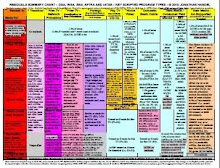
An AFTRA committee, expected to recommend joint bargaining with SAG, instead referred the matter to a subcommittee, the Hollywood Reporter and The Wrap reported. Curious about details, I contacted a source close to AFTRA. (SAG and AFTRA declined to comment.)
The committee that met yesterday is, in fact, AFTRA’s Strategy Cabinet, a key, 25-member committee that advises the AFTRA National Board on important matters. The Cabinet is chaired by AFTRA president Roberta Reardon and includes AFTRA officers and others.
As the Strategy Cabinet’s action indicates, there wasn’t 100% agreement in the room regarding joint bargaining. However, reports my source, there is nonetheless a sense of inevitability that there will, in fact, be joint bargaining. AFTRA wants to develop a framework that it would be comfortable with.
Fortunately, my source indicate that this framework would probably entail only the three well-understood concepts that I discussed in a recent post: (a) 50-50 representation on the negotiating committee (and equal voting strength for all members of the committee), (b) a non-disparagement agreement, and (c) working out the negotiating schedule to accommodate both the joint bargaining (SAG’s bargaining is scheduled for October 1 – November 15) and AFTRA’s always solo “front of the book” bargaining (that portion of their Network Code agreement expires November 15).
As a caveat, the subcommittee to which the Strategy Cabinet referred the matter has not been appointed yet (this is expected in the next few days, and Reardon is expected to be chair), so it may have other thoughts. In any case, these developments make it all the more important for SAG to make decisive moves at its National Board meeting this Sunday towards joint bargaining.
Two other interesting notes from the Strategy Cabinet meeting. One is that AFTRA is continuing with an organizing training program in all Locals whose purpose, I’m told, is to build strength at the bargaining table in AFTRA’s existing areas or jurisdiction, including by increasing AFTRA’s share of work in a variety of areas. Those existing areas include some where AFTRA’s jurisdiction overlaps with SAG’s – scripted basic cable; new media; and video games – as well as other areas that are AFTRA’s alone.
In addition, the Cabinet created a national Actors’ Equity Cooperation Committee to explore with Actors’ Equity areas of mutual interest and concern. This could be a very early step towards merger; who knows? In any case, cooperation, and perhaps a merger, make sense from three very different perspectives.
First, at the level of expensive stage productions, a number of these are mounted by studios (Disney) and/or based on movies. Cooperation or a merger would allow actors to present a united front during bargaining. Bluntly put, the more sources of media conglomerate revenue that actors can threaten, the more leverage they have.
Second, at the level of 99-seat productions (in
Finally, of course, merger would eliminate duplicative dues payments and presumably make it easier to qualify for health insurance and pension for actors who work in both television and live stage. The Equity pension plan, like AFTRA’s, is a defined benefit plan; interestingly, Equity also has a 401(k) plan. (Equity declined to comment for this story.)
Looks like AFTRA may be slowly bringing actors towards the day when all three performers unions merge, though there are certainly many steps between now and then, if indeed it ever happens. Interesting times.
———————
Subscribe to my blog (jhandel.com) for more about entertainment law and digital media law. Go to the blog itself to subscribe via RSS or email. Or, follow me on Twitter, friend me on Facebook, or subscribe to my Huffington Post articles. If you work in tech, check out my book How to Write LOIs and Term Sheets.