Showing posts with label DGA. Show all posts

Wednesday, April 28, 2010

DGA to Negotiate on SAG & AFTRA's Heels

The Directors Guild announced on its website today that it will begin negotiations with the AMPTP (studio alliance) in mid-November, which is immediately after the scheduled end of 45 days of negotiation between the AMPTP and SAG (Screen Actors Guild) & AFTRA (a smaller performers union).

The DGA contract (like those of SAG, AFTRA and the WGA) expires in mid-2011, but the DGA always negotiates early. Still, the announcement puts enormous pressure on SAG and AFTRA to conclude an agreement in October or early November of this year. If they don’t, the DGA will step in and do a deal first, setting a template that SAG and AFTRA may not like. Indeed, the announcement also says that the DGA will engage in informal discussions with the AMPTP before mid-November, which will prepare the DGA to do a deal promptly before the holiday season sucks the wind out of the town.

The prospect of the DGA stepping in, and the fact that it will negotiate informally even before then, could reduce SAG and AFTRA’s leverage, though at least one industry observer familiar with the situation said that SAG does not consider the DGA scheduling a cause for concern. Still, the DGA timing may reduce the likelihood of significant change in the new media provisions of the contracts, unless the DGA is pushing for the same changes as well. Hopefully, SAG, AFTRA and the DGA will coordinate their proposals. The timing of the DGA negotiations increases the likelihood that they will.

SAG, AFTRA and the AMPTP declined to comment.

The DGA announcement is below.

———————

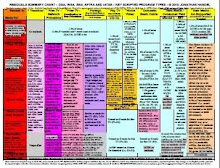
Subscribe to my blog (jhandel.com) for more about entertainment law and digital media law. Check out my residuals chart there too. Go to the blog itself to subscribe via RSS or email. Or, follow me on Twitter, friend me on Facebook, or subscribe to my Forbes.com or Huffington Post articles. If you work in tech, check out my book How to Write LOIs and Term Sheets.

———————

Negotiations Announcement from DGA President Taylor Hackford and Negotiations Chair Gil Cates (April 28, 2010)

"We have reached an understanding with the AMPTP to begin formal negotiations for a new agreement in mid-November of this year, after the scheduled AFTRA-SAG negotiations begin on October 1.

"As is our custom, we will engage with the AMPTP to clarify and narrow the issues before the beginning of formal negotiations. We will use these discussions to confirm that both parties are committed to negotiating a fair agreement that will protect the economic and creative rights of DGA members while accomplishing the important objective of keeping our industry working in this challenging period.

"Following our traditional practice, the DGA began serious preparations for these negotiations well in advance of our contract expiration. In January, the National Board appointed Gil Cates as Negotiations Chair. Our consultants and research department have begun updating our business and revenue forecasts and assimilating the data collected in the last few years. Our councils, committees and staff have also begun their work to identify issues and prepare proposals.

"Our full Negotiating Committee will be appointed in June and will begin meeting this summer to prepare the DGA proposals.

“We wholeheartedly support SAG's and AFTRA's decision to move forward with joint negotiations and wish them every success when they begin their own negotiations with the AMPTP in October."

Friday, July 24, 2009

Fixing the Residuals System

The residuals system is broken. It’s expensive to administer and is an invitation to conflict as platforms such as new media evolve. Yet we need residuals, because talent survives on these payments between gigs. Can the system be fixed?

Yes, I believe so. For a proposal, see my piece in today’s Hollywood Reporter.

———————

Subscribe to my blog (jhandel.com) for more about entertainment law and digital media law. Go to the blog itself to subscribe via RSS or email. Or, follow me on Twitter, friend me on Facebook, or subscribe to my Huffington Post articles. If you work in tech, check out my new book How to Write LOIs and Term Sheets.

Saturday, April 18, 2009

SAG & Studios Agree to Tentative Deal

The Screen Actors Guild and the AMPTP (alliance representing studios and producers) reached tentative agreement yesterday on a two-year TV/theatrical contract, potentially ending a ten-month stalemate that halted production of most studio movies and put thousands of people out of work.

The deal will probably be approved by the SAG board today or tomorrow and ratified by the membership by mid-May, but the hardline MembershipFirst faction has vowed to fight the deal, so ratification, although likely, is not assured. Assuming the deal is in fact ratified (which takes a 50% majority), the stalemate would be over by mid-May. Some production might resume before then, in anticipation of ratification, but this is unknown.

In separate news today, the SAG and AFTRA boards meeting jointly approved the commercials contract reached April 1 with the advertising industry. Ratification ballots will go out to the members of both unions next week, with a return date in mid-May. The deal has wide support among the leadership and is expected to pass easily.

Back to the tentative TV/theatrical deal: Critically, this deal would expire on June 30, 2011, effectively synchronizing it with the Writers Guild, Directors Guild and AFTRA (smaller actors union) deals. That means all four unions will be able to coordinate negotiations and strategy, even to the point of threatening a joint strike by two (WGA and SAG) or three (WGA, SAG and AFTRA) of the unions. (The DGA has essentially never gone on strike, and AFTRA seldom does.)

This synchronicity should give the unions significant leverage, which raises the question of why the studios agreed to it. Probably they needed to restart theatrical film production soon in order to have movies for 2010. That would seem to be the only pressure point SAG had, since the union was widely understood to be unable to strike (a strike authorization would have taken a 75% affirmative vote of those voting, and the union didn’t even seek such a vote for fear of failing).

The gain—synchronicity—came at a price to SAG, however. The new deal compromises the force majeure claims SAG has pending from the 2007-2008 WGA strike. These are claims by actors for lost wages due to the strike, and amount to tens of millions of dollars. It’s unknown as yet how much will be foregone. Also, since the claims were the subject of a pending arbitration process, it’s unknowable how much SAG would have gotten if it had continued to pursue the claims. Thus, it’s hard to calculate the dollar cost of the compromise. The new deal also modifies the force majeure language in the union contract, but the details are unknown.

The deal includes no changes in new media from the AMPTP’s February offer, according to sources. That offer, in turn, is essentially the same as the new media provisions that the DGA, WGA, and AFTRA (in two separate deals) agreed to. (IATSE’s new media provisions are similar in several respects as well.) No change was expected by anyone, yet, ironically, new media was the reason the hardliners stalemated for ten months in a futile attempt to improve on the template accepted in the other five union deals.

The deal will take effect upon ratification, and includes an immediate 3.0% increase in minimum pay rates plus a 0.5% increase in pension and health contributions. A year later, there will be an additional 3.5% increase in minimums, which will run through contract expiration.

In contrast, AFTRA members have been enjoying a 3.5% increase for the last ten months (when AFTRA did its deal), and will receive their 3.0% + 0.5% bump on June 30 of this year. That means that for virtually the entire contract period, AFTRA rates will be about 3.5% higher than SAG’s. In other words, the new deal does not give SAG a double increase in order to catch up with AFTRA.

If SAG wants to ever catch up, they’ll have to seek a double increase in 2011, but that will involve giving up some other issue that SAG would otherwise have negotiated for, and in any case a double increase in 2011 would not be retroactive to the 2009-2011 period. This is part of the damage that the hardliners inflicted on the union.

Speaking of retroactivity, that’s an element that, not surprisingly, this deal doesn’t include either. That means that SAG actors who worked in TV over the last ten months will not receive makeup payments to bring them up to higher minimum pay levels that they would have received if the deal had been done promptly. This also is a result of the delay that MembershipFirst caused by not making a deal almost a year ago. And, of course, the whole issue of expiration date was caused by the hardliners’ delaying tactics.

The deal next goes to the SAG national board tomorrow for approval and then to the members for ratification over a several week period. SAG hardliners will fight the deal—SAG president Alan Rosenberg, 1st VP Anne-Marie Johnson, and former Hollywood board member David Jolliffe are among those who have already spoken in opposition—but I expect it to pass, although not with the over-90% margin the Writer Guild deal did a year ago. The deal will almost certainly go out to the members with a minority statement in opposition. Nonetheless, people are sick of not working and will probably agree that the deal was the best obtainable in a bad economy and with SAG weakened in large part by the hardliners themselves.

One thing that’s clear is that this is a time of enormous change for the Hollywood actors unions. Most immediately, actors have a lot to vote on over the next several months: the commercials contract, the TV/theatrical contract, the AFTRA Board elections, and then the SAG presidential and Board elections, the latter of which are expected to run from July through September.

In addition, several of the Hollywood unions’ pension and/or health plans have made cutbacks (AFTRA, AFM, and IATSE), due to the stock market collapse and to the continued increases in health care costs. Also, SAGWatch reports today that SAG itself is in difficult financial straits, due to MembershipFirst’s mismanagement: loss of union dues due to the production slowdown over the last 10 months, departure of television work to AFTRA due in large part to SAG’s internal strife, the expenses of futile battles with AFTRA and internally, and, most significantly, alleged bloated hiring practices that added 100 staff members to the union payroll. Layoffs are apparently expected, and the LA Times is reporting today that the union has a deficit exceeding $6 million.

SAG’s new leaders have difficult work to do on various other contracts that expired or were ignored on MembershipFirst’s watch, including the franchise agreement between SAG and the town’s talent agents, which expired seven years ago. Then there’s the perennial question of SAG-AFTRA merger, which will probably be a factor in the upcoming SAG elections, as will vituperative arguments about the new TV/theatrical deal and the responsibility for the large-scale decline in SAG’s power and prestige.

Change isn’t limited to the labor side. The AMPTP’s longtime head, Nick Counter, retired several weeks ago. Also, interestingly, the new TV/theatrical deal was negotiated primarily on an informal basis by key SAG leaders and studio heads, not by formal bargaining between the union and the AMPTP. Although AMPTP acting head Carol Lombardini played a part late in the discussions, this process raises questions as to the future role and effectiveness of that organization.

Hanging over all of this are the twin factors of the economy and new media. The troubled economy will continue to harm the entertainment industry for some time to come. New media will continue to evolve, and will probably roil the unions, and the industry as a whole, for a decade or more.

And, of course, with mid-2011 expiration dates set for the WGA, DGA, AFTRA (two deals) and new SAG deals, negotiations will start again in the towards the end of next year. No rest for the weary, or sleep for the sinful, it seems.

———————

Subscribe to my blog (jhandel.com) for more about SAG, or digital media law generally. Go to the blog itself to subscribe via RSS or email. Or, follow me on Twitter, friend me on Facebook, or subscribe to my Huffington Post articles. If you work in tech, check out my new book How to Write LOIs and Term Sheets.

Friday, February 27, 2009

Hollywood Labor Roundup

Keeping you up to date on miscellaneous goings-on in the world of Hollywood labor, here’s what’s happened in the last week or so:

  • SAG Commercials Negotiations. These continue in NY under a press blackout. No news to report.
  • SAG TV/Theatrical Contract. Rumors abound that a top CAA exec or a studio chief might get involved in trying to mediate between SAG and the AMPTP. Unclear if there’s any substance to the reports.
  • Counter Leaving. The AMPTP confirmed what had been an open secret: after 27 years (and after negotiating a staggering 311 union contracts), the studio alliance’s president, Nick Counter, is retiring. That will be effective March 31, 2009. His deputy, Carol Lombardini, executive VP, will serve as acting president, and Counter will continue on as a consultant, including on the SAG negotiations, whenever there are any again.
  • Chernin Leaving. After 20 years at Fox, thirteen of them as News Corp.’s president and COO, Rupert Murdoch’s deputy, Peter Chernin, is retiring. That’s of interest to union watchers because Chernin and Disney’s Bob Iger played a role in brokering a deal to end the writers strike last year. Now it seems less likely that Chernin could play such a role in the SAG stalemate, assuming anybody could.
  • DGA Hires New Media Consultant. Already planning for thee 2011 labor negotiating cycle, the forward-looking Directors Guild has hired new media consultancy Wolzien LLC to study the issues. Wolzien, whose principal (and apparently sole employee) is Tom Wolzien, was one of two consultancies that performed a similar function for the DGA leading up to the 2007-2008 negotiations. (The other firm has never been publicly identified.)
  • WGA Executive Director David Young Defends Writers Strike. Well, what did you expect? Young lays out his case in a statement on the WGA website, which includes a handy chart and a bullet point list (see below).
  • Leno Haled Into WGA Court. Jay Leno is facing the music for writing his own material during the WGA strike, which the WGA contends was a violation of strike rules. No word on a verdict yet.

———————

Subscribe to my blog (jhandel.com) for more about SAG, or digital media law generally. Go to the blog itself to subscribe via RSS or email. Or, follow me on Twitter, friend me on Facebook, or subscribe to my Huffington Post articles.

———————

WGA Chart of Improvements over Studios’ Last, Best and Final Offer

Top of Form


November 4 AMPTP offer

February 9 final deal

Internet ad-supported streaming – in the first year of the life of a television program

Free for 6 weeks; 1.2% of producer's gross thereafter (equal to 0.24% of distributor's gross)

Free for 17 or 24 days; 3% of applicable minimum; switches for network prime time in the third year of the contract to 2% of distributor's gross

Internet ad-supported streaming – after the first year of the life of a program

1.2% of producer's gross

2.0% of distributor's gross

Internet ad-supported streaming feature films

No residual offered = zero

1.2% of distributor's gross

Electronic Sell-Through (Download to Own)

DVD rates (0.3% and 0.36% of distributor's gross)

0.65% and 0.7% of distributor's gross (though the companies are now reneging on covering library product with these negotiated rates)

Internet Download Rentals

1.2% of distributor's gross

1.2% of distributor's gross

Fair Market Value test

Same as 2001 contract

Enhanced test for related-party transactions

Inspection of New Media Deals and Activity reports

None

Rights for quarterly inspections of unredacted company records

Promotional use in new media

Free, however they define it, including ad-supported streaming of complete programs

Clips only are free and only with clearly promotional purpose

Made-for-New-Media

Jurisdiction over dramatic forms only if derived from MBA-covered scripted programs; excludes original, comedy-variety, serials, etc.

Jurisdiction over all New Media programs; terms and conditions applied to all but the lowest-budgeted productions, only when done by non-professional writers

Creator's rights ("Separated" Rights)

None

TV Separated Rights adapted to New Media

WGA List of Improvements Over the DGA Deal

  • The DGA won EST [i.e., Electronic Sell-Through] at 0.65% and 0.7% only for movies and TV first released in 2008. The WGA won EST at 0.65% and 0.7% for our entire library of product – although the companies are trying to renege on this, forcing us to seek arbitration.
  • The DGA won only a small raise in the third year of streaming. The WGA, for the first time ever, won a formula by which the writer will be paid 2% of Distributors Gross in the third year of streaming.
  • The DGA sunsetted all New Media provisions in their contract. WGA accepted no such sunset clause – we don’t want to start from zero in these hard fought areas when we go back to the bargaining table in 2011.

Saturday, January 31, 2009

Hollywood Labor’s Long-Term Future: More Unrest

After a year and a half of Hollywood labor turmoil, we’re finally nearing a SAG deal and the end of this negotiating cycle. Will this be the beginning of a new era of labor peace in the industry?

Unfortunately not. Silicon Valley is not going to suddenly take an Ambien and stop innovating. That means that a scant two years from now, when negotiations for 2011 renewals of the guild and union contracts begin, negotiators will be challenged with even newer forms of “new media,” new business models, and new economic realities.

Thus, the cycle of anxiety, distrust and failed bargaining may begin again. And so on when those renewals expire three years later, and again three years after that, and so forth. Hollywood is now yoked to the computer, Internet and consumer electronics industries, all of which evolve at breakneck speed, dragging slower-moving Hollywood along like a clumsy partner in a three-legged race. That has toxic consequences for the entertainment industry’s labor relations, including, notably, an increased risk of strikes, stalemates and slowdowns.

What to do? I suggest that Hollywood guilds, unions and management form a joint New Media Working Group. This body should have members from management and from the Writers Guild (WGA), Directors Guild (DGA), Screen Actors Guild (SAG), AFTRA, IATSE, and management. Perhaps the AFM (musicians union) should be included as well; I don’t know enough about that union to venture an opinion.

The function of the Working Group would be to analyze and report on developments in new media and the possible resulting effect on existing labor agreements and relationships. The goal would be to track those changes on an ongoing basis and generate various options for addressing them in the collective bargaining agreements.

By doing this work on an ongoing basis, it might be possible to reduce the paroxysms of last-minute activity that characterize the negotiating process today. And, by conducting this work jointly, it might be possible to bring the various unions, and management, onto the same page in their subsequent negotiations: that is, to ensure that everyone has a common knowledge base from which to work.

To do its work, the committee should meet quarterly or even monthly. It will need research support (sharing of data) from all parties, and a budget for purchase of research reports and other such expenses, consultants as necessary, and perhaps a staff person who would travel regularly to Silicon Valley. The committee would build relationships with major players and information sources—agencies, attorneys, other guilds, academics, research firms, tech companies, and the like.

Silicon Valley will continue to innovate, and new media will continue to evolve. Yet, when it comes to guild agreements, the entertainment industry seems content to snooze between contract renewals. Isn’t it time to try a different approach?

Portions of this article previously appeared December 14, 2007, as Memo to DGA - Please Propose a Tri-Guild New Media Adjustment Committee.

———————

Subscribe to my blog (jhandel.com) for more about SAG, or digital media law generally. Go to the blog itself to subscribe via RSS or email. Or, follow me on Twitter, friend me on Facebook, or subscribe to my Huffington Post articles.

Sunday, November 9, 2008

AMPTP, IA to Talk Monday

Negotiations between SAG and the AMPTP (studios) are stalled, and the mediation process seems glacial, so the AMPTP is taking advantage of its free time to negotiate with IATSE, it seems. The two parties are sitting down for talks tomorrow (Monday) and have scheduled three days' worth of sessions, reports Variety.

The IA and AMPTP last met about seven months ago, also for three days. Seemingly, there's no rush -- the IA deal doesn't expire until next August. But on the other hand, the AMPTP would love to be able to announce yet another deal incorporating the new media template that SAG objects to. That template -- a set of provisions regarding minimums, residuals, jurisdiction and other matters -- has been part of four other deals this year (DGA, WGA, and two AFTRA deals).

Wednesday, October 1, 2008

SAG Apparently Seeking Strike Authorization

Lewis Carroll was a master of bizarre fantasy, willful illogic, and headstrong characters. Not surprisingly, that often makes his shape-shifting prose relevant to present-day concerns. Consider Alice’s fall down the rabbit hole:

The rabbit-hole … dipped suddenly down, so suddenly that Alice had not a moment to think about stopping herself before she found herself falling down what seemed to be a very deep well.

Either the well was very deep, or she fell very slowly, for she had plenty of time as she went down to look about her, and to wonder what was going to happen next. …

Down, down, down. Would the fall never come to an end?

Lewis Carroll, Alice’s Adventures in Wonderland

If we were focused on the broader world, we’d note how woefully applicable this passage is to the current economic crisis — will the fall never come to an end?

Or we might look at the sorry state of politics, and ruminate on how we’ve fallen from a potato(e)-head VP (Dan Quayle) to a frat-boy boob of a president, and now to a VP candidate who was mayor of almost nothing just two years ago. Again — will the fall never come to an end?

Our focus is SAG, however, but the question is still relevant. The Hollywood Reporter is reporting that SAG’s negotiating committee will probably approve a measure today asking the guild membership for a strike authorization. Variety is less sure, referring to “speculation” along these lines. But if the Reporter is accurate, we’re off on a journey deeper into Wonderland.

Now, whether an authorization will pass is unknown: 87% of members responding to a guild survey said the guild should keep negotiating for a “better” and “fair” contract, but that’s not the same as saying they’re willing to strike over it — and, critically, only 10% of the guild’s paid-up members even bothered to return the survey.

The other 90% didn’t care enough to return the survey, and many of them are probably sick of guild politics and may not want a strike. Whether they’ll bother to vote is another question, and thus we face the possibility of the 120,000 member guild striking based on the vote of just a few thousand members. That has a rather Carrollian illogic to it.

Then there’s the matter of the subject of the strike: SAG wants to fill some gaps in the new media template agreed to by the Directors Guild, Writers Guild, and AFTRA (twice). Fair enough, except that there’s little money in new media today, and there’s unlikely to be much for the next few years. Thus, those gaps have little immediate impact — and may never, depending on how new media business models evolve. Why not wait, and strike (or threaten to do so) in three years, when there may be more money at stake? Why now?

That, in turn, brings us to the subject of “now,” and back to the economy. Banks are busy failing, housing prices are deflating, and gas prices, though off a bit, are still quite high. Congress seems more capable of running from the problem than solving it, and economists are debating whether this is the worst crisis in 20 years, or in 75.

Into this nerve-wracking landscape strides SAG, apparently willing to trigger a second Hollywood strike in less than a year — i.e., to risk losing real money, and, no doubt, some people’s homes, for the sake of precedent that could be argued over in three or more years, when it really matters. It’s true that precedent, once installed in Hollywood union agreements, is hard to dislodge, but it still seems illogical — in a sort of Carrollian “verdict first, trial afterward” fashion — to strike over issues as incremental and, to date, speculative, as these.

SAG’s appears to be playing a dangerous game: Seek an authorization and fail to obtain it, and the guild’s leverage collapses. That’s a real risk, because an authorization requires 75% yes vote of those voting. With failure comes the possibility that the studios would withdraw the offer on the table, and substitute an inferior one. That’s glory for you, as Humpty Dumpty once remarked.

Seek an authorization and obtain it, and the next step is a vote of the guild’s national Board — controlled now by the newly-elected moderates (Unite for Strength) and their allies in New York and the regional branches. But they’ve only got a razor thin margin, susceptible to disruption by the hardline Membership First faction. What’s more, it’s unclear if UFS would take a stand and oppose a strike. Their leader, Ned Vaughn, was vague when I asked him about negotiating strategy in August (and he hadn’t returned my call seeking comment by the time I wrote this article). Membership First, in contrast, is quite decisive, and its certitude might carry the day: The Board might indeed call a strike if the members grant it the authority to do so.

But if a strike does happen, then what? The studios are unlikely to back down on the new media template they’ve set. The result is likely to be a long, bitter strike, with the possibility that SAG will end up with a worse deal than it’s being offered now. Of course, SAG might prevail. That’s what the hardliners are betting, in any case.

You may be wondering why UFS would even permit the Negotiating Committee to seek a strike authorization in the first place. Answer — they may not have a choice: Membership First still controls many aspects of the guild, including the Negotiating Committee. Moreover, the first national Board meeting isn’t until the 18th. That’s probably the first time the moderates could take a decisive stand, if they’re inclined to do so. (There’s a Hollywood Division board meeting next Monday, the 6th, but Membership First still controls that board.)

In other words, today’s vote (if it takes place as the Hollywood Reporter predicts), is a preemptive strike by Membership First against the new, moderate majority — yet another symptom of the guild’s bitter divisions. Now we’ve left Alice behind, and entered the world of the Italian Renaissance — in particular, the world of cutthroat political strategist Niccolò Machiavelli — and that of the ancient Greeks, who coined the word “hubris,” a word that surely applies to an attempt to thwart the will of SAG voters. Sometimes a rabbit hole leads to Wonderland, but other times to a place far more dangerous. Will the fall never come to an end?

Wednesday, August 20, 2008

New Media Jurisdiction: Letter from the DGA

The DGA has just released a letter from DGA President Michael Apted entitled "Giving New Media Room to Grow." Dated today (August 20, 2008), the letter appears in the September 2008 issue of DGA Monthly.

The letter addresses the question of the jurisdictional carveout for certain media production. I agree with most of it, and present it here. See below for my additional thoughts.

Dear Members,

As we move into the third month of our new contract, I wanted to take this opportunity to address the issue of union jurisdiction over new media production – the question of whether all the writers, actors, and directors who work on studio-produced programming for the Internet must be covered by union contracts. This issue – new media jurisdiction – was central to all the guild negotiations this year because however entertainment evolves over the next few decades, it is clear that a significant part is going to be online.

In our contract negotiations earlier this year, we made the decision to allow an exception to our general policy of insisting on jurisdiction over every show made by the studios and production companies that are signatories to the DGA contract. The exception, which the Writers Guild and AFTRA also chose to include in their new contracts, allows producers to make low-budget “experimental” programs for the Internet that hire people who would not be covered by our contract. However, we built into our agreement a very important protection – if a signatory company on a new media production employs a professional as director or in any other DGA category, regardless of the budget level – that production is covered by the Guild agreement.

Critics of this approach argue that union jurisdiction must be absolute. If some productions are allowed to be non-union, they claim, producers will take advantage of the loopholes and eventually all productions will be non-union. But before there can be a union job, there has to be a job. And despite all the grandiose talk about the coming bonanza, new media hasn’t yet started raining money. The truth is that for new media production to realize its undeniably vast potential – and create all those jobs we want our members to have – it must be given the room to evolve and grow. The current landscape of new media is overwhelmingly populated by user-generated content and all kinds of concepts created by thousands upon thousands of eager novices with digital cameras and new, out-of-the-box ideas. Occasionally, one of these efforts might catch the attention of the studios, and the new media jurisdictional carve-out will allow producers of extremely low-budget productions to take a chance with young, untried writers, directors, and actors who are not members of any union. If their efforts yield fruit and their shows succeed, their budgets will quickly reach professional levels and they will come under union jurisdiction. If they don’t succeed– well, at least they got their shot. That’s the nature of experimentation. We must be flexible to allow that experimentation to flourish.

What would happen if the unions were to demand and be given jurisdiction over all new media production without exception? The most likely scenario is that it would become structurally and economically unfeasible for AMPTP members to make low-budget experimental shows for the Internet. Then two things could happen. First, rather than grow within the studios and companies that are guild signatories, new media production would gravitate toward the Googles and Microsofts of the world, which are not. Second, to stay competitive in the game, the studios are likely to create non-union subsidiaries where they could produce Internet programs without bothering to become signatories at all. At this point, the talent guilds would be in danger of being pushed out of new media. Were an experimental show to succeed, it wouldn’t come under union jurisdiction, nor would the writers, actors, and directors who created it.

Even if the studios were persuaded to make low-budget new media production under union jurisdiction, this could result in another problem. Many of those untested novices would be required to pay DGA initiation fees and dues, potentially forcing the DGA to accept a large number of new members who have been hired to do one experimental project and might never direct again. Frankly, it would not be fair to charge them initiation fees and dues (which they probably couldn’t afford in any case).

So we have a choice. We can insist on having jurisdiction on paper over everything, and thereby run the risk that the area develops in a largely non-union context. Or we can carve out an exception that will allow experimentation, innovation and growth at the lowest budget levels, while simultaneously securing jurisdiction over all professional-level productions. That approach ensures that if and when the producers become successful, the jobs they’ve created will go union. This approach has been successful before. With very low-budget feature films, we designed an innovative, flexible jurisdictional carve-out that allowed the new medium to develop in a way that ensured that once it was ready for professionals, those professionals would be our members.

I believe we’ve made the right decision.

Sincerely,

Michael Apted
DGA President

The new media jurisdictional carve-out would apply only to a production that falls under the following circumstances:

* $15,000 or less per minute; or
* $300,000 or less per episode; or
* $500,000 or less per series of programs produced for a single order;

and does not utilize an employee in any DGA-covered category who has previously been employed under a DGA collective bargaining agreement.


Two points worth adding. First, the dollar thresholds are high -- much higher than almost all new media production today ($2,000 - $5,000 per minute is typical, with occasional productions at $10,000 per minute). I'd prefer to see them lower, and this is (in my view) an unfortunate compromise that the DGA made. But it's the template, and we're stuck with it, as a practical matter.

However, bear in mind that the union-member provision ("and does not utilize an employee in any DGA-covered category ...") means that even if the production is below the overly-generous thresholds, it's still covered if it uses a DGA member.

Second, the WGA, AFTRA, and proposed SAG deals have the same jurisdictional dollar thresholds, and also have similar provisions regarding use of union members. For instance, in the WGA deal, if the show is written by a "professional writer" -- a defined term that includes WGA members, published novelists, and professionally-produced playwrights -- then the show is covered, regardless of budget.

Likewise, the AFTRA deal has a similar provision regarding "covered performers." This term is defined as follows:

A “covered performer” is an individual who has worked under a collective bargaining
agreement and has met any of the following criteria:
.. has at least two television (including free, basic, pay or direct-to-video) or
movie credits;
.. has had 13 weeks’ employment as a performer in radio (including satellite
radio) in a major market;
.. has had at least two credits in a professional stage play (e.g., Broadway,
Off-Broadway, LORT, COST, or CORST contract, or as part of an Equity
National tour);
.. has been employed as a performer on an audio book or as a royalty artist on
a sound recording which has been commercially released by a major or
bona fide independent label;
.. has been employed as a principal performer, announcer, singer, or dancer in
a national television or radio commercial, interactive game, or nonbroadcast/
industrial production.
The Producer shall be entitled to rely on the representation of the performer as to
whether he or she meets the definition of a “covered performer.”
The proposed SAG deal is reportedly similar to the AFTRA deal, and thus presumably includes this language. Thus, if a show uses a SAG, AFTRA or Equity member with two TV or movie credits or any of the other listed credits, then it's covered, even if the budget is below the thresholds.

Monday, June 30, 2008

AMPTP Makes Final Offer to SAG

The AMPTP just made a final offer to SAG. I'm advised by a AMPTP spokesman that this offer tracks the AFTRA and DGA/WGA deals in terms of minimums, new media, and other provisions. On force majeure (an actors-only issue), the AMPTP offer holds to the AMPTP's previous position that the existing contract language should be revised.

The AMPTP spokesman confirms that this is a "last, best, and final offer" in legal terms. Such an offer would allow the AMPTP to impose the offer's terms once the SAG agreement expires tonight. However, as the AMPTP press release says, "As SAG's leadership considers our final offer, we will continue for now to work under the terms of the old contract as current productions wind down."

The AMPTP has offered to meet with SAG on Wednesday afternoon to explain the offer, but states that it will not entertain counter-offers.

Wednesday, June 18, 2008

Curtain Call

“We are not done yet!” shouted Screen Actors Guild leader Doug Allen three times at the guild’s anti-AFTRA rally last week. Evidently not, but Hollywood is beyond well-done and beginning to burn. It’s time for SAG to put its full efforts into crafting the best deal it can get, rather than try to derail the AFTRA primetime deal.

Why? Several reasons. For one thing, attempting to defeat the AFTRA deal is a futile exercise. The members of AFTRA – the American Federation of Television and Radio Artists, SAG’s smaller rival – approved a similar daytime deal by an affirmative vote of 93% of those voting. It’s almost impossible to believe that SAG can cut that percentage to 49% – i.e., virtually in half – which is what would be necessary to nullify the deal.

For another thing, even if the incredible were to happen, SAG’s stated goal of persuading AFTRA to then return to the bargaining table jointly with SAG is Pollyannaish. There’s little but bad blood between the unions at this point. Indeed, given that SAG and AFTRA are both headquartered in the same office building, it’s hard to imagine what shared elevator rides must be like. Do people retreat to opposite corners like cold-war prizefighters, or do they simply turn their backs on each other?

The other reason that SAG’s mission in quixotic at best is that some (though not all) of the positions it’s taking are just non-starters. For instance, on clip consent – the issue of whether actors should have the right to veto studios’ online use of excerpts from movie and TV shows – SAG is taking positions at odds with the AFTRA deal and even with what SAG itself apparently originally proposed. That’s a quick road to nowhere.

Another example: SAG is seeking revisions in the new media template already enshrined in the Directors Guild, WGA, AFTRA daytime, and AFTRA primetime deals. That’s largely an uphill battle. SAG’s also not going to get any improvement in the DVD residual, no matter how fair such an increase may be (and I do think an increase would be fair). That’s another pointless venture: None of those four earlier deals contains a DVD increase, and it’s a fair bet that IATSE (representing technical and craft workers) won’t be looking for one either when it recommences its negotiations.

That makes five other contracts that don’t or won’t have an increase. With SAG in last position among the above the line unions (i.e., all but IATSE), it has virtually no leverage to revise the 24 year-old deal that established what the WGA called “the hated DVD formula.” Ironically, SAG put itself in this position. It could have negotiated jointly with AFTRA were it not for a series of decisions that angered the smaller union and gave it an excuse to sever a 1981 joint bargaining agreement. And even after that arrangement collapsed, SAG could have had an extended period of negotiations prior to AFTRA entering the field, had the guild not refused for weeks to set a date to start negotiations. AFTRA’s, and management’s, reactions should have been easy to predict. SAG overplayed a weak hand, allowing management to play one union off against the other, and now the guild finds itself buried under a landslide of precedent.

That’s unfortunate, because the probable result is that SAG will still be sidelined in negotiations – or maybe on the picket lines – while AFTRA begins signing up new TV shows starting sometime after July 7, the date that ratification ballots are due back from the membership. No doubt the smaller union will be vigorous in seeking new signatories and enlarging its reach. After all, AFTRA didn’t negotiate its deal simply to put it up on a shelf and admire it. A weakened SAG will be the consequence. Already, SAG’s own leadership is bitterly divided on tactics and on the inter-union rivalry.

More regrettable is what SAG’s maneuvers are doing to the industry. Feature production is already down significantly, and that trend will only get worse once the SAG deal expires. Whether or not SAG strikes, the town will enter a near-complete work stoppage come June 30. That’s a blow the battered industry and depressed local economy can ill-afford. Let’s be done with labor negotiations, at least until the guild’s commercials contract comes up for renewal this fall, when new media will once again be likely to present difficult challenges and frustrate all concerned. It’s time for SAG to finish its scene, take a graceful bow, and depart the stage.

Saturday, May 24, 2008

Acting Up

CANNES, France – Do loose clips sink ships? Apparently the actors think so. Their ongoing union negotiations with the studios are hung up over clip consent – the issue of whether studios can use short excerpts from movies and TV shows without an actor’s permission. In particular, the question is whether actors should have a veto right when the studios make clips available online or via cell phones.

The issue is arcane, like so much that’s recently bedeviled Hollywood labor. Studios say that seeking consent from every actor in every clip is uneconomical, which would mean no clip revenue for either side (although significant digital revenue is years away in any case). It’s a compelling argument.

Actors respond that they want to control their own images and avoid being overexposed, let alone mashed-up and morphed. That also sounds sensible – until you consider the tens of thousands of clips already available online illegally. Neither the actors nor the studios can control those clips, or pretty much anything else on the Internet. That horse left the barn several years ago, yet management and labor are still arguing over whether to ride English or Western.

There are other major issues in the negotiations as well: Should actors get a bigger piece of DVD revenue? Yes, but they probably won’t, because the writers and directors already passed on the issue, leaving the actors with little leverage. What about union jurisdiction over low-budget new media production? The parties should adopt the nuanced deal agreed to by the directors and writers. Product integration? Force majeure? The former is a type of product placement on steroids, and the latter’s scarcely worth explaining, although it’s not without economic impact; the actors should yield on the first, the studios on the second.

On and on it goes, with mind-numbing complexity. Further confusing matters is a tussle between the two major actors unions, the Screen Actors Guild and the smaller American Federation of Television & Radio Artists. SAG and AFTRA used to negotiate jointly with the studios, but a bitter split led to negotiations this year in alternating bouts: a few weeks of discussions between the studios and SAG, then a few weeks between the studios and AFTRA, then back to SAG again. It’s like a French farce, with doors slamming as parties enter and exit the negotiating room.

Granted, these are complicated talks. Digital media is clouded with uncertainty, subsidiary issues abound, and the contract being amended runs to hundreds of pages. Yet, a sense of perspective seems nowhere in evidence. As the June 30 contract expiration approaches, we slide closer to a second possible work stoppage in the entertainment industry within a year. That could take the form of a lockout – a studio refusal to continue or restart production during labor uncertainty – rather than a strike, which would require a 75 percent affirmative vote, for SAG at least. Even now, feature film production has all but ceased in anticipation of the contract expiration.

If this seems dysfunctional, it is. Hollywood labor is a machine with an enormous number of moving parts, none of them well-oiled. In addition to conflict between SAG and AFTRA, there is disagreement within SAG as well, on geographic lines. Several of the unions are riven by internal strife on class lines also, and most of the unions are at odds with each other, notwithstanding some overlapping membership. Meanwhile, the studio alliance whose only responsibility is to make labor deals was unable to do so this year with either the writers or directors. Instead, several studio chiefs had to be called in to do the job, which will probably be the case with the actors as well.

While the industry endures dissension, strikes and lockouts, Silicon Valley entrepreneurs, none of them unionized, enjoy snacking on Hollywood’s bacon. They’re growing – and gloating – while Hollywood’s slowing. That’s not good news for Los Angeles. In addition, Hollywood is hurt by depression in the global film business, evident in diminished activity here in Cannes at the film market that accompanies the film festival. On the heels of the recent Writers Guild strike, the Los Angeles economy can ill-afford another multi-billion dollar hit.

What to do? It’s time to close the deal, first with SAG, whose productions are more affected than AFTRA’s. Let’s get the studio chiefs back in the room, then hope for rational, mutual self-interest from both sides. The SAG deal would lead to a quick conclusion with AFTRA as well, and the whole industry could get back to the hard work of making light entertainment – and of sustaining the local economy.

First published in the Los Angeles Business Journal.

Wednesday, February 6, 2008

What's the Deal?

We haven't been hearing much detail yet on the WGA deal in process, but here are a few data points:

On ad-supported streaming, Variety says the deal is initially similar to the DGA deal - in other words, a fixed dollar residual. No word if the amount is the same as in the DGA deal, and it might be difficult to make the amounts match exactly, because the fixed dollar amount in the DGA deal is keyed off of provisions in the DGA agreement that may not be identical to those in the WGA agreement.

In any case, note that I say "initially" similar. The WGA agreement has a three-year term. Variety reports that for streaming occurring in the first two years of that term, the fixed amount would apply. In the third year, the residual would be 2% of distributors gross (i.e., the amount that the network receives). This is a great improvement.

In contrast, the New York Post reports that the deal on ad-supported streaming is altogether different: their sources say that it is a tiered system based on viewership (no word on how the tiers would work or what the payment amounts would be). They also say that the 17 to 24-day free promotional window (during which no residuals are payable) has been shrunk to 7 days.

I don't know which of these reports, if either, is correct. However, either one of these approaches would probably be a victory for the WGA.

Variety also reports that the WGA has obtained separated rights for programs created for the Internet. This technical-sounding provision, which has no analogue in the DGA agreement, means that writers could receive various payments if, for instance, material they create for the Internet is later turned into a TV show or movie. That's another win for the WGA.

I haven't heard reports of any other differences from the DGA deal, but no doubt there are some. Also, there are a miscellany of other issues that are WGA specific.

Just for fun, let's look back at the six "roadblocks" the AMPTP cited when it walked out of talks in December:

  1. Reality jurisdiction. The WGA dropped this demand a few weeks ago.
  2. Animation jurisdiction. The WGA dropped this demand a few weeks ago.
  3. Sympathy strikes. Status unknown, but the WGA has probably dropped this demand.
  4. Distributors gross as a basis for residual calculation. The AMPTP conceded this point for the DGA, probably as a result of pressure from the WGA strike.
  5. Self-dealing transactions. The AMPTP gave the DGA some advances in this area.
  6. Industry standards (requirement that subcontracted work be subject to terms of Guild agreement). Status unknown.

Monday, February 4, 2008

Favored Nations?

With a writers deal apparently in the offing, now's a time to pause and ask about favored nations. The questions are simple:

First, if the writers gain an improvement over the directors deal, will the directors "retroactively" get the benefit of the writers bargain? Maybe so - they may insist on it (note that their membership hasn't yet been asked to ratify their deal, and might refuse to do so without the retroactive improvements).

Indeed, the directors deal may contain a favored nations clause requiring that they be offered the improvements. ("Favored nations" refers to a clause giving the benefit of any better bargain reached with another party; it's a term from diplomacy, abbreviated from "most favored nations.") The directors deal executive summary that's been released doesn't mention such a clause, but we've not seen actual contract language.

Note, however, the directors deal is already out to the members for ratification, so the Directors Guild may have little leverage to insist on getting the benefit of the writers bargain if their contract does not have a favored nations clause. Of course, the idea of directors without leverage is hard to conceive.

Second, if the screen actors later gain an improvement over the writers and directors deals - and they've been hinting that they'll insist on one - will the writers and directors retroactively get the benefit of the actors bargain? The analysis is the same, but applies to both the writers and directors deals.

So, memo to the writers guild negotiators: if you want the best deal you can get, insist on a favored nations clause in your deal.

Tuesday, January 22, 2008

HBO Free Online VOD Test

The Cynopsis Digital email newsletter has an interesting report today:


HBO begins testing a new broadband content offering today in a selection of Time Warner Cable systems in Milwaukee and Green Bay, Wisconsin. HBO on Broadband, viewable only on PCs by HBO TWC subscribers, will offer access to some 600 episodes (400 at any one time) of HBO originals per month for no additional charge, including The Wire, Sex and the City and The Sopranos. ...[N]o details on whether or not the service would eventually be offered nationally.
Unclear if this is streaming or download, and what residuals formula will be used.

Thursday, December 20, 2007

The Guilds Will Survive

Kevin Morris and Glenn C. Altschuler have an Op-Ed piece in today's Los Angeles Times in which they predict the demise of the Hollywood guilds, or at least, of the WGA and SAG. Their scenario is that massive numbers of primarily high-earning writers and actors - screen writers, television show runners, movie stars and celebs - go financial core, weakening the guilds beyond recognition.

"Financial core," for those not attuned to the vagaries of labor law, is a status in which members withdraw their formal membership in the guild (as far as the guild is concerned), but are still considered guild members for legal purposes. See NLRB. v. General Motors, 373 U.S. 734 (1963) and CWA v. Beck, 487 U.S. 735, 745 (1988), both of which are Supreme Court cases.

Under the law, Fi-Core members are no longer subject to guild discipline, and can thus cross guild picket lines to work during a strike. The can also work non-union as well as union jobs, and continue to receive all benefits of guild membership, when they work a union job. They also continue to pay almost full guild dues.

Since Fi-Core members can work during a strike, the guilds would lose enormous leverage. This is because the guilds would lose the ability to shut down the industry. Production would restart, and the guild becomes a mere echo of its former self. The guilds become organizations of the disenfranchised - non-working writers and actors, and those whose stature in the industry commands only low wages. Eventually even they begin to defect. The guild survives (because Fi-Core members pay dues), but loses the ability to strike, and thus to bargain effectively.

This sounds pretty awful. But, there's a flaw in the argument: show runners and screen writers would no doubt threaten to change their status to Fi-Core go to the WGA in massive numbers before actually doing so (likewise as to celebs and stars with respect to SAG). This is exactly what ended the 1988 strike. At that point, even the hardline guild leadership would probably listen. There would probably also be a movement among the rank-and-file to go Fi-Core as well.

As the Op-Ed piece points out, this doomsday scenario could happen. But will it? Probably not. Before it does, more moderate heads in the guild will prevail. Self-preservation is a strong instinct.

This article first appeared in the Huffington Post.

Wednesday, December 19, 2007

WGA Strike: A More Optimistic Scenario

Here's a more optimistic scenario than my recent prediction. It's all speculation, but maybe this is a pathway to a solution:

1. The DGA does a deal on new media residuals that's close to what the WGA wants (due in part to pressure from the WGA, as well as, of course, due to its own hard work, leverage and research), but not quite what the WGA is looking for.

2. WGA leadership rejects the DGA deal as a template, but returns to the bargaining table, perhaps by conceding on reality, animation and sympathy strikes.

3. SAG leadership, meanwhile, rejects the DGA deal even more strenuously.

4. The WGA achieves a slight improvement in the new media formulas, in part by pointing out that SAG will be even harder for the AMPTP to deal with. The WGA concedes on reality, animation and sympathy strikes (if it hadn't already in step 2), and also confidentially promises to sell the new media deal to SAG leadership. See also my suggested resolution for other deal points. The AMPTP concedes on other issues to close a deal and avoid the horror show of two guilds on strike.

5. The DGA would probably have a "favored nations" clause in its deal requiring the AMPTP to offer it any improved deal. So, the AMPTP grants the DGA, as well as SAG, the benefit of the improved new media formula.

This scenario allows everyone to claim victory and save face - the DGA gets to make the deal, the WGA gets to improve on it, SAG gets to help close the new media deal and also avoid a strike, and the AMPTP gets significant concessions. Here's hoping.

Tip of the hat to the anonymous friend who helped me brainstorm this scenario.

This article originally appeared on the Huffington Post today.

Tuesday, December 18, 2007

Wedge Issue in the Hollywood Strike: New Media Residuals

The directors guild (DGA) and writers guild (WGA) are meeting soon to discuss new media. That's a hopeful sign, but does it mean the WGA leadership is likely to support the new media deal that the DGA and studios ultimately agree to? Maybe not, for several reasons.

First, as I've previously discussed, the WGA leadership may be subjected to scathing criticism if it looks at the DGA's deal and simply says, "yes, I'll have one of those too." (See WGA Strike: How to Restart the Talks, And Why, section entitled "Why It's Important to Do a Deal Before the DGA Does"). Rightly or wrongly, people will question whether a bruising strike was necessary at all; why not simply have worked without a contract for a few months instead, and let the DGA do their deal?

Second, the DGA places less emphasis on residuals than the WGA or SAG do (see sec. (1) of Writers' Strike: Why They're Talking). This means that the DGA will probably emphasize other issues, such as compensation minimums, somewhat at the expense of new media residuals, in the eyes of the other WGA and screen actors guild (SAG).

Third, each new media residual dollar that the DGA obtains will cost the studios more than twelve dollars. That's because, if the DGA deal on new media residuals serves as a template, the studios would have to pay corresponding amounts to the other unions: in other words, $1 to the DGA means also paying $1 to the WGA, $3 to SAG (there's a 3x multiplier), $4.50 (a 4.5x multiplier) to the IA (the IATSE, which is the union that represents technicians and craftspeople), and around $3 (another 3x multiplier) to the AF of M (musicians union). See Reflections on Residuals: Go Forth and Multiply for discussion of this phenomenon, called pattern bargaining.

Those multipliers are definitely a problem, because they create a wedge that the AMPTP (studio negotiators) can exploit between the DGA and the other two unions. For instance, suppose the DGA were to say to the AMPTP during negotiations "give us $10 more in new media residuals, and, by the way, we know the WGA would probably be happy with this amount too." Sounds nice. However, the AMPTP would look at this proposal and realize that the actual cost to the studios would be more than $120, because of those multipliers.

In response, the AMPTP might say, "no way, but we'll instead give you $50 in additional minimum compensation" (the money that gets paid to a director upfront). In that scenario, the DGA gets more than it asked for ($50 rather than $10), but the other guilds and unions get nothing, because minimums are not mirrored across the various guild and union agreements.

In other words, there's no pattern bargaining, and no multiplier effect, when it comes to minimums or other non-residuals issues. Thus, the AMPTP is more willing to give a dollar on a non-residual issue than on residuals. And - as mentioned above - those non-residual issues are precisely the ones that are somewhat more important to the DGA anyway.

So, the DGA might well accept the AMPTP counteroffer, since $50 is a lot more than $10. Now, that's no criticism of the DGA. Its duty is to represent its members. And, of course, the DGA are not pushovers, and they come to the table armed with almost $2 million worth of research on new media issues, plus a veteran entertainment lawyer, Ken Ziffren, as a consultant. But this "wedge issue" does create a problem when it comes time to sell the new media deal to the other two guilds.

The resolution to this problem has less to do with math and more to do with words: if there are no words on the page, there's nothing to direct. And if there are no actors to speak those words, there's still nothing to direct. Nothing to direct means no work for the DGA member. So, the DGA will need to balance its members' on-paper financial interest with the real-world scenario of one or even both of its sister guilds on strike.

At the end of the day, the DGA and the AMPTP will reach a compromise that, hopefully, incorporates the interests of the other two guilds indirectly as well. In our example, perhaps the DGA and AMPTP would agree on a $5 increase in new media residuals plus a $15 increase in DGA minimums. That would be a $20 total increase for the DGA (better than $10, though worse than $50), a $5 increase for the WGA (better than nothing, but not as good as $10), and corresponding increases for the other guilds in accordance with those multipliers. The cost to the AMPTP would be $75 ($5 times twelve, plus $15), which is not as costly as $120 but is more so than $50.

The key, then, is for the DGA - as well as the AMPTP - to believe that the WGA is serious about the strike, and willing to stay out for months no matter what the loss of income to writers, directors or others (actors, IA, and everyone else). That's a brutal truth, but with direct talks between the WGA and AMPTP stalled, keeping the DGA under pressure may be the WGA's only option.


This article was first published on the Huffington Post on December 18, 2007.

Monday, December 17, 2007

WGA Strike: How to Restart the Talks, And Why

There may still be time – a small window at best – to negotiate a solution to the WGA strike before the DGA does its deal. How might this be done, what’s the deal the WGA and AMPTP should do, and what will happen if the DGA does negotiate a deal first? Read on; but first, some background.

Background

The WGA’s trying to compel the AMPTP to return to the table by filing charges with the National Labor Relations Board (NLRB). This might work, since three of the AMPTP’s non-negotiable demands (“roadblocks”) – distributor’s gross, fair market value and, arguably, industry standards – relate to compensation, which is a subject of mandatory bargaining under the National Labor Relations Act, 29 U.S.C. §§ 158(a)(5) & (d). A caveat – although I’ve spoken to several labor lawyers (both pro-labor and pro-management) on the issues discussed in this section, I’m not one myself.

Thus, the AMPTP in my view has no right to walk out on talks over two or perhaps all three of those issues, at least until an impasse is reached. Given the apparently desultory nature of the negotiations so far, this does not yet appear to be the case. (See WGA Strike - Negotiation Issues (sec. 2(a) of memo) for explanation of the AMPTP’s roadblocks.)

The problem with the charges, however, according to at least one labor lawyer I spoke with, is that the process is so slow that the DGA will probably be done negotiating before a final decision on the charges is reached.

The WGA is also trying to force each of the companies – the 6 majors plus CBS, at least – to negotiate separately, notwithstanding that they usually negotiate as a multi-employer bargaining unit, the AMPTP. I’ve not yet had a chance to research this issue.

However, as a strategic matter, the charges that the WGA filed with the NLRB make the AMPTP, and the companies individually, less likely to bargain voluntarily, because now they would seem to be caving to legal pressure. That’s not good, and that’s why I called the charges “ill-advised” in an AP story. (I also called the charges “inflammatory,” which was probably a bit strong.) The charges also probably all but destroyed back-channel efforts to restart talks.

In any case, if the Guild leadership does have legal justification for forcing individual negotiations, it should have taken this tack months ago, before alienating the companies with invective and legal charges. This move would have resonated with the public from day one, because almost everyone outside the companies is concerned that media conglomerates have grown too big and too powerful. Even some Republican members of Congress have expressed misgivings.

Moreover, at least two of the WGA’s demands – jurisdiction over reality and over animation – are not subject to mandatory bargaining, according to three labor lawyers with whom I spoke. These issues are two of the AMPTP’s six roadblocks. Thus, the WGA has no right to force the AMPTP to bargain over these issues.

Why does the Guild care so much about reality? In my view, it’s primarily so that the Guild can choke off reality as well as scripted product the next time that negotiations take place, in three years. With no access to reality, the networks would have nothing to substitute for scripted programming in the event of a strike, whereas, this time around, such substitution is exactly what we’ll see starting next month.

That would be great for the Guild, but such extreme loss of leverage is unacceptable to the companies. Pigs could sprout wings and fly up and down Wilshire Boulevard, and the Guild would never get this jurisdiction. Not now, not ever.

There’s another reason the companies won’t grant jurisdiction, and that’s because the IA is organizing reality already, more successfully than the Guild, in fact. The companies won’t step into an inter-union fight – and if they did, they’d favor the IA, because it’s a larger, more powerful union, and because it apparently tends to drive an easier bargain.

This latter point applies to animation as well, which the IA has organized for many years, although the Guild has also had some success. Nonetheless, this area doesn’t affect many existing WGA members, and it’s hard to escape the conclusion that the focus on animation is due to the occupation of the Guild president, Patric Verrone (hint: he’s an animation writer).

The sixth roadblock, the Guild’s demand that it be allowed to honor another union’s picket lines, such as SAG’s, may or may not be subject to mandatory bargaining; my quick research suggests the matter is unclear. Nonetheless, such a sympathy strike provision is completely unacceptable to the companies, since labor peace is a key benefit of the bargain for the companies when they sign a union agreement. This is another non-starter.

How to Restart Talks

So, what to do? The companies started this mess by presenting incendiary proposals in July and sticking to them for months. The Guild’s not blameless either; it’s pushed for reality and animation since July as well. Since then, both parties have deployed vitriol in equal proportions, and, by most reports, negotiating sessions have been marked by lectures, inefficiency and infantile pranks more often than serious negotiation.

At this juncture, the AMPTP is to blame for walking out, and the Guild should keep up the pressure on companies to bargain individually. The AMPTP is structurally a problem – each of the companies has a veto right, which means that hardliners may prevail for quite some time. Moreover, the AMPTP’s president and chief negotiator, Nick Counter, reports to the CEO’s of all eight or so member companies. That situation inherently breeds caution and stalemate, ensuring that Counter will resist Guild demands even if there were some he’d otherwise be inclined to agree to (which there may not be, however).

So, unfortunate though it may be, to restart talks, the Guild will need to take a bold step: accede to three of the AMPTP’s demands and drop reality, animation and sympathy strikes. The WGA’s never going to get these, and everyone knows it. Indeed, Verrone recently began to back down on reality, stating that "It's not a sticking point . . . there is room to negotiate." Without these steps, the companies and the AMPTP are unlikely to return to the bargaining table in time to head off the DGA.

The Guild should also step up the pressure to make writers less dependent on the studios in new media. Training classes on technology, software, business models and entrepreneurship; negotiated discounts on software; awards to foster new media creation – all of these steps should have been taken at least a year ago, but better late than never.

What’s the Deal They Should Make?

Here are key points to the deal the parties should make:

* Guild’s Proposals re Reality, Animation and Sympathy Strikes. Not happening.

* Industry Standards. This is the Guild’s proposal that, if the companies subcontract work, the sub will have to comply with the guild agreement’s requirements. Completely reasonable; otherwise, subcontracting becomes a hole in the agreement big enough to drive a Teamster’s truck through.

* Fair Market Value. This is the Guild’s proposal that self-dealing transactions – such as program licensing deals between two divisions of the same conglomerate – be valued at fair market value, in order to protect residuals from being artificially depressed. Also reasonable. But, the companies are concerned that an overzealous arbitrator could dramatically overvalue a transaction, creating disproportionate liability for the company. That would create uncertainty for business projections and financial statements. My compromise: cap the increase in value the arbitrator is permitted to impose. The Guild gets a degree of fairness, and the companies get a degree of risk protection.

* New Media Residuals. See WGA Strike - Negotiation Issues (secs. 3(b) & 4 of memo) for my proposals. Distributor’s gross is one component of the new media residuals issue. The Guild will probably have to compromise here.

* Other Issues. See WGA Strike - Negotiation Issues (sec. 6 & Ex. A of memo) for details.

* Tri-Guild New Media Adjustment Committee. The revised Guild agreement should establish a Tri-Guild New Media Adjustment Committee. See Memo to DGA - Please Propose a Tri-Guild New Media Adjustment Committee.

* DVD Residuals. The Guild was seeking to double the DVD residual, but has withdrawn this proposal (and publicly confirmed the withdrawal). This removes a major impediment to a deal, although I think it’s a mistake. See Slipped Disc: Why DVD Residuals Still Matter — and Always Will.

Why It’s Important to Do a Deal Before the DGA Does

If the DGA negotiates first – it’s planning to commence negotiations in early January – it will probably conclude a deal promptly. Since the DGA cares less about residuals than the WGA or SAG do (see sec. (1) of Writers' Strike: Why They're Talking), the DGA’s deal on residuals will probably be unacceptable to both of the sister guilds (the DGA will trade for a better deal on other issues). The WGA, for its part, has already signaled as much, stating “We wish [the DGA] well [in its talks], but they do not represent writers. Our strike will end when the companies return to negotiations and make a fair deal with the WGA.”

In addition, after more than two months of a bruising strike, it will seem untenable to the WGA leadership to admit that the DGA was able to accomplish what the WGA couldn’t. The WGA’s already trying to defuse this issue by arguing that the WGA has “softened up” the AMPTP for the DGA to strike a decisive blow, but the loss of face would nonetheless be real.

More importantly, the criticism from the IA and other sectors of the industry – including WGA members themselves – would be loud and unrelenting, and could even result in a movement to oust the leadership in the next election. In fact, such a movement is likely unless the WGA achieves significant gains. The WGA leadership is playing a high-stakes game, and has painted itself into a corner that may turn out to be the edge of a precipice.

Thus, I fear that both the WGA and SAG will reject the DGA deal. The WGA leadership will urge its members to hold on and keep the faith until the cavalry arrives, in the form of the 120,000-strong SAG, which will be free to strike after June 30, when its contract expires. We’ll then face the prospect of both of those guilds on strike, arrayed against the DGA, as well as the IA (which has consistently criticized the strike and the WGA’s leadership) and probably the Teamsters (whose support has apparently slipped away in the last few weeks).

The WGA leadership is betting that this approach will bring the companies not just to the bargaining table, but to their knees. The companies are likely, however, to continue to resist, because the financial structure of their businesses are at stake. Maybe this approach will work nonetheless – but it’s a scorched earth policy that could bring the entire industry to the brink of ruin. How much better it would have been for both parties to have negotiated reasonably from the beginning. What a disgrace.

This article first appeared on the Huffington Post on December 17, 2007.

Friday, December 14, 2007

Memo to DGA - Please Propose a Tri-Guild New Media Adjustment Committee

Since the WGA negotiations have devolved into nuclear winter, it looks like the next move will be talks between the studios and the DGA. Here's a suggestion/request for the directors: please include, in your proposal to the studios, a tri-guild New Media Adjustment Committee.

What does that mean?

"Tri-guild" - the committee should have members from management and from all three above-the-line guilds (WGA, DGA, SAG), assuming each guild ratifies a similar contract proposal (so that all three guild agreements would contain the same language establishing the committee). The committee might also have members from the IA (IATSE represents many below-the-line workers, i.e. craftspeople), AFTRA (a performers union), and AF of M (musicians union), both of which also have new media issues (since both also receive residuals); however, these latter two unions haven't generally been part of multi-guild committees in the entertainment industry. The committee should also have more-or-less non-aligned members from the legal and agency world, academia, and elsewhere.

"New Media" - the committee's focus would be the issues associated with new media.

"Adjustment Committee" - the committee would have the power to propose and pre-negotiate changes to the WGA, DGA and SAG agreements, so that new media issues aren't dealt with in an almost-indigestible lump on the eve of (or after) contract expiration, which is part of what led to the current, bitter strike.

The committee should meet quarterly or even monthly. It will need research support (sharing of data) from all parties, and a small budget for purchase of research reports and other such expenses. The committee would build relationships with major players and information sources (agencies, attorneys, other guilds, academics, research firms, tech cos., etc.).

The WGA had a Contract Adjustment Committee in the 1990's, with a general focus (it had nothing in particular to do with new media), but I understand that it was not very effective. This time the stakes are higher, because technological change, like the Terminator, will never stop.

This means more of what we've been seeing for the last 10 years: software keeps evolving, business models keep changing, hardware gets smaller, faster and cheaper, data capacities and transmission speeds increase, new web sites spring up overnight with instant audiences, and new technologies are developed on a regular basis.

Where all this leads is unknown, but one thing is clear: Silicon Valley is not going to suddenly take an Ambien and stop innovating. Yet, when it comes to guild agreements, the entertainment industry seems content to snooze between contract renewals.

The guild agreements are multi-hundred page accretions of hard-fought gains, historical accidents, and tough compromises. Unless the entertainment industry establishes a mechanism to modify those contracts on an ongoing basis - rather than attempting to do so under looming deadlines - we may face repeated strikes and near strikes (de facto strikes) at regular, three-year intervals. The 2007 strike is no fun, to put it mildly. Do we really want the same thing in 2010 as well?

Thursday, November 29, 2007

Writers' Strike: Why They're Talking

The writers and the producers (studios and networks) returned to talks this past weeks, following a three-week period, during which no talks occurred, after negotiations collapsed on November 4. What persuaded the parties to resume discussions?

The writers are back at the table for these reasons:

(1) The Directors Guild of America (DGA) is Waiting in the Wings. The Writers Guild knows that if they don't do a deal soon, the DGA will commence negotiations with the producers and do a deal first. (Even though the DGA's contract doesn't expire until June 30, they like to do their deals early.)

The home video and new media aspects of that deal would then become the template for the writers' deal, because all three guilds (writers, directors, and actors) mirror each other in the home video portion of the agreements. And, the directors' deal would be more favorable to studios than the writers' deal would be.

The reason the directors would be less assertive is that the directors don't care about residuals as much as the writers, because two important DGA constituencies don't relay on residuals as much as writers do: film directors generally receive more upfront money than writers and are less reliant on residuals; and assistant directors and other non-director personnel, who are 40% of the DGA membership, receive virtually no residuals. (This leaves middle-class TV directors somewhat in the lurch.)

Also, film directors probably view themselves as quasi-management (which is accurate - they tell people what to do!), and would thus be less aggressive from a labor union perspective.

(2) Unity is Beginning to Crack. Writers are also returning to the table because unity is beginning to crack. For instance, many showrunners - the writer-producers who write and supervise TV shows - are apparently returning to their producing duties (though not their writing duties). This will allow shows to continue producing scripts they have on hand, giving the networks a new lease on life, even though no new scripts are being written.

Also, the Teamsters (truck drivers), who had expressed unity with the writers, are now apparently crossing the picket line in significant numbers. Their support had been key, since their refusal to deliver equipment can shut down production immediately. If nothing moves, nothing shoots.

In addition, the IATSE (union representing "below-the-line" workers such as cinematographers, production designers, hair, makeup, etc.) has continued to be critical of the strike, since many of its members are out of work as a result.

The producers (studios and networks) are back at the table for these reasons:

(1) TV Shows Went Dark Faster Than Expected. The fact that the showrunners ceased their producing duties meant that many shows (several dozen so far) ceased production much sooner than the studios and networks expected.

(2) Movies Began to be Postponed. The average studio movie costs $100 million to produce and distribute. Without a writer on standby to touch up (or even rewrite) the script during production, studios, stars and directors are reluctant to begin production. And, once a movie is postponed, it becomes difficult and expensive to restart it: stars and directors may be unavailable because they're working on other projects, locations become unavailable, options may expire, etc.

(3) Pilot Season is Imperiled. The networks select new shows for next fall season by ordering pilots - sample, initial episodes of prospective TV series. Scripts are written, some are selected for production as pilots, then the resulting pilots are viewed and some are selected to become new series. This process happens during January through early April. Without scripts, there's no pilots and no pilot season. Without pilots, there are no new series, at least under the current system (some execs suggest that this process is inefficient and overly expensive in any case).

(4) The Studios and Networks Were Losing the PR Battle. The studios and networks were unprepared for the PR onslaught -- blogging, YouTube videos, international demonstrations, rallies, statements of support from politicians and from other unions, and the like. Surveys of both the entertainment industry and of the public at large show overwhelming support for the writers.

Both parties are back at the table for these additional reasons:

(1) The Industry as a Whole Wants Them to Negotiate. People are losing their jobs, the industry is shutting down, and the community saw both sides trading vitriolic barbs rather than engaging in serious negotiation. Anger was building against both parties.

(2) Agents Began to Mediate. Agents don't make money unless deals get made. This put them on the firing line. Also, agents have a foot in both camps: they represent the writers, but they dress, talk, think like, and lunch with the execs. Also, they spend their day making deals, every day. They're uniquely positioned to induce the parties to negotiate, and to reach a solution, and they stepped up to the plate and engaged the parties.

All of these pressures and efforts bore fruit in getting the parties back in the room. Now it's time for them to complete the process and reach an agreement.

This article first appeared on The Huffington Post on 11/29/07.