In yesterday’s post regarding the schedule for this cycle’s negotiations, I said that SAG and AFTRA would be jointly negotiating basic cable starting on November 7. Sources close to AFTRA and SAG have corrected me on this—and provided more details.
My take on this was based on a misreading of a SAG press release from 11 days ago. The actual language in the release was:
The Basic Cable Live Action, Basic Cable Animation and TV Animation contracts negotiations with producers are tentatively scheduled to begin November 7, 2010. As part of the Basic Cable Live Action agenda item, the SAG National Board voted to explore the possibility of coordinated bargaining with AFTRA in the area of live action basic cable programming.
The source close to SAG confirms that SAG has indeed reserved time starting on Nov. 7 for basic cable discussions. So SAG will presumably be having basic cable discussions with the companies unless something unexpected happens. The AMPTP will be present, and the sessions will be at AMPTP headquarters, but the discussions are technically with “authorizers,” which appears to mean some of the AMPTP members plus other companies.
Will AFTRA be a part of those negotiations? That’s where it gets more complicated. Sources close to both unions confirmed that there have been emails and conversations between the two unions, with one source implying that these informal communications have been between the National Executive Directors of the two organizations, David White (SAG) and Kim Roberts Hedgepeth (AFTRA).
Have those communications progressed beyond the informal stage? The source close to AFTRA says they haven’t, and that s/he would expect a formal letter if things were to continue to move forward. The source close to SAG was a bit doubtful that such a letter was even necessary, but wasn’t completely sure.
Regardless of formality, is AFTRA receptive to the idea of coordinated bargaining? The source close to AFTRA said yes, in theory. The caveat was that AFTRA would want to be sure that coordinated bargaining would increase the likelihood of members actually working. S/he added that AFTRA would consider any SAG proposal on coordinated bargaining very seriously.
That comment points out a difference in philosophy between the two unions, at least to date. SAG has a single basic cable agreement. Companies are offered they agreement, and that’s what they have to sign if they want to use SAG members in their productions. Only in rare circumstances are waivers granted.
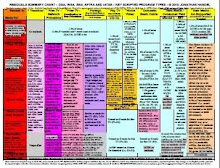
AFTRA in contrast has four basic cable templates, one of which is similar to the SAG basic cable contract. Two of the contracts are used with smaller networks, such as the CW, while other are used with full-fledged networks. In each situation, there is a choice of two approaches to residuals. Additionally, the templates are subject to negotiation, which is why they’re “templates” (or “contract forms”) rather than “contracts.” The result is so-called “one production only” deals.
The difference in philosophy is this: AFTRA believes that these OPO deals are the best opportunity to prevent shows from going non-union or being produced in Canada. The source close to AFTRA says the union has statistics on this. There were some statistics of this sort in AFTRA’s 2007 magazine article on basic cable. I’m not sure if there are more recent figures as well.
SAG, in contrast, believes that promulgating a single contract is the best way to ensure that guild members receive the full benefit of SAG’s power to negotiate on their behalf, and that a union’s job is to set minimums.
There’s a also a perception, among at least some leaders on the SAG side, that AFTRA does not pursue contract grievances as aggressively as SAG does. Producers and management-side lawyers generally share this belief, and often prefer to deal with AFTRA rather than SAG.
It doesn’t go unnoticed, either, that AFTRA’s approach has enabled the union to achieve greater market share in basic cable. Whether this comes at the expense of SAG, as some believe, or is simply captures programs that would have gone non-union or fled to Canada, is difficult to say.
In any case, the fundamental difference in opinion is clear, and the question is, should a union focus more on obtaining work for members or more on setting minimums? Compromises between these two extremes are obviously possible, but the two goals are obviously in tension with each other.
The importance of coordinated negotiations, and achieving a synchronization of the two unions’ approach to basic cable is that this helps advance the cause of merger. A single, merged union obviously can’t have only one contract and never deviate from it, while simultaneously having four templates and negotiating OPO deals.
The most likely solution is to meet in the middle, and, for instance, have two contracts rather than one or four. Or there might be four contracts but now deviations from them (i.e., no OPO deals, just a choice of contracts). And, perhaps, two of those contracts might b phased out over the next several years. There are all sorts of compromises one might envision, but it’s obvious why the matter is sensitive.
Another reason the matter is sensitive, of course, is that SAG is in the position of asking AFTRA whether it will join SAG and bargain in a coordinated way. This conceptually makes SAG the suitor, and AFTRA the decision maker (or the “decider,” in George Bush’s charming locution). That’s not a comfortable place for SAG to be in and will require delicate maneuvering to avoid bruised egos. Indeed, it’s perhaps a bit surprising that SAG’s board voted to explore coordinated bargaining without assurance that AFTRA’s board would adopt a similar resolution at its board meeting, which was held on the same day as SAG’s.
SAG, AFTRA and the AMPTP had no comment.
Stay tuned for my piece later this week looking at the issues in play for SAG and AFTRA. And watch for my new book “Hollywood on Strike!,” due out next month.
———————
Subscribe to my blog (jhandel.com) for more about entertainment law and digital media law. Check out my residuals chart there too. Go to the blog itself to subscribe via RSS or email. Or, follow me on Twitter, friend me on Facebook, or subscribe to my Forbes.com or Huffington Post articles. If you work in tech, check out my book How to Write LOIs and Term Sheets.