Monday, December 10, 2007

Too Funny - AMPTP.com

If you want to visit the AMPTP website, go to AMPTP.org. But if you want to see a hilarious and sharp-tongued parody site, visit AMPTP.com, at least until the lawyers make them take it down (it may amount to cybersquatting). The first sentence on the home page sets the tone:

We are heartbroken to report that despite our best efforts, including sending them a muffin basket, making them a mix CD, and standing outside their window with a boombox blasting Peter Gabriel songs, our talks with the WGA have broken down.
There are five pages in all. The owner of the site, Tactical Edge Group's Bill Davis - an experienced prop master and armorer (weapons master for TV show and movies) - tells me he's rented the site for a limited time to a group of striking writers. He's owned the site for several years, along with several hundred others. A visit to the Internet Archive's Wayback Machine (which archives past versions of websites) shows that the site has been parked for several years. Check it out at http://web.archive.org/web/*/http://amptp.com .

Tip o' the hat to Dave McNary at Variety for mentioning the site to me.

Sunday, December 9, 2007

Expanding the IP Empire

A bill introduced in the House would expand enforcement of IP laws regarding movies, fashion and other areas, reports Variety. The bill would establish an IP czar in the White House and an IP division in the Justice Dept. Too early to tell what the bill's prospects might be.

DVD + Hi Def = $20 billion in 2012

"By 2012, standard DVD discs will total $10 billion in U.S. consumer sales, HD DVD $5 billion and Blu-ray $5 billion," per Adams Media Research, as reported by Video Business.

This compares with 2006, in which DVD was a $16.5 billion business, according to the Entertainment Merchants Association trade org. (Unclear if this also includes hi def, but the difference is probably not great either way.)

That growth, even in the face of the continued hi def format war (Blu-ray vs. HD DVD), means that the WGA's failure to achieve an increase in the DVD residual (see WGA Strike - Negotiation Issues) will continue to represent a significant loss, as I previously predicted. See Slipped Disc: Why DVD Residuals Still Matter — and Always Will.

Friday, December 7, 2007

WGA Strike - Negotiation Issues

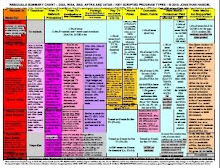
I've written a detailed memo on the current state of the proposals in the writers strike. It includes several summary sections in plain English, as well as more detailed analysis.

Monday, December 3, 2007

WGA Strike - Confusion Reigns

Let's see the proposals - the studios (AMPTP) and writers (WGA) need to release the full text of their latest proposals so the entire entertainment industry can form an informed opinion on the negotiations. Here's why:

Saturday, December 1, 2007

Streaming Ad Market Worth $120m to Nets in '07

The Financial Times is reporting that the four major U.S. networks will reap $120 million in 2007 from ads connected with free streaming of their content. The number is expected to sharply increase next year. The FT's source is Starcom, described as a leading media buying agency.

The WGA wants 1.2% of such ad revenue, which suggests $1.44 million would have gone to the WGA for 2007. However, the Guild is willing to give the nets a residual-free promotional window of several days (i.e., the first several days that a particular program is available would not trigger residuals). Thus, the WGA's take would be less than the math suggests.

The cost to the nets and/or studios would be 9.5 times as much, because the residual formulas in agreements for the directors, actors and below-the-line craft workers would contain similar residuals formulas.

Friday, November 30, 2007

WGA Strike - Confusion Reigns

Are the talks between writers and producers headed for a breakdown, or are we on the road to a deal? It's impossible to tell. The producers say their new proposals represents an increase in compensation to the writers. The writers say it represents a decrease.

In addition, it appears that the writers have a proposal on the table too. Yet, the writers' public statement omits details of their proposal, while offering some details of the producers' proposal. Meanwhile, the producers' statement has no details of either.

The writers' statement is bitter and angry, yet they say they're going to study the producers' proposal -- even though they've already attacked it. In contrast, the producers' statement implies that talks are on the way to a fruitful conclusion. We're being spun by at least one party, and probably both. The parties should release the full text of their proposals and let the public judge.

Thursday, November 29, 2007

Writers' Strike: Why They're Talking

The writers and the producers (studios and networks) returned to talks this past weeks, following a three-week period, during which no talks occurred, after negotiations collapsed on November 4. What persuaded the parties to resume discussions?

The writers are back at the table for these reasons:

(1) The Directors Guild of America (DGA) is Waiting in the Wings. The Writers Guild knows that if they don't do a deal soon, the DGA will commence negotiations with the producers and do a deal first. (Even though the DGA's contract doesn't expire until June 30, they like to do their deals early.)

The home video and new media aspects of that deal would then become the template for the writers' deal, because all three guilds (writers, directors, and actors) mirror each other in the home video portion of the agreements. And, the directors' deal would be more favorable to studios than the writers' deal would be.

The reason the directors would be less assertive is that the directors don't care about residuals as much as the writers, because two important DGA constituencies don't relay on residuals as much as writers do: film directors generally receive more upfront money than writers and are less reliant on residuals; and assistant directors and other non-director personnel, who are 40% of the DGA membership, receive virtually no residuals. (This leaves middle-class TV directors somewhat in the lurch.)

Also, film directors probably view themselves as quasi-management (which is accurate - they tell people what to do!), and would thus be less aggressive from a labor union perspective.

(2) Unity is Beginning to Crack. Writers are also returning to the table because unity is beginning to crack. For instance, many showrunners - the writer-producers who write and supervise TV shows - are apparently returning to their producing duties (though not their writing duties). This will allow shows to continue producing scripts they have on hand, giving the networks a new lease on life, even though no new scripts are being written.

Also, the Teamsters (truck drivers), who had expressed unity with the writers, are now apparently crossing the picket line in significant numbers. Their support had been key, since their refusal to deliver equipment can shut down production immediately. If nothing moves, nothing shoots.

In addition, the IATSE (union representing "below-the-line" workers such as cinematographers, production designers, hair, makeup, etc.) has continued to be critical of the strike, since many of its members are out of work as a result.

The producers (studios and networks) are back at the table for these reasons:

(1) TV Shows Went Dark Faster Than Expected. The fact that the showrunners ceased their producing duties meant that many shows (several dozen so far) ceased production much sooner than the studios and networks expected.

(2) Movies Began to be Postponed. The average studio movie costs $100 million to produce and distribute. Without a writer on standby to touch up (or even rewrite) the script during production, studios, stars and directors are reluctant to begin production. And, once a movie is postponed, it becomes difficult and expensive to restart it: stars and directors may be unavailable because they're working on other projects, locations become unavailable, options may expire, etc.

(3) Pilot Season is Imperiled. The networks select new shows for next fall season by ordering pilots - sample, initial episodes of prospective TV series. Scripts are written, some are selected for production as pilots, then the resulting pilots are viewed and some are selected to become new series. This process happens during January through early April. Without scripts, there's no pilots and no pilot season. Without pilots, there are no new series, at least under the current system (some execs suggest that this process is inefficient and overly expensive in any case).

(4) The Studios and Networks Were Losing the PR Battle. The studios and networks were unprepared for the PR onslaught -- blogging, YouTube videos, international demonstrations, rallies, statements of support from politicians and from other unions, and the like. Surveys of both the entertainment industry and of the public at large show overwhelming support for the writers.

Both parties are back at the table for these additional reasons:

(1) The Industry as a Whole Wants Them to Negotiate. People are losing their jobs, the industry is shutting down, and the community saw both sides trading vitriolic barbs rather than engaging in serious negotiation. Anger was building against both parties.

(2) Agents Began to Mediate. Agents don't make money unless deals get made. This put them on the firing line. Also, agents have a foot in both camps: they represent the writers, but they dress, talk, think like, and lunch with the execs. Also, they spend their day making deals, every day. They're uniquely positioned to induce the parties to negotiate, and to reach a solution, and they stepped up to the plate and engaged the parties.

All of these pressures and efforts bore fruit in getting the parties back in the room. Now it's time for them to complete the process and reach an agreement.

This article first appeared on The Huffington Post on 11/29/07.

Wednesday, November 28, 2007

Blogging for TV Shows During the Strike

Eriq Gardner at The Hollywood Reporter's Entertainment & Media Law Blog points out, even though "The Office" is dark, its blog continues to be updated. The blog, of course, is in the name of various characters from the show, but someone's writing it. If that someone is a Guild writer - seemingly unlikely, given how outspoken The Office's writers have been - is that writer violating the strike rules?

Eriq noted that I had previously blogged on a related matter, and asked me to comment. My reply, which he ran as part of the post today, was as follows:

Can a WGA member write for [a struck-company owned TV show] blog during the strike?

I spoke with WGA spokesman Gregg Mitchell, and his answer was an emphatic "No." A TV show's fictional blog is just "an extension of the same show," he stated, and the writing is therefore prohibited.

Let's drill down. The strike rule applies to writing in connection with new "programming" for non-traditional media, but doesn't define that term. Does a series of blog entries constitute "programming" on the Internet?

Probably so. We can find guidance in the Sideletter on Literary Material Written for Programs Made for the Internet (2004 Writers Guild MBA, p. 561). This Sideletter provides limited, optional jurisdiction for new media writing. Two provisions are key.

In one place, the Sideletter refers to "literary material written for the Internet or other similar delivery systems." The term "literary material," in turn, is defined in the MBA (Art. I.A.5) to include, among other things, "dialogue, ... sketches, ... narrative synopses, routines, and narrations." This would seem to encompass blog entries.

Also, the Sideletter refers to "audiovisual entertainment programs made for the Internet of the type that have traditionally been covered under the WGA Basic Agreement as well as other types of programs made for the Internet." I've added the emphasis to make the point: in new media, the Guild's concerns are not limited to audiovisual programming.

So, my analysis is that the strike rules do indeed prohibit blogging for struck-company-owned TV show blogs. It's odd to think that blog entries - unadorned text - constitute "programming." But so it goes in the crazy world where new technology collides with an abstruse, 600-page Guild agreement.

Tuesday, November 27, 2007

Exclusive: The AMPTP YouTube Video the Writers Don’t Want You to See

WGA writers, whose pencils are (mostly) down and PC’s off, have lately occupied themselves walking picket lines and chanting protest slogans. Many have found time for a bit of auteurism, creating a growing number of YouTube videos explaining the writers’ position (reportedly an astonishing 750 videos to date). The videos — by turns impassioned and humorous — have collectively attracted notice.

But, like the dog that didn’t bark, the real mystery is why the producers haven’t produced. The Alliance of Motion Picture and Television Producers (AMPTP) has created no YouTube videos of its own, opting instead for the old-media alternative of occasional paid advertising in the NY Times, LA Times and trades, and an op ed piece in the LA Times. I wish I could offer you a link to the AMPTP’s new YouTube video — like my headline promises — but I can’t, because there isn’t one (that link will just give you a blank screen). The companies’ strategy has been more NoTube than YouTube.

But why? With all their resources, why haven’t the AMPTP companies produced and distributed video content of their own? It’s not for lack of writers; the companies could use non-WGA writers if they wished, since new media is not a covered area, and in-house promotional activity presumably isn’t either (and, in any case, the WGA agreement expired October 31 and is no longer in effect). Nor is it because the companies don’t have a case to make; they do, although I disagree with much of it.

And, the companies’ audio-visual silence does not represent a failure to understand the importance of public opinion — otherwise, why buy the ads and write the op-ed piece? Nor can the absence of company content be explained by pointing to the success of the AMPTP’s traditional PR methods, because there’s nothing to point to. On the contrary, the companies are losing the PR battle, and badly; for instance, over two-thirds of respondents to a Variety survey said that the writers were representing themselves more clearly, forcefully, honestly and forthrightly than the companies. In addition, half the respondents see the AMPTP in a more negative light as a result of the strike.

The only remaining explanation is that the studios and networks — the country’s largest media companies — just don’t understand new media, or they have carelessly allowed their representative, the AMPTP, to function without comprehending the importance of new media. Online, and on cellphone and iPod screens, is increasingly where the eyeballs are, not to mention the hearts and minds (thankfully, that’s as anatomical as we need to get). Newspapers, and television, also matter, a lot; but ignoring a fast-growing, young-skewing medium makes companies seem stodgy at best, and ever more the villain — or, “the man,” if you prefer — at worst.

Does it matter? Yes. A business that loses the love of its customers might soon find itself more busy suing them than selling to them. The studios seem to have inadequately taken note of the lessons the music industry offers, so here’s one that bears repeating: piracy is hard enough to combat, but even more so if there’s no love lost between consumer and company.

In addition, a company that can’t figure out how to use new media on its own behalf will have an even harder time understanding how and why its customers use new media. Not for nothing have Silicon Valley companies successfully portrayed Hollywood as an industry that doesn’t get it. The AMPTP’s inaction only reinforces that conclusion. It’s time for the execs — or the AMPTP — to grab their camcorders and start making some video.

This article originally appeared in The Huffington Post on November 27, 2007 at http://www.huffingtonpost.com/jonathan-handel/exclusive-the-amptp-yout_b_74237.html?refresh_comments=1.